

Cold Brew vs Iced Coffee: Which Should You Make Today?
Cold brew steeps coarse grounds in cold water for many hours, yielding a low-acid, full-bodied concentrate; iced coffee is hot-brewed then chilled or flash-brewed directly onto ice for a brighter, more aromatic cup. According to KitchenAid’s consumer explainer, the core difference comes down to temperature at extraction — and that single variable reshapes everything from flavor to caffeine perception to how long your batch stays fresh.
Choose cold brew if you:
- Want a smooth, mellow, low-acid drink you can batch ahead and keep in the fridge for the week
- Have a sensitive stomach or find hot-brewed coffee harsh
Choose iced coffee (or flash brew) if you:
- Crave bright, floral, or fruity notes from a light single-origin bean
- Need a cold coffee in under ten minutes
Key Takeaways
Cold brew and flash iced coffee are chemically distinct beverages that suit different beans, schedules, and palates — matching method to roast is the single most impactful decision a home brewer can make.
| Point | Details |
|---|---|
| Method defines flavor | Cold brew yields smooth, low-acid sweetness; flash brew preserves bright aromatics hot extraction captures. |
| Titratable acidity gap | Cold brew can have 28–50% lower titratable acidity than hot-brewed equivalents, making it genuinely gentler on the palate. |
| Steep and brew times | Cold brew needs 12–24 hours; flash brew takes 3–5 minutes; match your method to the time you actually have. |
| Match roast to method | Use medium-to-dark roasts for cold brew and light-to-medium roasts for flash brew to get the most from each bean. |
| Rowst starting point | The Coffee Lover Pack lets you trial multiple roast profiles across both cold brew and flash brew methods at home. |
Table of Contents
- What is cold brew and how is it made?
- What is iced coffee and how does it differ?
- How to make each at home: recipes and ratios
- Why do cold brew and iced coffee taste so different?
- How does caffeine compare between the two methods?
- What grind size and roast work best for each method?
- How to serve, sweeten, and customize your cold coffee
- How long does each method keep, and can you freeze it?
- Cold brew vs iced coffee: a quick side-by-side
- Which method should you choose?
- A perspective on choosing beans and methods
- Rowst coffees worth trying for each method
- Sources
What is cold brew and how is it made?
Cold brew is a full-immersion extraction: coarse grounds steep in cold or room-temperature water with no heat applied at any stage. Food & Wine describes it as a cold infusion rather than a traditional brew, which is an important distinction. Heat is the engine of conventional extraction; cold brew replaces it with time.
The essentials at a glance:
- Grind: coarse, comparable to French press
- Ratio (concentrate): 1:4 to 1:5 grounds to water by weight
- Ratio (ready-to-drink): 1:8 grounds to water by weight
- Steep time: 5–6 hours at room temperature; 10–12 hours minimum in the fridge (up to 24 hours for a stronger concentrate)
- Equipment: a wide-mouth mason jar, a Toddy cold brew system, or any dedicated cold brew pitcher with a built-in filter
Room-temperature steeping is faster because extraction kinetics still respond to ambient warmth, but refrigerator steeping gives you more control and a cleaner, less oxidized result. For most home brewers, an overnight fridge steep is the easiest routine.
Pro Tip: Use a coarse, French-press-style grind. A drip-grind used for a long cold steep produces muddy texture, excessive fines, and a bitter result that is also difficult to filter — a common mistake flagged by Food & Wine. When in doubt, grind coarser.
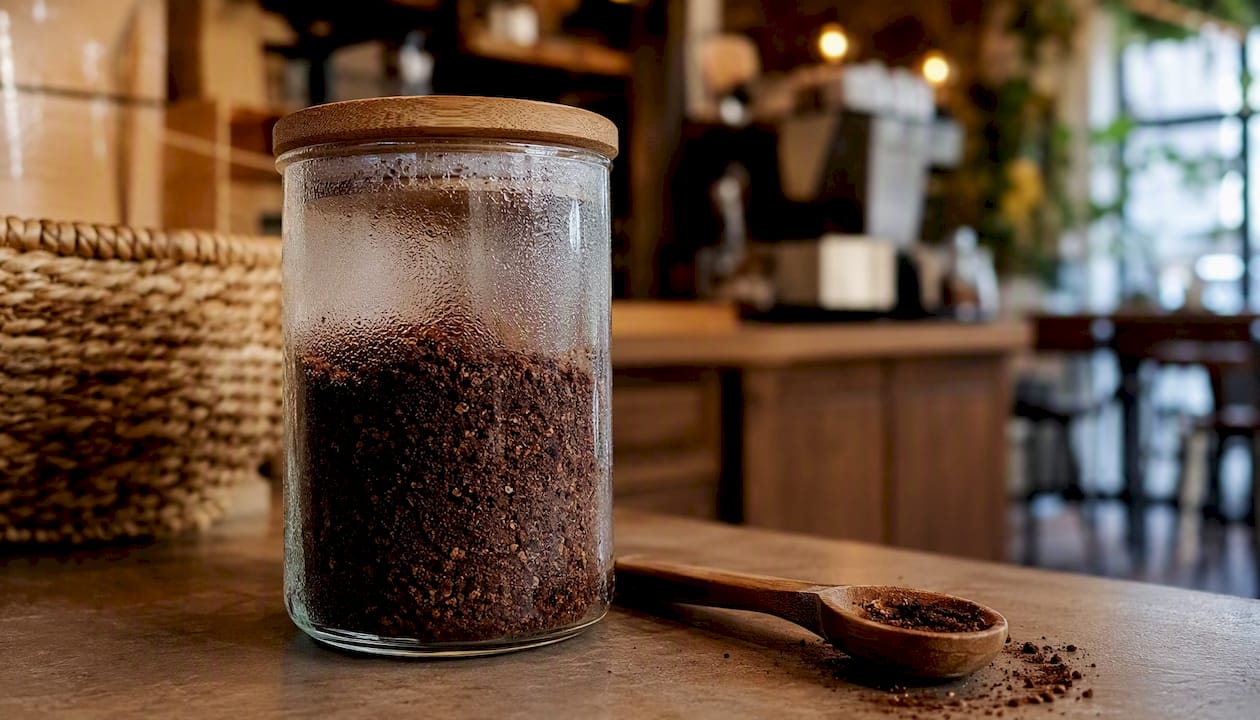
After steeping, strain through a fine-mesh sieve lined with a paper filter or a cloth filter. The result is either a concentrate (dilute 1:1 with water or milk before drinking) or a ready-to-drink batch if you used the lower ratio.
What is iced coffee and how does it differ?
Iced coffee is hot-extracted coffee served cold. Two methods produce it, and they are worth treating separately because they taste noticeably different.
Chilled hot brew is the simplest approach: brew a standard pot of drip or pour-over coffee at your usual ratio, let it cool, then pour it over ice. The drawback is that cooling takes time, and the coffee can taste flat or stale if it sits too long before chilling.
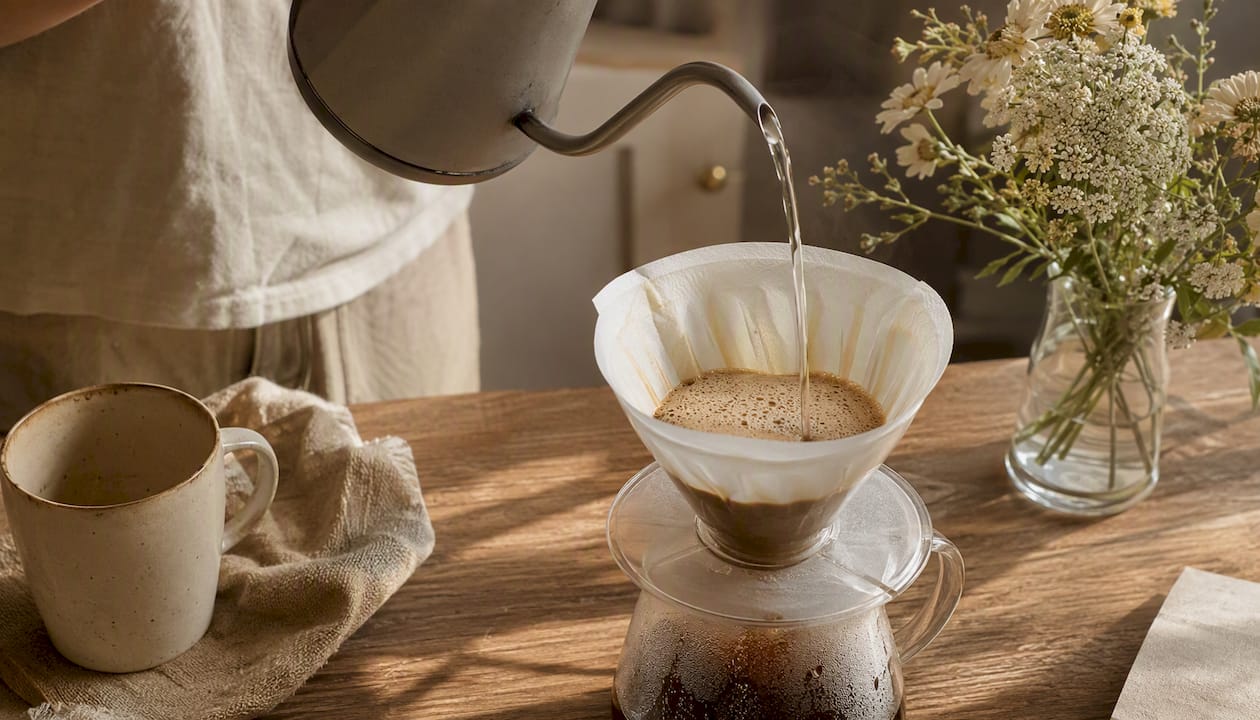
Flash brew (Japanese iced coffee) is the more elegant solution. You brew hot coffee directly onto a bed of ice inside the carafe, so the coffee chills the instant it extracts. Because hot water captures volatile aromatic compounds that cold water cannot, flash brew delivers a bright, complex cup that chilled hot brew often loses during the cooling wait. JayArr Coffee’s analysis identifies flash brew, immersion cold brew, and Kyoto slow drip as three chemically distinct cold-coffee traditions, each suited to different roasts and use cases.
Key differences between the two iced coffee approaches:
- Chilled hot brew: brew at a standard ratio (roughly 1:15 grounds to water), cool, pour over ice; expect some dilution
- Flash brew: account for the ice weight as part of your total water; brew hot at a concentrated ratio so the melting ice brings the drink to drinking strength
Both methods take under ten minutes of active time, which is the sharpest contrast with cold brew’s overnight commitment.
How to make each at home: recipes and ratios
Cold brew concentrate (the batch method)
- Weigh out 100 g of coarsely ground coffee.
- Add 400–500 g of cold, filtered water (1:4 to 1:5 ratio).
- Stir gently to saturate all grounds.
- Cover and steep in the refrigerator for 12–18 hours.
- Strain through a fine-mesh sieve lined with a paper filter.
- Store concentrate in a sealed jar. Dilute 1:1 with water or milk to serve.
Flash/Japanese iced coffee (single serving, ~12 oz)
- Place 150 g of ice directly into your pour-over carafe or server.
- Weigh 20 g of medium-fine ground coffee into your dripper.
- Use 200 g of hot water (around 200°F) for the pour-over, brewing directly onto the ice.
- The total liquid (ice + hot water) equals roughly 350 g, bringing the brew to drinking strength as the ice melts.
- Serve immediately over additional ice if desired.
Chilled iced coffee (drip or pour-over)
- Brew at a standard ratio (1:15 grounds to water) using your usual method.
- Pour into a heat-safe container and refrigerate until cold (at least 30 minutes).
- Serve over ice. Expect slight dilution from ice melt; brew slightly stronger if that bothers you.
| Variable | Cold brew concentrate | Flash iced coffee | Chilled iced coffee |
|---|---|---|---|
| Grind size | Coarse | Medium-fine | Medium |
| Grounds:water ratio | 1:4 to 1:5 | ~1:10 (hot water only) | 1:15 |
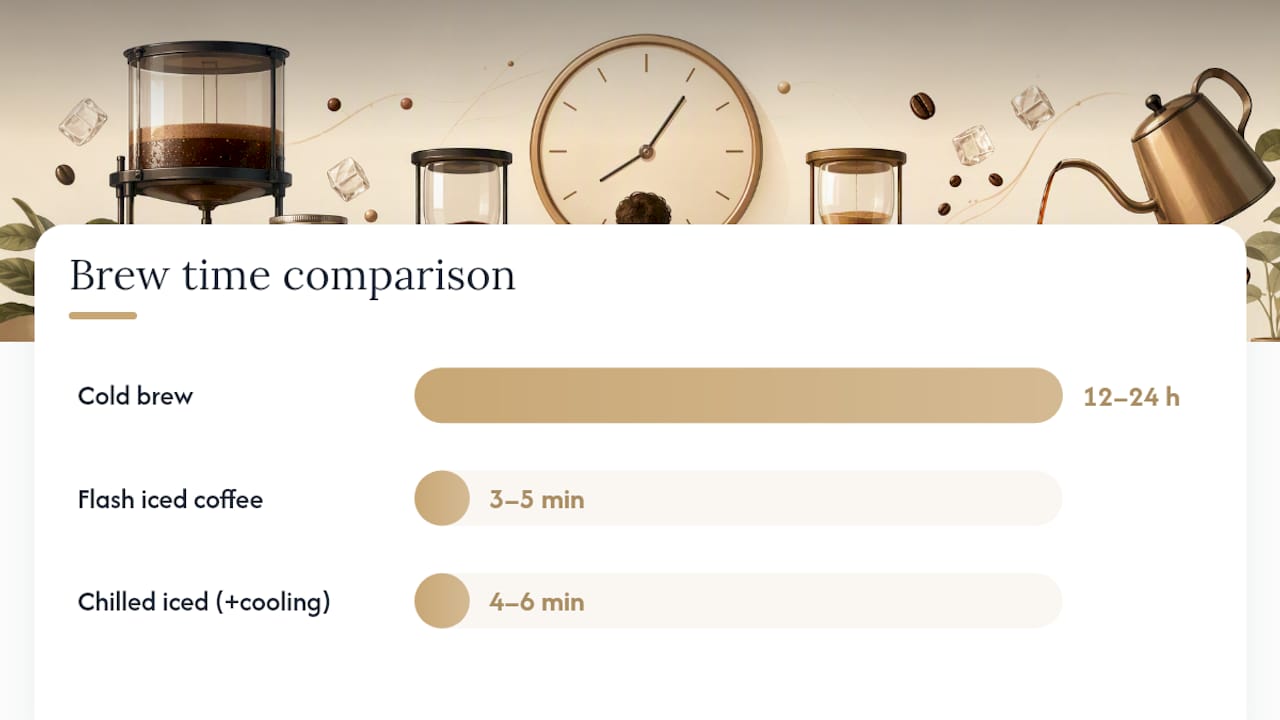
| Active brew time | 5 min prep + 12–18 h steep | 3–5 minutes | 4–6 minutes + cooling |
| Dilution before serving | Yes, 1:1 with water or milk | None (ice is factored in) | Slight (ice melt) |
| Equipment | Jar, filter, scale | Pour-over, scale, timer | Drip brewer or pour-over |
Pro Tip: A kitchen scale is the single most useful tool for both methods. Volume measurements for coffee are notoriously inconsistent; weight gives you a repeatable result every time.
Why do cold brew and iced coffee taste so different?
Temperature is the master variable in coffee extraction. Hot water dissolves a wider range of compounds faster, including volatile aromatic acids that give coffee its brightness and floral character. Cold water is selective: it extracts more slowly and favors certain sugars and larger, less volatile molecules, which is why cold brew tends to taste sweeter and rounder.
The Specialty Coffee Association’s summary of UC Davis experiments found that cold-brew immersion samples were measurably more floral and less bitter or sour than chilled hot brews at matched TDS (total dissolved solids). Cold brews also showed slightly higher pH values (by 0.1–0.2 units) and lower titratable acidity. That last point deserves a closer look.
pH vs. titratable acidity: pH measures hydrogen ion concentration at a single moment; titratable acidity measures the total dissolved acid load. Cumulus Coffee’s research synthesis notes that titratable acidity can be 28–50% lower in cold brew compared to hot-brewed equivalents, even when pH values overlap. This is why cold brew genuinely feels less acidic on the palate, not just in marketing copy.
Flash brew sits in a different position. Because hot extraction captures volatile aromatics before they can dissipate, and rapid chilling locks them in, flash brew preserves a brightness and complexity that immersion cold brew cannot replicate. Super-Espresso’s comparison reports that flash brew retains significantly more volatile aromatic compounds than immersion cold brew.
Pro Tip: If you are brewing a light, floral single-origin from Ethiopia or El Salvador, flash brew will express those aromatics far more vividly than cold brew. Save cold brew for medium-to-dark roasts where smoothness and body are the goal.
How does caffeine compare between the two methods?
Cold brew concentrate has higher caffeine per ounce than ready-to-drink iced coffee, but that comparison disappears once you dilute the concentrate to drinking strength. At an equivalent final dilution, caffeine content between cold brew and iced coffee is broadly comparable and depends far more on your grounds-to-water ratio than on the brewing temperature.
Practical caffeine rules of thumb:
- A cold brew concentrate (1:4 ratio) diluted 1:1 before serving ends up at roughly a 1:8 effective ratio — similar in strength to a strong drip coffee
- Flash brew brewed at 1:10 (hot water only, with ice as the remainder) delivers a concentrated cup comparable to a strong pour-over
- Chilled hot brew at 1:15 is the mildest of the three in caffeine per cup
The variables that most affect caffeine are grind size (finer = more surface area = more extraction), steep or brew time, and total grounds used. Serving size matters too: a 16 oz cold brew concentrate drink contains more caffeine than a 6 oz flash brew simply because of volume.
What grind size and roast work best for each method?
Getting grind and roast right is where home brewing moves from acceptable to genuinely good.
For cold brew:
- Grind coarse, comparable to French press or slightly coarser
- Medium-to-dark roasts perform best: chocolate, caramel, and nutty notes translate beautifully through cold extraction
- Very light single-origins can taste muted or grassy in cold brew because the floral volatiles never fully extract at low temperatures
- Rowst’s Uganda Bugisu is a natural fit here: its chocolatey, full-bodied profile deepens rather than disappears in a cold steep
For flash brew and iced coffee:
- Medium-fine to medium grind, similar to a standard pour-over setting
- Light-to-medium roasts shine: bright acids, stone fruit, and florals come through with clarity
- Avoid very dark roasts for flash brew; the bitterness that hot water extracts can become harsh when chilled
Pro Tip: Grind fresh for every batch. Pre-ground coffee loses volatile aromatics within hours, and those aromatics are precisely what flash brew is designed to preserve. For cold brew, freshness still matters, but the method is more forgiving of a day-old grind.
How to serve, sweeten, and customize your cold coffee
Dilution is the variable most home brewers underestimate. Cold brew concentrate is designed to be diluted; if you pour it straight over ice without accounting for ice melt, the drink will taste thin by the end. Brew your concentrate slightly stronger than you think you need, then dilute deliberately.
Sweetening cold drinks:
- Granulated sugar does not dissolve well in cold liquid; use a simple syrup (equal parts sugar and hot water, cooled) or a flavored syrup instead
- Sweetened condensed milk is a classic addition to cold brew that adds both sweetness and a silky body
- Honey dissolved in a small amount of warm water before adding works well for a more nuanced sweetness
Popular customizations by method:
- Cold brew: a long pour over tonic water with a citrus peel for a café-style spritz; oat milk for a creamy, neutral sweetness; a pinch of salt to round out any residual bitterness
- Flash brew: pairs naturally with bright, citrus-forward syrups (yuzu, bergamot, or a simple lemon syrup) that complement rather than mask the aromatic complexity
Pro Tip: Cold foam — made by frothing cold heavy cream or oat milk with a handheld frother — adds a luxurious texture to cold brew without altering its acidity. Spoon it on top rather than stirring it in to keep the layers distinct.
How long does each method keep, and can you freeze it?
Cold brew concentrate is the most storage-friendly of the three. Kept sealed in the refrigerator, concentrate holds well for up to two weeks. Ready-to-drink cold brew (lower ratio, not concentrated) is best within one week. The lower acidity and absence of heat during brewing mean it resists spoilage better than hot-brewed coffee.
Storage guidance at a glance:
- Cold brew concentrate (refrigerated, sealed): up to 2 weeks
- Ready-to-drink cold brew (refrigerated): up to 1 week
- Flash brew: best consumed within 24 hours; the volatile aromatics that make it special dissipate quickly
- Chilled hot brew: 3–4 days refrigerated, though flavor degrades noticeably after day two
Freezing: Pour cold brew concentrate into ice cube trays and freeze. Drop the cubes directly into milk or water for an instantly cold drink that does not dilute as it melts. Flash brew is not worth freezing; the aromatics you worked to preserve are largely lost in the freeze-thaw cycle.
Reheating: Cold brew can be reheated gently and tastes surprisingly clean, though it will not replicate the flavor of a freshly hot-brewed cup. Chilled hot brew reheated tends to taste flat and stale. If you want a hot drink, brew fresh.

A quick safety note: once you add dairy (milk, cream, condensed milk) to any cold coffee, treat it as a perishable dairy product and consume within 24 hours. Label your jars with the date you made them.
Cold brew vs iced coffee: a quick side-by-side
| Feature | Cold brew | Flash iced coffee | Chilled iced coffee |
|---|---|---|---|
| Brewing method | Cold immersion, no heat | Hot pour-over onto ice | Hot brew, then cooled |
| Grind size | Coarse | Medium-fine | Medium |
| Brew time | 12–24 hours | 3–5 minutes | 4–6 min + cooling |
| Flavor profile | Smooth, sweet, low-acid | Bright, floral, aromatic | Bright, slightly flat |
| Serving/dilution | Dilute concentrate 1:1 | Ready as brewed | Pour over ice |
| Equipment | Jar, filter, scale | Pour-over, scale, timer | Drip brewer or pour-over |
| Best roast | Medium to dark | Light to medium | Light to medium |
| Storage life | Up to 2 weeks (concentrate) | Best within 24 hours | 3–4 days |
Which method should you choose?
The right choice depends on what you value most in a cold coffee ritual. Here are the clearest scenarios:
- “I want make-ahead morning convenience” → Cold brew. Batch it Sunday night; pour all week.
- “I want to taste a light single-origin at its best, cold” → Flash iced coffee. Brew it fresh, drink it immediately.
- “I have a sensitive stomach or find coffee harsh” → Cold brew. The lower titratable acidity is a genuine sensory difference, not just marketing.
- “I need a cold coffee in the next five minutes” → Flash brew or chilled hot brew. Cold brew cannot be rushed.
- “I’m hosting and want to impress” → Flash brew for a single-origin showcase, or a cold brew concentrate bar where guests dilute to taste.
- “I want the most economical option” → Chilled hot brew uses a standard ratio and no extra equipment.
One trade-off worth naming plainly: cold brew uses more coffee per cup than a standard hot brew at drinking strength. The concentrate ratio (1:4 to 1:5) means you go through beans faster. If you are using exceptional single-origin coffee, flash brew is the more economical way to experience those flavors cold.
A perspective on choosing beans and methods
There is a tendency in coffee circles to treat cold brew as the sophisticated choice and iced coffee as the shortcut. The SCA’s UC Davis research complicates that narrative in a useful way: cold brew is not a stronger or more complete extraction. It is a different extraction, one that suppresses certain compounds while amplifying others. Cold-brew smoothness is not a sign of depth; it is a sign of selectivity.
What this means practically is that the method should follow the bean, not the other way around. A chocolatey, full-bodied Uganda Bugisu deserves a cold steep. A delicate, fruit-forward El Salvador Pacamara deserves flash brew, where its aromatics can actually reach you. Choosing the wrong method for a beautiful bean is the most common and most avoidable waste in home coffee brewing.
The other underappreciated point: flash brew is not a compromise between cold brew and hot coffee. JayArr Coffee’s breakdown of the three cold-coffee traditions makes clear that flash brew is its own category, with its own chemistry and its own ideal use cases. Treating it as “just iced coffee” undersells it considerably.
Rowst coffees worth trying for each method
The bean you start with shapes everything that follows. Rowst sources single-origin specialty coffees directly from small-scale producers in Uganda, El Salvador, and Mexico, which means each offering has a distinct flavor identity worth matching to the right method.

For cold brew, the Uganda Bugisu is a natural starting point: its chocolatey, full-bodied character deepens through a long cold steep in a way that lighter beans simply cannot. For flash brew, the El Salvador Pacamara brings stone fruit and floral brightness that hot extraction captures and rapid chilling preserves beautifully. If you want to experiment with both methods before committing to a single origin, the Coffee Lover Pack gives you a curated selection of roast profiles designed for exactly that kind of exploration. Visit Rowst to browse the full catalog and find the bean that fits your ritual.
Sources
- Worth the wait: How cold brew differs from chilled hot brew | Specialty Coffee Association
- What’s the Difference Between Cold Brew and Iced Coffee? | Food & Wine
- Japanese Iced Coffee vs Cold Brew vs Kyoto Slow Drip: All 3 Cold Methods | JayArr Coffee
- Cold Brew vs. Iced Coffee: What’s the Difference? | KitchenAid