

Save Waste, Brew Sweeter: Cloth Filter Coffee for Home Brewers
Cloth filter coffee produces a cup with more body than paper and more clarity than metal, which makes it a genuine third option rather than a compromise. It suits home brewers who already love the ritual of pour-over and don’t mind an extra rinse-and-store routine between cups. The tradeoff is real: skip the maintenance, and a cloth filter turns rancid fast. Treat it right, and it rewards you with a rounder, sweeter cup every single time.
TL;DR:
- Cloth filters produce a fuller-bodied, sweeter cup with softened acidity and minimal sediment, making them ideal for naturals and honey-processed coffees.
- Proper maintenance involves rinsing immediately after brewing, storing submerged in water, and boiling every 4 to 8 weeks to prevent rancid flavors.
- Replacing a cloth filter every 2 to 3 months balances performance with environmental benefits, though they use more household water than paper filters.
- Grind size and pouring technique are critical for achieving optimal extraction, with adjustments needed based on taste issues like thinness or bitterness.
- Match your filter material to your brewing style: paper for convenience and clarity, metal for full-bodied grit, and cloth for ritual-focused, moderate-effort brewing.
Table of Contents
- What a Cloth Filter Coffee Setup Actually Does to Your Cup
- How to Brew Coffee With a Cloth Filter, Step by Step
- Cleaning and Storing Your Cloth Filter the Right Way
- Cloth vs Paper vs Metal: Which Filter Fits Your Coffee
- Choosing the Right Cloth: Cotton, Hemp, and Fit
- Fixing Common Cloth Filter Problems
- What Rowst Recommends for Your Cloth Brewing Setup
- Ritual or Convenience: Where Cloth Filters Really Fit
- Try These Rowst Coffees With Your Cloth Filter
- Sources
What a Cloth Filter Coffee Setup Actually Does to Your Cup
Every filter material sits somewhere on a spectrum. Paper traps oils and fine particles almost completely, giving you a clean, bright cup. Metal mesh lets nearly everything through, so you get fuller body but plenty of sediment. Cloth sits between the two, letting through some of the coffee’s natural oils and micro-fines while still catching most of the grit.
That middle position changes what lands in your mug:
- Mouthfeel: rounder and slightly syrupy, closer to French press than to a paper V60 pour.
- Sweetness: often perceived as higher, since more of the coffee’s natural oils carry aromatic compounds into the cup.
- Acidity: softened compared to paper, which tends to sharpen brightness.
- Sediment: minimal, a light silt at the bottom of the cup rather than the gritty layer metal filters leave behind.
The oils paper strips out include diterpenes like cafestol, compounds linked to raising cholesterol when consumed in large volumes over time. Cloth lets a modest amount through. It’s not a health concern for most people at typical drinking habits, but it partly explains why cloth-brewed coffee tastes richer than a paper-filtered cup from the same beans.
How to Brew Coffee With a Cloth Filter, Step by Step
Cloth needs a little prep work paper doesn’t. Do it right and the process takes barely longer than any other pour-over method.
- Wet and season the filter. Rinse it under hot water until it’s damp all the way through, then give it a gentle squeeze so it’s moist, not dripping. A bone-dry cloth filter will absorb water unevenly and slow your pour.
- Grind medium-coarse to medium. Slightly coarser than you’d use for paper helps offset cloth’s slower flow rate. If you’re dialing in a new grinder, Rowst’s grind size guide is worth a look before you commit to a setting.
- Set your ratio. Aim for 1:15 to 1:17, coffee to water. A 20-gram dose gets you 300 to 340 grams of water total.
- Bloom first. Pour twice your coffee weight in water (a 2:1 bloom), let it sit 30 to 45 seconds, then move into your main pour.
- Pour slowly in a tight spiral. Keep water temperature around 195 to 205°F. Steady, controlled pouring matters more with cloth than with paper, since the fabric drains slower and uneven pours create channeling.
- Total brew time should land between 3 and 4 minutes. If you’re well outside that window, adjust your grind before anything else.
Pro Tip: Keep a second seasoned cloth filter ready so you’re never brewing with one straight out of the fridge. A cold, wet filter drops your water temperature fast and stalls extraction.
If your cup tastes thin, grind finer or slow your pour. If it’s bitter or your brew runs long, go coarser. Small adjustments go further with cloth than with paper.
Cleaning and Storing Your Cloth Filter the Right Way
The single biggest reason people abandon cloth filters is a rancid, musty-tasting cup, and that’s almost always a maintenance failure, not a material flaw.
Right after brewing:
- Dump the spent grounds immediately, don’t let them sit.
- Rinse under hot water, rubbing the fabric between your fingers to work out fine particles.
- Use a soft brush on any stubborn grounds caught in the weave.
Between brewing sessions, store the filter submerged in clean water inside a sealed container in the refrigerator. This keeps it from drying out and stops the oils inside the fibers from oxidizing. Every 4 to 8 weeks, do a deeper clean: a slow boil or an oxygen-based soak pulls out accumulated oils that a hot rinse alone can’t touch. Skip soap entirely. It leaves residue that ruins the next several cups.
Watch for these signs it’s time for a new filter: a musty smell even after boiling, visible thinning or tears, or noticeably slower drainage than when it was new. Most cloth filters need replacing every 2 to 3 months under regular use.
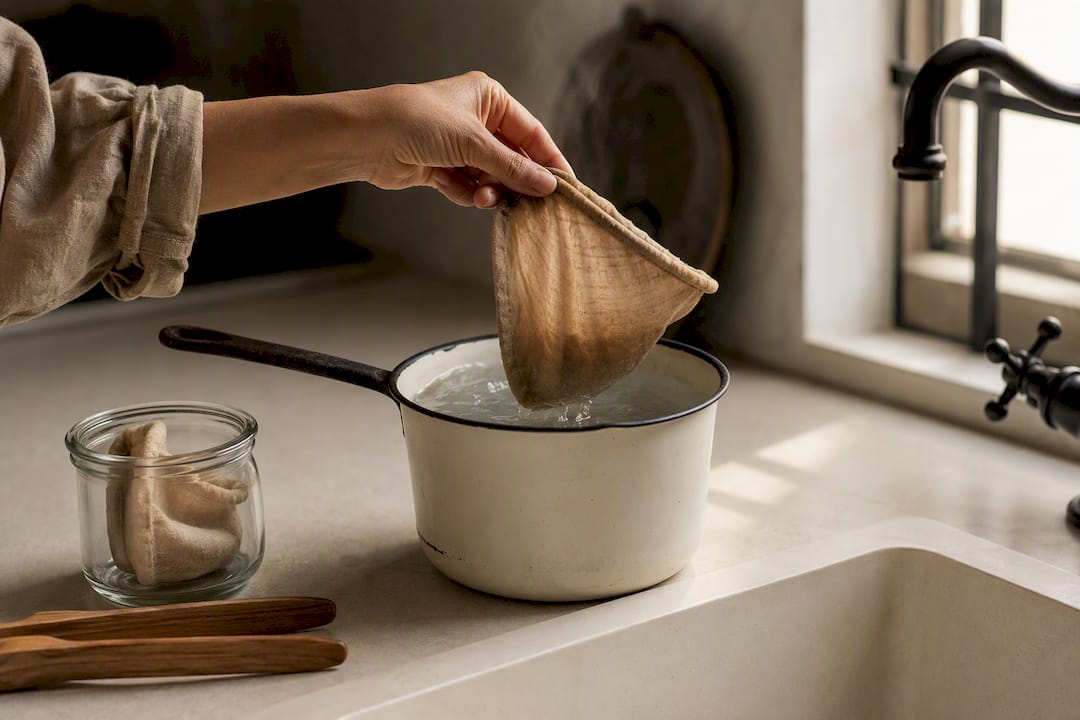
There’s a genuine sustainability tradeoff here. Cloth filters cut disposable paper waste to zero, but they use more household water for rinsing and boiling. For most people, that’s still a favorable tradeoff, but it is worth acknowledging rather than pretending cloth is free of any environmental cost.
Cloth vs Paper vs Metal: Which Filter Fits Your Coffee
Filter choice is a preference call, not a hierarchy. No single material wins for every coffee, and the right pick depends on what you’re brewing and how much upkeep you’re willing to do.
- Paper gives you the cleanest, brightest cup with zero maintenance. It’s the right call for washed, high-acidity single-origins where you want clarity front and center, and for anyone brewing on autopilot before work.
- Metal delivers the fullest body and the most sediment, plus no ongoing cost since mesh filters last for years. It suits drinkers who love a heavier mouthfeel and don’t mind grit at the bottom of the cup.
- Cloth lands in between: moderate body, minimal sediment, and a rounder cup, at the cost of regular rinsing and periodic replacement. It’s particularly well suited to naturals and honey-processed coffees, where the extra body plays up sweetness rather than muddying acidity that’s already been softened by processing.
If you brew daily and want zero fuss, paper wins on convenience. If you treat brewing as a slower, more deliberate ritual, cloth gives you a cup character paper simply can’t reach.
Choosing the Right Cloth: Cotton, Hemp, and Fit
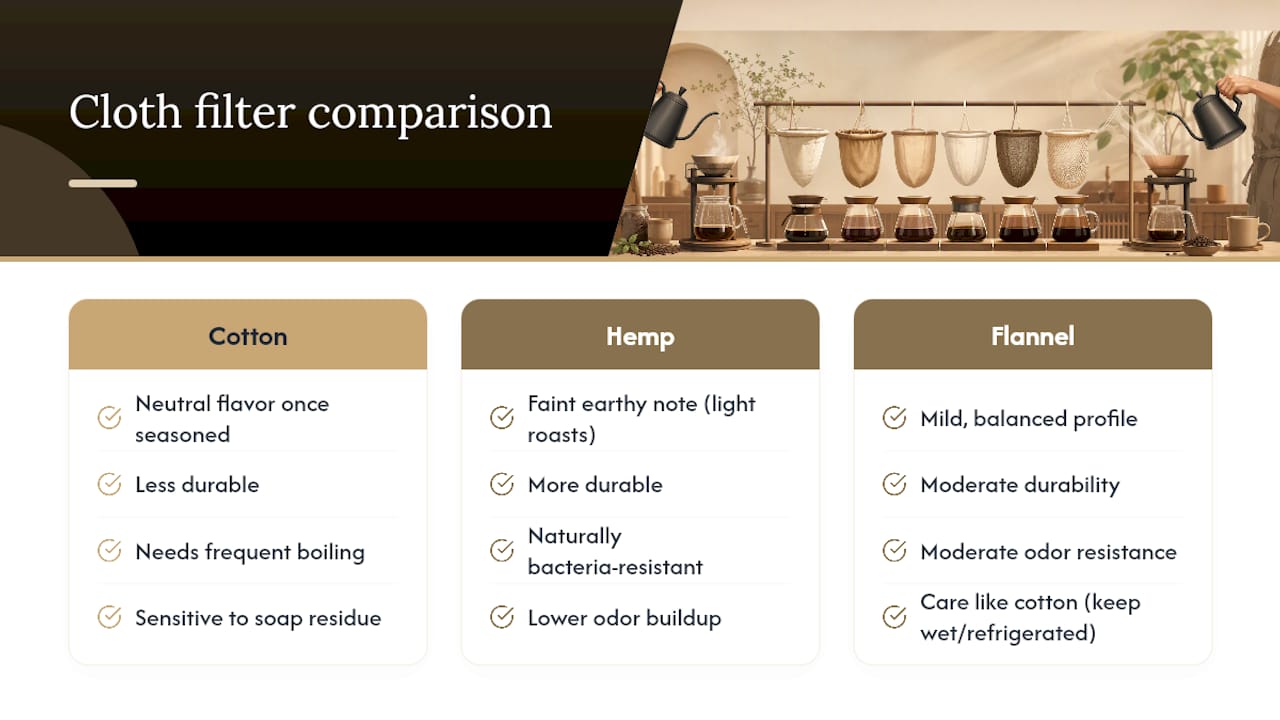
Material matters as much as brewing technique. Unbleached organic cotton is the most common choice, offering a neutral flavor profile once properly seasoned, though it needs more frequent boiling to stay odor-free. Hemp filters are more durable and naturally resistant to bacterial buildup, but they can impart a faint earthy note that some drinkers notice in lighter roasts. Flannel blends split the difference, often used in the traditional Japanese cloth-brewing that popularized this method.
Shape matters too. V60 and Kalita-style cloth inserts need a snug fit to avoid channeling, while syphon brewers typically use a sock-style cloth that seats over a metal frame. Check your dripper’s dimensions before buying.
Lifespan depends heavily on care. Filters stored dry or exposed to soap residue degrade faster than ones kept wet and refrigerated between uses. Over several months, replacing a cloth filter every 2 to 3 months costs roughly the same as a steady habit of paper filters, so the financial tradeoff is close to a wash. The real savings show up in reduced landfill waste, not your wallet.
Fixing Common Cloth Filter Problems
Most cloth filter complaints trace back to one of three causes.
- Musty or rancid taste: boil the filter immediately. If the smell persists after boiling, retire it. Old oil buildup doesn’t reverse.
- Slow or clogged brewing: coarsen your grind first, then check that the filter is fully wet before pouring. A dry patch anywhere in the weave will bottleneck flow.
- Gritty cup: your grind may be too fine, or you’re stirring too aggressively during the bloom. Ease off agitation and let gravity do more of the work.
For travel, seal a damp filter in a small jar of water; it’ll be ready to rinse and brew the moment you land. Advanced brewers sometimes sift grounds with a tool like a Kruve to remove ultra-fine particles before dosing, which tightens up clarity without losing the body cloth is known for.
Pro Tip: If a filter smells slightly “off” but shows no visible damage, run it through two full boiling cycles before writing it off. One boil often isn’t enough to fully purge oils that have soaked in over weeks.
What Rowst Recommends for Your Cloth Brewing Setup
Grind consistency matters more with cloth than with paper, since uneven particles clog the weave and slow your pour unpredictably. Rowst’s Chemex brew guide covers the same pour control and temperature discipline that carries over directly to cloth brewing, even though the filter material differs.
For your first cloth-filtered cups, reach for something with sweetness and body already built into the profile. A washed El Salvador or a medium-roast Mexican single-origin tends to shine here, since cloth amplifies the round, sweet character those beans already carry. Save your brightest washed Ugandan lots for paper, where their acidity gets to lead. Grinding just before brewing also matters more with cloth, since pre-ground coffee loses the aromatic oils that cloth filtration is specifically built to preserve.
Ritual or Convenience: Where Cloth Filters Really Fit
Cloth rewards patience, not perfection. If mornings are rushed, paper will serve you better. But for a weekend pour-over where the ritual matters as much as the result, cloth earns its keep. Try a small batch before committing to the routine.
— Diego
Try These Rowst Coffees With Your Cloth Filter
Some single-origin lots are picked for the kind of depth and sweetness that cloth filtration draws out best, since these direct-sourced beans carry the oils and body that paper would otherwise strip away.
Start with the Rowst Coffee Collection to find a washed or honey-processed lot suited to your dripper, or grab the Discovery Pack if you want to run several origins through the same cloth filter and compare how each responds. Enthusiasts ready to commit to the ritual might prefer the Coffee Lover Pack, a larger set built for regular brewing rather than a one-off sample. Every bag ships whole bean, so you’re grinding fresh right before your bloom, which is exactly when cloth filtration performs best. Pick a pack, set your grinder to medium-coarse, and brew your first cup this weekend.
Sources
- How to Brew with a Cloth Pour Over - CoffeeGeek
- Pour over filter comparison (paper vs metal vs cloth) - CoffeeGearHub
- Cloth Coffee Filters: Are They Worth It? - The Pourover
- Coffee Sock Review: How To Brew With Cloth Coffee Filters - CoffeeBrewGuides