

Coffee Aroma Wheel: How to Use It and Practice Like a Pro
The coffee aroma wheel is a hierarchical vocabulary tool that guides tasters from broad aroma categories toward precise, specific descriptors. It gives you a shared language for what you’re smelling and tasting, so “kind of fruity” becomes “blackberry” or “grapefruit zest” with a little practice. The wheel works best when you treat it as a path, not a quiz: smell the cup, name the broadest impression you notice, then let the wheel guide you outward only as far as your nose can confidently go.
- Start at the center, not the edge.
- Pick one category before chasing specifics.
- Let ambiguity be fine on your first few tries.
Key Takeaways
Mastering the coffee aroma wheel comes down to starting broad, moving outward only when the aroma supports it, and practicing with genuinely distinct coffees on a repeatable schedule.
| Point | Details |
|---|---|
| Start at the center | Name the broad category (fruity, floral, roasted) before attempting a specific outer-ring descriptor. |
| Know the ring counts | The wheel moves from 9 broad categories to 25 subcategories to 61 specific descriptors. |
| Pair with the WCR lexicon | The 110-attribute Sensory Lexicon supplies physical references that calibrate what each term should smell like. |
| It’s fine to stop early | A confident middle-ring term beats a forced, inaccurate outer-ring guess. |
| Practice with contrast | Rowst’s single-origin packs, like the Coffee Lover Pack, give beginners distinct aromas to compare while training their palate. |
Table of Contents
- What Is the Coffee Aroma Wheel, Exactly?
- How Is the Coffee Flavor Wheel Structured?
- How Do You Use the Coffee Aroma Wheel Step by Step?
- Where Does the Wheel’s Research Come From?
- What Do Common Coffee Flavor Descriptors Actually Smell Like?
- What Are the Wheel’s Limitations?
- How Should You Practice With the Coffee Aroma Wheel?
- Quick Cheat Sheet for Approaching Any Cup
- Practice the Wheel With Coffee Worth Tasting
- Frequently Asked Questions
- Sources
What Is the Coffee Aroma Wheel, Exactly?
The coffee aroma wheel, more formally known as the Coffee Taster’s Flavor Wheel, is a visual taxonomy of the aroma and flavor terms used in cupping and tasting notes. Think of it as a map of a vocabulary rather than a list of flavors hidden in your coffee. It does not claim your cup contains actual jasmine oil or literal blueberries; it gives you the closest matching language for the sensory experience in front of you.
The Specialty Coffee Association (SCA) created and maintains the wheel, and the current version was revised in 2016 in partnership with World Coffee Research (WCR). That collaboration matters because it ties a widely used tasting chart to real sensory science instead of marketing language invented by a single roaster.
What you’ll actually find on it:
- Broad sensory families like fruity, floral, roasted, and sour/fermented sit at the center.
- Each family branches into subcategories, then into specific, concrete descriptors at the outer edge.
- Every descriptor links back to the WCR Sensory Lexicon, which defines exactly what each term should smell or taste like using physical reference samples.
How Is the Coffee Flavor Wheel Structured?
The wheel works in three concentric rings, and knowing which ring you’re in changes how you should be tasting. The innermost ring holds the broadest categories: fruity, floral, sweet, nutty/cocoa, spices, roasted, sour/fermented, green/vegetative, and other. From there, the SCA’s official guidance walks tasters outward through 25 subcategories in the middle ring, arriving at 61 specific descriptors on the outer ring, terms like “ripe strawberry,” “raw honey,” or “black tea.”
Quick reference: how the rings scale
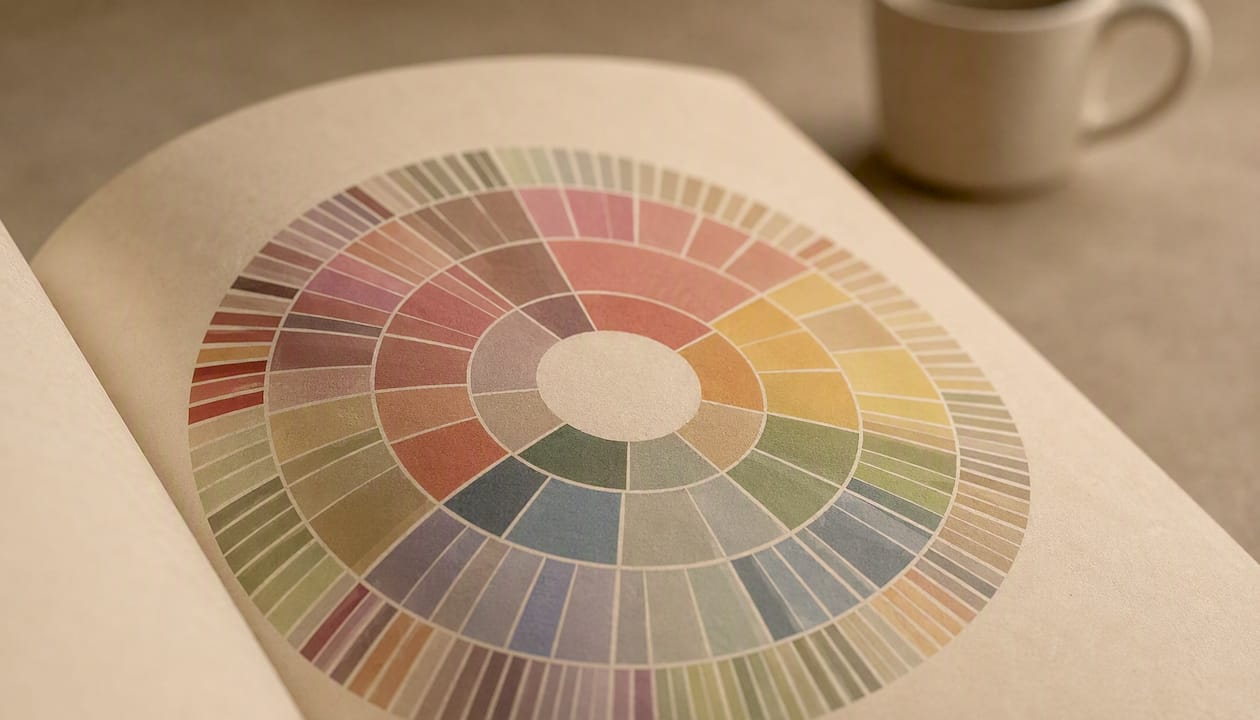
The jump from 9 broad categories to 25 subcategories to 61 outer descriptors is intentional. It mirrors how your nose actually works: you register a general impression first, then refine it if the aroma is strong and clear enough to support a specific claim. Some interactive versions of the wheel present a slightly different total (one popular interactive tool counts 95 notes across its three levels), which reflects edition differences rather than a wrong answer.
Colors and connected cells matter more than they first appear. Descriptors are grouped and color-coded by family, so a taster scanning the wheel can visually connect “orange” and “grapefruit” under citrus fruit, or “cinnamon” and “clove” under brown spice, without reading every label. Related cells cluster together, which speeds up recognition once you’ve used the wheel a handful of times.
- Inner ring: 9 broad categories (fruity, floral, roasted, and so on).
- Middle ring: 25 subcategories that narrow the family down.
- Outer ring: 61 specific descriptors for confident, precise notes.
How Do You Use the Coffee Aroma Wheel Step by Step?
Using the wheel is less about memorizing 61 words and more about training a sequence. Here’s the order that works, based on standard cupping protocol:
- Smell the dry grounds right after grinding, before any water touches them. This is your first impression, often dominated by roast character.
- Break the crust and smell the bloom once hot water hits the grounds. Aromas intensify and shift here, sometimes revealing fruit or floral notes the dry grounds hid.
- Slurp the coffee with force, spraying it across your palate to aerosolize aromatics and engage your retronasal sense of smell.
- Start at the wheel’s center. Ask yourself: is this fruity? Floral? Roasted? Pick the family that fits before anything else.
- Move outward only as far as your confidence allows. If “fruity” is clear but you can’t commit to “berry” versus “citrus,” that’s a legitimate stopping point.
- Record what you land on, even if it’s a middle-ring term. A confident subcategory beats a forced, wrong outer-ring guess.
Cupping professionals pair this sequence with a few habits worth borrowing: reset your palate with water or a neutral cracker between cups, taste two coffees side by side rather than in isolation, and keep a consistent water temperature so aroma volatility doesn’t skew your comparison.
- Cup, then bloom, then slurp, in that order.
- Broad first, specific only when the aroma clearly supports it.
- Compare two coffees together, not one coffee against memory.
Pro Tip: Keep a small aroma kit or even a handful of pantry references, cinnamon, dried apricot, dark chocolate, next to your cupping table. Smelling the real reference right before you smell the coffee dramatically speeds up how fast you can name what’s in the cup.
Where Does the Wheel’s Research Come From?
The original flavor wheel dates to 1995, built from early sensory research into how tasters describe coffee. The 2016 revision, developed with World Coffee Research, replaced looser, more subjective language with terms tied to defined sensory references.
That connection to WCR is what separates this wheel from a generic flavor chart. The WCR Sensory Lexicon identifies 110 flavor, aroma, and texture attributes, each backed by a physical reference sample a trained panel can smell or taste to calibrate intensity. The full Lexicon 2.0 documentation spells out exactly what “jasmine” or “musty” should smell like, down to the reference material used to train panelists.
The wheel gives you vocabulary. The lexicon gives you definitions and physical references, so two tasters using the word “jasmine” are actually smelling the same thing.
Professional cuppers use the lexicon less as bedtime reading and more as a calibration tool: smell the reference sample, then smell the coffee, then decide if the term genuinely applies. SCA licenses the wheel and related materials under Creative Commons for noncommercial use, and sells printed poster versions for anyone who wants a physical copy near their tasting station.
What Do Common Coffee Flavor Descriptors Actually Smell Like?
Descriptors only click once you’ve connected them to something you’ve actually smelled. Here are the clusters beginners run into most often, with a food-memory anchor for each.
- Floral: jasmine, bergamot, chamomile. Think of walking past a flowering shrub, light, fleeting, almost perfume-like. Common in washed East African coffees.
- Fruity: berry, citrus, stone fruit. A bright, sometimes tart intensity, closer to smelling a bowl of fresh raspberries than tasting jam.
- Roasted: caramel, toast, pipe tobacco. This is roast-driven rather than origin-driven; darker roasts push hard into this family regardless of where the bean grew.
- Nutty/cocoa: almond, hazelnut, dark chocolate. Common in Central American and Brazilian coffees, especially natural-processed lots.
- Spices: clove, cinnamon, black pepper. Usually a background note that adds complexity rather than dominating the cup.
- Sour/fermented: overripe, winey, alcohol/fermented. Can be a deliberate processing choice or a defect, context and intensity tell you which.
Origin and roast level bias which cluster you’ll land in most often. Light-roasted East African coffees, particularly from Ethiopia and Kenya, tend to skew floral and fruity because the process preserves volatile aromatics that darker roasting would burn off. If you want a practical reference point, coffees like an El Salvador Pacamara or a Uganda Bugisu sit at different points on this spectrum, giving you real contrast to practice against rather than abstract theory.
What Are the Wheel’s Limitations?
The wheel is a vocabulary aid, not a chemical analysis. Naming “blueberry” doesn’t mean a lab could isolate that compound in your cup, it means the aroma profile resembles blueberry closely enough for the term to communicate something useful to another taster.
The most common beginner mistake is forcing an outer-ring descriptor when a middle-ring or even inner-ring term is the honest answer. There’s no penalty for writing “fruity” instead of guessing wrong between “cherry” and “cranberry.” A second mistake is chasing exotic-sounding notes at the expense of noticing balance and structure, professional tasters consistently emphasize balance across sweetness, acidity, and body over any single flashy descriptor.
- Don’t force specificity the aroma doesn’t support.
- Balance matters more than an impressive-sounding note.
- Papery, musty, or chemical notes usually signal a defect, not a rare flavor. Stop and re-taste rather than trying to name it.
How Should You Practice With the Coffee Aroma Wheel?
Palate calibration is a skill you build in short, repeated sessions, not a single long study day. A simple four-week routine works better than sporadic effort:
- Week 1: Spend 10 minutes daily smelling everyday pantry items, cinnamon, orange peel, dark chocolate, and naming them out loud before checking the label. This builds raw aroma memory.
- Week 2: Compare two coffees side by side each session (same brew method, same water temperature) and pick just one wheel category for each. Don’t chase outer-ring precision yet.
- Week 3: Try aroma sniff pairs that are easy to confuse, lemon versus grapefruit, cinnamon versus clove, to sharpen discrimination between similar notes.
- Week 4: Run a roast-level comparison using the same origin at two roast levels, and track how roasted, nutty notes shift as fruity, floral ones fade.
Keep a simple tasting journal through all four weeks. Revisit the exact same coffee at the two-week mark and again at week four. Most beginners are surprised how much faster and more confident their descriptors get, even without any change in the coffee itself.
Pro Tip: A Coffee Lover Pack or similar multi-origin sampler is genuinely useful here, not just as a purchase, but because tasting genuinely different origins side by side accelerates the “aha” moments this practice depends on far more than sampling variations of the same bag.
Quick Cheat Sheet for Approaching Any Cup
Keep this taped near your grinder or cupping station:
- Smell the dry grounds first, before water touches them.
- Smell the bloom once hot water hits the coffee.
- Slurp hard to aerosolize aromatics across your palate.
- Start at the wheel’s center, then move outward only as far as confidence allows.
- Record broad-to-specific, and if in doubt, reset your palate with water and taste again.
A note on building your own palate
Learning the wheel changed how I taste coffee entirely, not because I memorized 61 words, but because pairing it with the WCR lexicon’s reference samples turned vague impressions into language I trusted. My go-to practice routine is embarrassingly simple: two cups, one wheel, ten quiet minutes. Rowst’s single-origin lots make good training partners precisely because their differences are pronounced enough to actually taste.
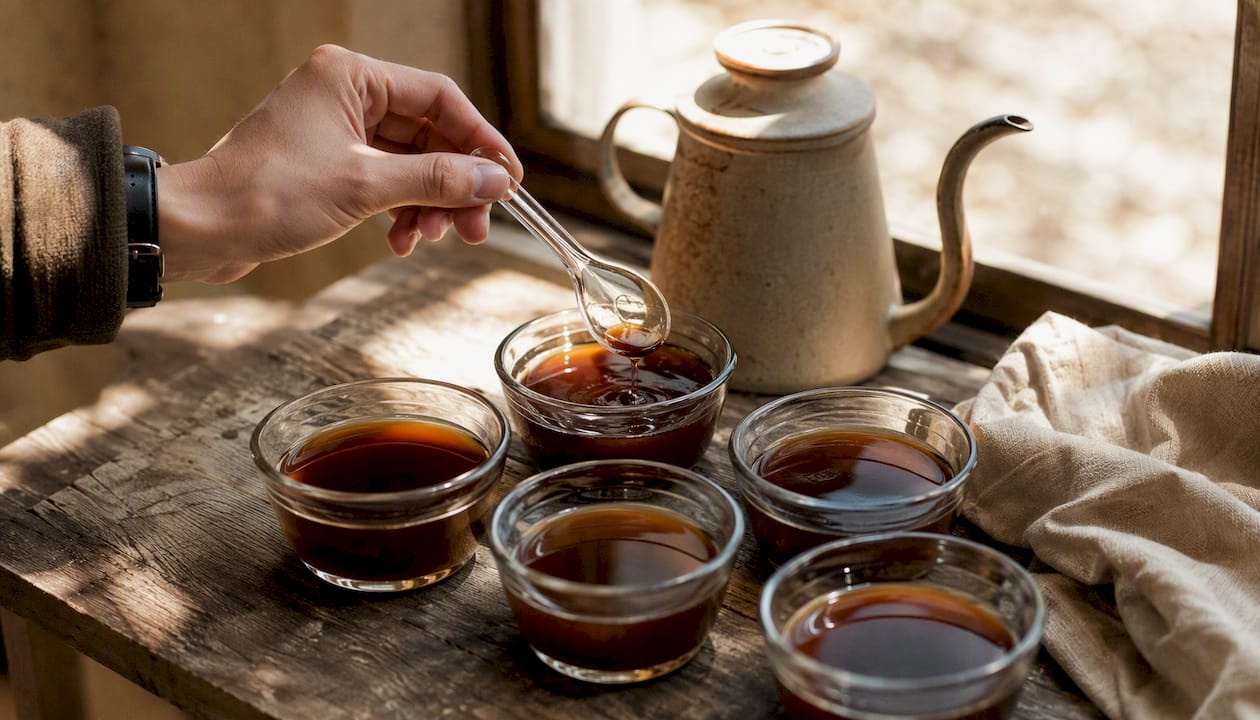
Practice the Wheel With Coffee Worth Tasting
Reading about descriptors only gets you so far. Real progress happens when you have distinct, high-quality coffees to compare side by side, and that’s exactly where Rowst fits into your practice routine. Because Rowst sources single-origin lots directly from small-scale producers in places like Uganda, El Salvador, and Mexico, the flavor contrasts between bags are pronounced enough to actually train your palate against, not subtle variations that leave you guessing.
The Coffee Lover Pack is built for exactly this kind of comparative tasting, giving you several distinct origins in one order instead of committing to a single bag. If you’d rather start smaller, the Discovery Pack offers a lower-commitment way to get two or three contrasting coffees on your table this week. Either way, pull up the wheel, brew both, and start at the center.
Frequently Asked Questions
What is the coffee aroma wheel used for? It gives tasters a shared, standardized vocabulary for describing aromas and flavors in coffee, moving from broad categories like “fruity” to specific descriptors like “blackberry” so notes mean the same thing to everyone using the wheel.
Is the coffee aroma wheel the same as the coffee flavor wheel? Yes, they refer to the same SCA-developed tool, officially called the Coffee Taster’s Flavor Wheel. “Aroma wheel” and “flavor wheel” are used interchangeably by most tasters and roasters.
Do I need special training to use the wheel? No. Beginners can start immediately by smelling a cup and picking the broadest matching category. Precision with outer-ring descriptors improves naturally with the kind of short, repeated practice sessions outlined above.
Why can’t I identify specific notes like professional tasters do? Palate calibration takes repetition, not natural talent. Professionals have simply logged more hours smelling reference samples and comparing coffees side by side, which is exactly what a structured practice routine helps you build.
What should I do if two descriptors seem equally accurate? Record both, or default to the broader shared category. Overlapping notes are normal, especially with complex, naturally processed coffees, and forcing a single answer is less useful than an honest, slightly broader one.