

Coffee Terroir: What's Really in Your Cup
Coffee terroir is the combined sensory signature of a single-origin cup shaped by where the coffee grew, which variety was planted, how the farm was managed, and how the cherries were processed after harvest. Three things are worth knowing right away: altitude and microclimate directly alter the bean’s chemistry; post-harvest processing can amplify or even override those environmental signals; and detecting terroir reliably requires a medium-light roast and a standardized cupping approach, as recommended by peer-reviewed research and the World Coffee Research lexicon.
The concept borrows from wine, where terroir describes the taste of a place. Coffee extends it further. Unlike a grape that goes from vine to bottle with minimal transformation, a coffee cherry travels through fermentation, drying, milling, roasting, and brewing before it reaches your cup. Each step can sharpen or blur the origin’s character. Understanding that chain is what separates a curious coffee drinker from one who truly tastes where their coffee came from.
Key Takeaways
Coffee terroir is multi-factorial: altitude and microclimate shape the bean’s chemistry, but processing method and microbial community can amplify or redirect those signals just as powerfully.
| Point | Details |
|---|---|
| Terroir is environmental and process-driven | Place, variety, agronomy, and post-harvest processing all contribute to the final cup character. |
| Altitude shifts bean chemistry | Higher elevation tends to increase sucrose and reduce chlorogenic acids, producing brighter, sweeter profiles. |
| Processing can override origin signals | Natural and anaerobic methods introduce fermentation-driven flavors that can outweigh environmental terroir. |
| Standardized cupping reveals terroir | Medium-light roast, consistent grind, and the WCR sensory lexicon are the tools that make terroir comparison reliable. |
| Rowst for terroir exploration | Rowst’s single-origin micro-lots with full traceability and roast-date transparency are built for side-by-side tasting. |
Table of Contents
- What makes up coffee terroir?
- Why coffee terroir differs from wine — and why processing matters so much
- How researchers and the industry measure terroir
- What the research actually shows about altitude, soil, and processing
- How to taste terroir in the cup at home
- How to find coffees that actually show terroir
- Common misconceptions and the limits of terroir claims
- Terroir as a practice, not just a concept
- Rowst single-origin coffees for terroir exploration
- Sources
What makes up coffee terroir?
Food science research confirms that pedo-climatic conditions and agronomic choices together drive the phytochemical and sensory differences we call terroir. The main drivers fall into two groups.
Environmental factors:
- Altitude: Cooler temperatures at elevation slow cherry ripening, giving the bean more time to accumulate sucrose and aromatic precursors. Higher-altitude coffees tend toward brighter acidity and greater sweetness.
- Temperature and diurnal range: Wide day-to-night swings stress the plant beneficially, concentrating sugars and organic acids.
- Rainfall and dry season: Timing and duration shape cherry development and sugar accumulation.
- Soil type and mineral content: Volcanic soils common in Central America and East Africa offer high mineral availability and good drainage, both linked to cup complexity.
- Slope and aspect: Research in Brazil found that morning versus afternoon sun exposure on different slopes produced measurably different quality outcomes at the same altitude. A plot facing east and catching early light can yield a cup that differs noticeably from a west-facing neighbor on the same farm.
- Shade and microclimate: Shade trees regulate temperature and humidity at the canopy level, creating micro-environments that affect ripening pace and pest pressure.
Varietal and agronomic factors:
- Coffee species and variety: Arabica varieties like Gesha, Bourbon, and Pacamara each carry distinct genetic flavor potential. Variety selection is arguably the single most controllable terroir variable a farmer holds.
- Pruning and planting density: Dense planting increases competition for nutrients; strategic pruning concentrates the plant’s energy into fewer, better-developed cherries.
- Fertilization: Organic versus synthetic inputs affect soil microbiology and, indirectly, root uptake and bean chemistry.
Pro Tip: When reading a bag label, altitude and lot name together tell you more than either alone. A high altitude on a micro-lot from a named farm plot is a meaningful terroir signal. The same altitude listed on a commercial blend is not.
Why coffee terroir differs from wine — and why processing matters so much
Wine’s terroir story ends largely in the vineyard. Coffee’s does not. The post-harvest stage introduces variables that have no equivalent in winemaking, and they can be decisive.
The four main processing methods each leave a distinct chemical fingerprint:
- Washed (wet): The fruit is removed before drying, which tends to preserve the bean’s intrinsic environmental character. Washed coffees often read as cleaner and more transparent to origin.
- Natural (dry): Cherries dry whole, allowing the fruit’s sugars and microbes to ferment against the bean. The result is typically fuller body and intense fruit notes that can mask subtler terroir signals.
- Honey: A middle path where varying amounts of mucilage remain during drying, producing a spectrum of sweetness and body.
- Anaerobic: Controlled oxygen-free fermentation amplifies specific metabolites, often producing wine-like or tropical notes that are primarily process-driven rather than place-driven.
The microbial dimension adds another layer. Research on fermentation microbiology shows that yeast and bacteria communities vary by altitude and location, producing different fermentation metabolites that persist into the green bean and alter roast chemistry. A farm’s microbial population is, in a real sense, part of its terroir.
Processing choices are a dominant flavor driver, and terroir should be viewed as including local processing traditions and human practice. The wine model risks oversimplification when applied to coffee because the production chain is far longer and each step introduces new variables. — Perfect Daily Grind
Consider a single farm in Ethiopia producing both a washed and a natural lot from the same harvest. The washed version might express the farm’s altitude-driven florality and citrus acidity. The natural from the same trees could taste like blueberry jam. Same place, same variety, same season — two very different cups. Processing did not erase terroir; it redirected it.
How researchers and the industry measure terroir
Isolating terroir from the noise of roast variation, brew method, and bean age requires strict controls. The PMC review on coffee terroir assessment recommends the following standards:
- Standardized roast level: Medium-light, typically targeting an Agtron score in the 55–65 range on the SCA color scale. Darker roasts suppress origin-specific volatiles and make terroir comparison unreliable.
- Controlled roast date: Evaluate within a defined window after roasting, usually 7–21 days, to avoid freshness as a confounder.
- Single-origin sampling: One lot per farm or plot, not blended across farms or harvest dates.
- Standardized grind and brew: Consistent grind size and brew recipe (water temperature, ratio, contact time) across all samples being compared.
- Sensory panel with WCR lexicon: Trained cuppers using the World Coffee Research sensory lexicon and SCA scoring protocol to describe and score attributes like acidity, sweetness, body, and aroma.
Modern instrumental analysis adds a cross-check. Volatile compound profiling and biochemical marker analysis can identify origin-linked chemical signatures that validate what sensory panels detect, particularly useful when sensory results are ambiguous.
A practical terroir-cupping checklist:
- Use the same roaster and roast level for both coffees
- Cup within the same roast-date window
- Use identical grind settings and brew recipe
- Taste blind when possible
- Note acidity quality (brightness, type), sweetness, body, and specific aroma descriptors
- Record whether unusual notes (intense tropical fruit, wine-like ferment) might be processing-driven
What the research actually shows about altitude, soil, and processing
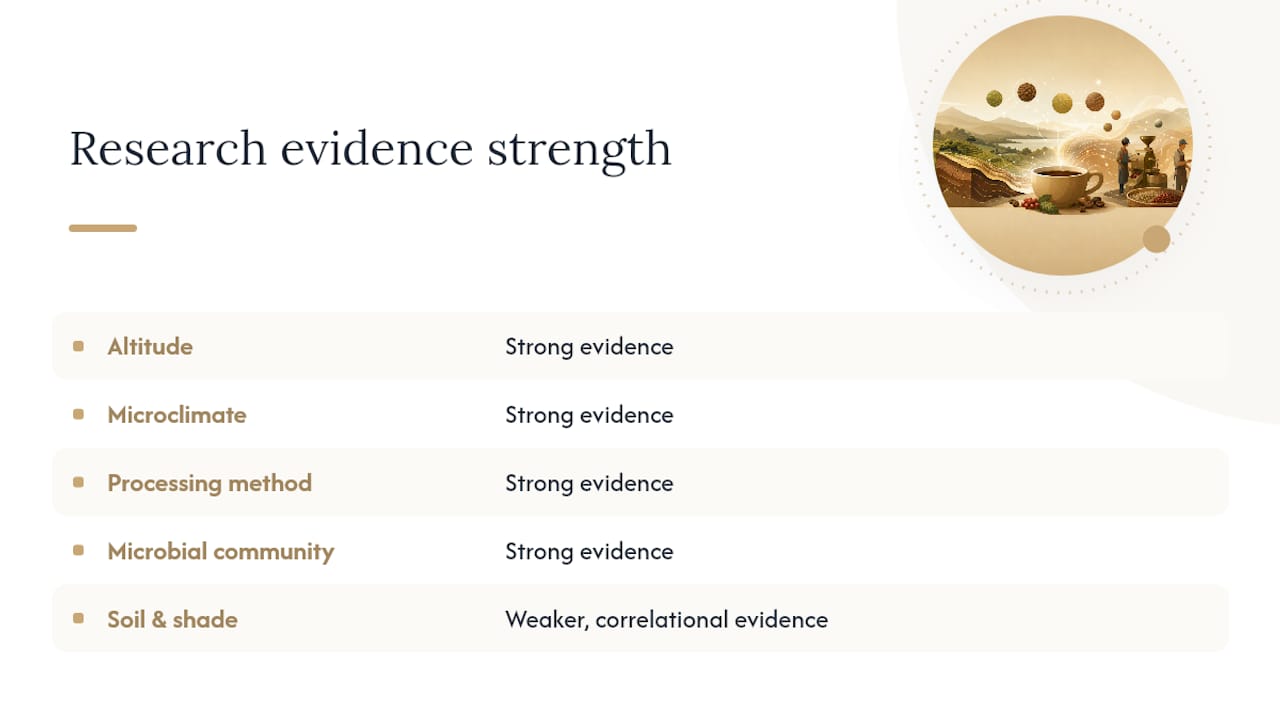
The evidence base for coffee terroir is strongest around altitude and microclimate, more mixed on specific soil-to-flavor links.
A study on Pu’er coffee found altitude-linked shifts in volatile compounds and flavor precursors, with higher-elevation samples showing increased aldehydes and fatty-acid precursors alongside higher cupping scores for aroma and flavor. Research from southwestern Ethiopia documented that caffeine and chlorogenic acids declined with altitude while sucrose increased, with wet-processed beans showing stronger sucrose gains at elevation. These biochemical shifts translate directly into the sensory profile: lower chlorogenic acids mean less perceived bitterness; higher sucrose contributes to sweetness and caramelization potential during roasting.
Altitude effects interact with factors like shade, processing method, and slope exposure to shape the final biochemical profile. A high-altitude coffee processed naturally will express terroir differently than the same altitude processed washed.
The solar radiation and slope study reinforces this complexity. Morning sun exposure on east-facing slopes produced different quality associations than afternoon sun on west-facing ones, even at comparable altitudes. Micro-terroir at the plot level can be decisive.
Where evidence remains thinner: direct links between specific soil minerals and identifiable cup flavors are correlational and difficult to isolate from varietal and processing effects. The claim that “volcanic soil tastes like X” is plausible but not yet consistently demonstrated in controlled studies.
Strongest evidence: altitude, microclimate, processing method, microbial community. Weaker or more correlational: specific soil mineral-to-flavor pathways, shade alone without altitude interaction.
How to taste terroir in the cup at home
A repeatable home protocol makes terroir comparison meaningful rather than impressionistic.
- Select two single-origin coffees from different altitudes or regions, both medium-light roasted, both within 14 days of roast date.
- Use the same grinder setting for both, targeting a medium-coarse grind for pour-over or a medium grind for cupping.
- Brew with water at 200°F using a consistent ratio (1:15 coffee to water by weight works well for comparison).
- Taste in the same order each time: aroma dry, aroma wet, slurp at 160°F, slurp at 130°F, finish at room temperature.
- Note four attributes: acidity (bright/soft/citrus/malic), sweetness (caramel/fruit/floral), body (light/syrupy/round), and aroma (floral/nutty/fruity/earthy).
- Flag processing suspects: intense tropical fruit, wine-like ferment, or boozy notes often signal processing influence rather than environmental origin. Clean, floral, or tea-like notes tend to reflect the place more directly.
Buying checklist for terroir-expressive coffees:
- Single-origin, ideally micro-lot or estate
- Named altitude (ideally above 1,400 masl for Arabica)
- Specific processing method listed
- Roast date on the bag (not just “best by”)
- Medium-light roast level
Pro Tip: Dense beans with closed or zig-zag fissures are a physical sign of slow, high-altitude ripening. If you buy whole bean, look at the center cut before grinding. It’s a quick, tactile proxy for terroir quality.
How to find coffees that actually show terroir
Roaster transparency is the single most reliable predictor of terroir expression in your cup. A bag that lists country, region, farm name, altitude, variety, and processing method gives you everything you need to form a hypothesis before you brew.
Questions worth asking your roaster or vendor:
- Which farm or cooperative did this lot come from, and at what altitude?
- Was it processed on-farm or at a centralized mill?
- What variety is it, and was it sorted as a single-variety lot?
- What roast level did you target, and what was the roast date?
What to look for on the bag:
- Micro-lot or estate designation: Signals plot-level traceability, which is where micro-terroir differences live.
- Named altitude: Specific elevation (e.g., 1,750 masl) is more meaningful than a regional range.
- Processing method: Washed lots tend to express environmental terroir most transparently.
- Roast date: Freshness matters. Terroir-linked volatiles degrade with time.
For regional expectations: East African origins (Ethiopia, Uganda) often express floral and fruit-forward profiles tied to high altitude and heirloom genetics. Central American origins (El Salvador, Guatemala, Mexico) tend toward balanced sweetness and nut or chocolate notes at mid-to-high altitudes. These are tendencies, not guarantees.
Pro Tip: You do not need to spend top dollar to explore terroir. A $20 micro-lot with full traceability will teach you more about place than a $40 blend with no origin detail. Prioritize information over price when building a tasting rotation.
Common misconceptions and the limits of terroir claims
Terroir has become a marketing word, and that creates real confusion.
Myths worth correcting:
- “High altitude always means better coffee.” Altitude is one variable among many. A poorly processed high-altitude lot can easily underperform a well-handled mid-altitude one.
- “Single-origin means terroir-expressive.” Single-origin only means one country or region. A single-origin blend across multiple farms or harvest dates can obscure plot-level terroir entirely.
- “The flavor note on the bag is the terroir.” Flavor descriptors are a roaster’s sensory interpretation, not a chemical measurement. They reflect roast profile, freshness, and brew method as much as origin.
- “Terroir is stable year to year.” Seasonal variation in rainfall and temperature means the same farm can produce noticeably different cups across harvests.
Real confounders to watch for:
- Dark roast profiles suppress origin-specific volatiles and make terroir comparison meaningless.
- Blending across farms or harvest dates averages out distinctive signals.
- Stale beans lose volatile compounds that carry terroir character.
- Brew method and water chemistry can amplify or suppress specific flavor attributes independent of origin.
A terroir claim is most trustworthy when it comes with micro-lot traceability, on-farm or single-mill processing, an independent cupping score, and a medium-light roast. Without those anchors, “terroir” on a bag is atmosphere, not evidence.
Terroir as a practice, not just a concept
The most useful shift in how I think about coffee terroir came from treating it as a question to ask of every cup rather than a quality stamp to look for on a label. The science is clear that altitude, microclimate, variety, and processing all leave measurable traces in the bean. What the research also shows is that no single variable tells the whole story. A coffee from 1,900 masl processed naturally and roasted dark has had its terroir story rewritten at least twice before it reaches you.
What changed my buying habits was building a small, focused rotation: three micro-lots across different altitude bands, all washed, all medium-light roasted within the same two-week window. That constraint removes most of the confounders and lets the place speak. The differences are often subtle at first, then suddenly obvious. A Ugandan lot from the Bugisu slopes tastes nothing like an El Salvador Pacamara from the Apaneca highlands, and once you’ve tasted them side by side under controlled conditions, you understand why altitude and variety together are the most legible parts of terroir.
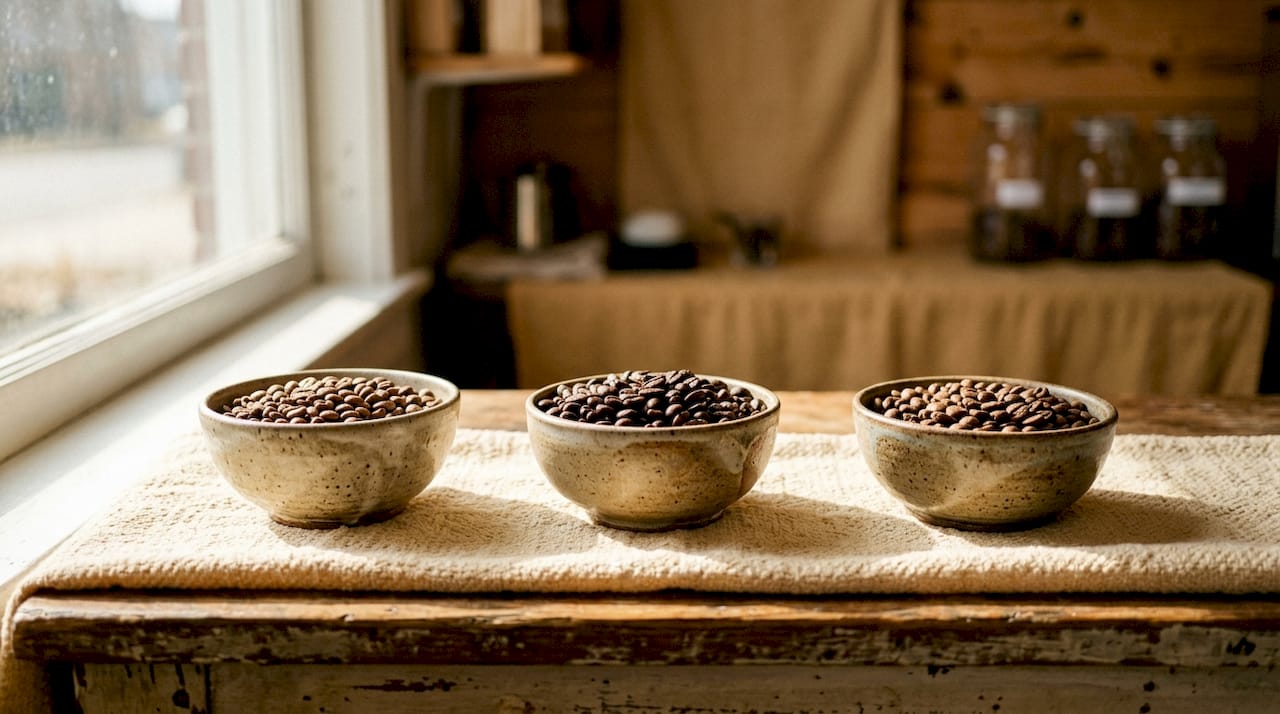
The practical wisdom here is patience. Terroir is not a single dramatic revelation. It’s a cumulative literacy built cup by cup.
Rowst single-origin coffees for terroir exploration
For anyone ready to put this knowledge to work, Rowst offers a direct path. Rowst sources single-origin specialty coffees directly from small-scale producers in Uganda, El Salvador, and Mexico, with full traceability and transparent processing information on every product page. No intermediaries, no blending across farms.
The Coffee Lover Pack is the clearest starting point for terroir comparison: it brings together multiple single-origin lots so you can taste regional and processing differences side by side. If you want to go deeper on a specific origin, the El Salvador Pacamara showcases a high-altitude varietal with exceptional genetic flavor potential, while the Mexico Veracruz offers a contrasting regional expression. Every Rowst coffee ships with roast-date information so you can plan your tasting window. Browse the full selection at Rowst and choose your first terroir comparison.
Sources
- Does Coffee Have Terroir and How Should It Be Assessed? - PMC
- Microbial communities and coffee fermentation (Frontiers in Microbiology)
- Effect of altitude and shade on biochemical composition of green Arabica coffee beans (PubMed)
- Association of altitude and solar radiation to understand coffee quality (MDPI - Agronomy)
- What Is Terroir and How Does It Affect Your Coffee? - Perfect Daily Grind
- World Coffee Research - Programs
- Cultivating coffee quality—terroir and agro-ecosystem (ScienceDirect book chapter)