

Taste the Altitude Effect: Coffee Varietals for Roasters and Buyers
Coffee varietals are named cultivated lines of Coffea whose genetics, origin, and growth habit strongly affect both how a plant is farmed and what its beans taste like once roasted. A Bourbon and a Caturra grown on the same hillside can produce distinctly different cups, because varietal governs bean density, sugar content, and disease resistance long before a roaster ever gets involved. What follows covers the major cultivars, the science behind their differences, and how to use that knowledge at the point of purchase.
TL;DR:
- The genetic lineage of coffee varietals influences traits like bean density, sugar content, and disease resistance, which impact the flavor and farm management.
- Bourbon and Typica are the foundational lines, with Bourbon offering higher yields and sweetness, but both lack significant disease resistance, leading to extensive breeding efforts.
- Notable specialty varietals such as Geisha, Pacamara, and SL28 are often cultivated at high elevations and are more fragile, requiring careful handling and specific processing to realize their full potential.
- Roasters adjust their profiles based on varietal density, raising temperatures for dense beans like Bourbon and using gentler approaches for larger, airy beans like Pacamara.
- Consumers should prioritize origin, altitude, and processing details over varietal name alone to accurately assess quality potential and flavor authenticity.
Table of Contents
- What Does “Coffee Varietal” Actually Mean?
- Why Do Typica and Bourbon Matter So Much?
- What Are the Most Notable Coffee Varietals to Know?
- How Does Varietal Shape Roasting and Tasting?
- Why Do Some Varietals Stay Rare While Others Go Commercial?
- How Should You Choose Varietal-Labeled Coffee?
- Where Can You Verify Varietal Claims and Sourcing?
- What Most Buying Guides Get Wrong About Varietal
- Taste the Varietal Story in Every Cup
- Sources
What Does “Coffee Varietal” Actually Mean?
Coffee people throw around “varietal,” “cultivar,” and “species” almost interchangeably, but they describe different levels of the same family tree. Species is the broadest category. Cultivar is the correct botanical term for a cultivated variant bred or selected for specific traits, though the coffee trade calls these same plants “varietals” on menus and bags. We’ll use “varietal” throughout, since that’s the term you’ll see on packaging, while noting that “cultivar” is the more precise word researchers and catalogs prefer.
The species split matters more than most buyers realize:
- Arabica (Coffea arabica) accounts for the bulk of specialty coffee, offers more complex acidity and aromatics, and is genetically self-fertile, which makes it easier to track lineage through named varietals.
- Robusta (Coffea canephora) grows at lower altitudes, resists leaf rust far better, delivers roughly double the caffeine, and tends toward a heavier, more bitter cup used mainly in blends and instant coffee. Rowst covers the deeper mechanics of this split in its guide to Arabica versus Robusta.
- Nearly every specialty varietal you’ll encounter, Bourbon, Typica, Caturra, Geisha, traces back to Arabica, organized into genetic families that catalogs use to group related mutations and crosses.
That family-tree framing, rather than a flat alphabetical list, is why serious varietal guides organize cultivars by lineage instead of treating each name as an isolated curiosity.
Why Do Typica and Bourbon Matter So Much?
Almost every celebrated specialty varietal on the market today descends from one of two source lines: Typica or Bourbon. Typica traveled from Yemen to Java in the early 1700s and then to the Americas, carrying the narrow, elongated bean shape and delicate, tea-like sweetness that became the reference point for “classic” Arabica character. Bourbon emerged from a separate transplanting to Réunion (once called Bourbon Island), and it became the more productive of the two.
Bourbon yields more than Typica, a gap significant enough that it reshaped which varietal farmers preferred once yield started competing with tradition, according to the Bourbon coffee variety’s history. That productivity edge, paired with a naturally dense bean and pronounced sweetness, made Bourbon the parent of an entire branch of the coffee family tree.
The descendants tell the story of how farmers kept chasing better trade-offs:
- Caturra — a natural dwarf mutation of Bourbon discovered in Brazil, valued for compact growth and easier harvesting on hillside farms.
- Pacas — a Bourbon mutation found in El Salvador, similarly compact, later used as a parent for hybrids bred for size and cup quality.
- Mundo Novo — a natural cross between Typica and Bourbon, combining Typica’s cup quality with more vigor and yield.
- Caturra and Catuai crosses — Catuai itself is a Mundo Novo and Caturra cross, engineered for wind resistance and heavy bearing on smaller trees.
Both foundational lines share a reputation for cup clarity over sheer punch: sweet, balanced, often floral or nutty depending on origin, without the wilder fruit notes bred into some newer hybrids. Their fragility is the trade-off. Neither Typica nor Bourbon carries meaningful resistance to leaf rust or coffee berry disease, which is precisely why breeders spent decades crossing them with hardier, if less refined, lines.
What Are the Most Notable Coffee Varietals to Know?
Once you’re past the foundational lines, the varietal names on specialty bags start multiplying fast. Here’s what you’re actually buying when you see these on a label.
Caturra shows up constantly across Central and South America because its dwarf stature makes dense planting and hand-harvesting manageable. The cup tends toward bright acidity with a lighter body than Bourbon, and it’s firmly a specialty-to-mid-grade varietal depending on altitude and processing.
Catuai is the workhorse cross bred for wind tolerance and consistent bearing, common in Brazil and Central America. It’s less prized for standalone cup character than Caturra or Bourbon, and it more often ends up in solid, dependable blends than in single-varietal showcases.
Pacamara is where things get interesting. Bred in El Salvador by crossing Pacas and Maragogipe, it produces some of the largest Arabica beans grown anywhere and regularly places in Cup of Excellence competitions. Developing it took several decades of selective breeding before it reached commercial release, and even now it’s agronomically unstable, meaning offspring don’t always breed true, according to World Coffee Research’s variety page. Growers concentrate it at higher altitudes in El Salvador, Honduras, Guatemala, and Nicaragua, generally between 1,300 and 1,800 meters, and lean on selective picking to hit the cup scores that justify the extra care, per Roastopedia’s Pacamara profile. Rowst sources a version of this exact varietal from El Salvador, and its Pacamara lot shows what that combination of size and clarity tastes like in the cup.
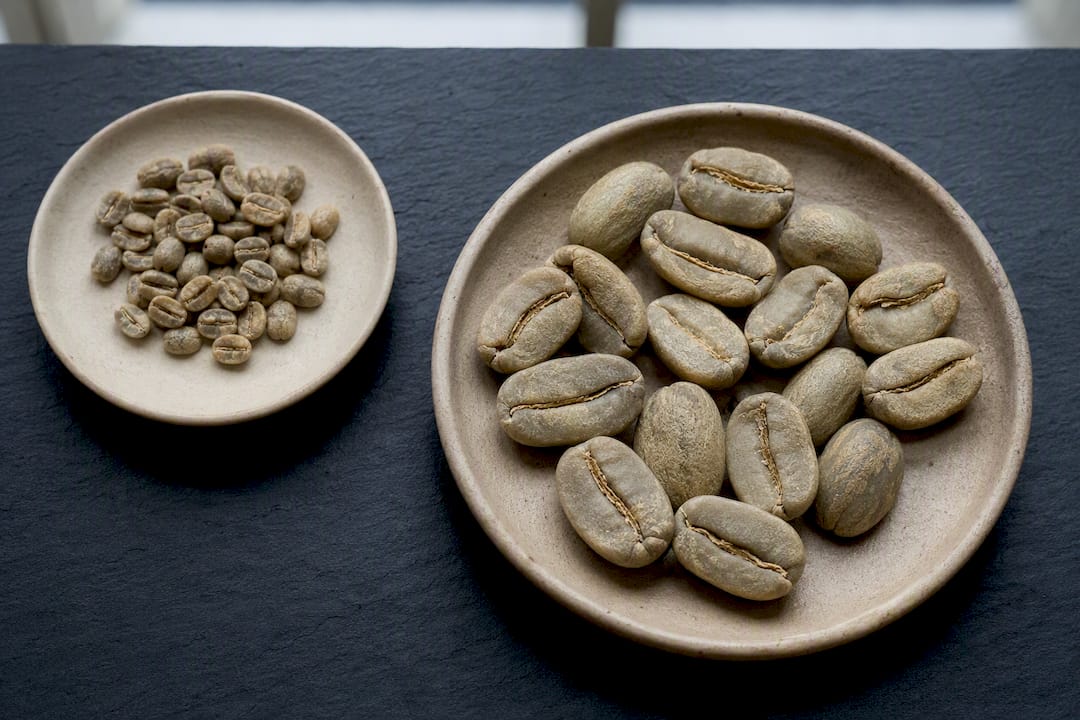
Geisha (Gesha) originated in Ethiopia and became specialty coffee’s most expensive varietal after Panamanian producers put it on the map at Best of Panama auctions, prized for jasmine-like florals and a tea-like, almost delicate body, per the Wikipedia varietal index. It’s now grown selectively in Colombia and Costa Rica as well, always in small volumes because yields are low and management costs are high.
Maragogipe is a giant-leaf Typica mutation, prized mostly for its enormous bean size rather than exceptional cup complexity on its own; it matters more as a genetic parent (see Pacamara) than as a standalone star.
Mundo Novo and its dwarf relative round out Brazil’s commercial backbone, chosen for vigor over standout cup scores.
SL28 and SL34 are Kenyan selections bred for cup quality, not disease resistance. SL28 handles drought better and tends toward blackcurrant and citrus intensity; SL34 performs better in wetter climates with a slightly softer, winey profile. Neither resists common leaf diseases well, according to the Wikipedia list of coffee varieties.
Starmaya is a newer F1 hybrid bred for both quality and cost-effective propagation via seed rather than expensive cuttings, aimed at smallholders who need resilience without sacrificing cup score.
Kona technically refers to Typica grown in Hawaii’s Kona district, prized for smooth, low-acid balance and commanding premium prices almost entirely on geographic scarcity rather than genetic novelty.
Pro Tip: When a bag lists SL28 or Geisha but no processing method, ask the roaster directly. Varietal sets the potential; processing and altitude decide how much of that potential actually makes it into your cup.
How Does Varietal Shape Roasting and Tasting?
Bean density and sugar content, both varietal-driven traits, determine how a roaster should approach the roast curve. Dense beans, the kind you get from Bourbon and its close relatives, resist heat transfer more than loosely packed, low-density beans, so an identical roast profile applied to two different varietals can produce wildly different results.
Roasters typically raise charge temperature and shorten development time on dense Bourbon-type beans, protecting delicate floral and fruit notes while still coaxing out full sweetness and body, according to Perfect Daily Grind’s Bourbon guide for producers and roasters. Large, low-density varietals like Maragogipe and Pacamara demand the opposite instinct: because the beans are big but comparatively airy, they can look underdeveloped on the outside while scorching on the inside if roasted too aggressively.
A few practical adjustments follow directly from this:
- Dense varietals (Bourbon, SL28) often benefit from a slightly higher charge temperature and a shorter, more controlled development phase.
- Large, low-density varietals (Maragogipe, Pacamara) need a gentler ramp to avoid a scorched exterior with a raw center.
- Brewing dense, sweet varietals with a slightly finer grind and shorter contact time tends to preserve clarity; looser, larger beans often benefit from coarser grinds that avoid over-extracting bitterness.
Varietal is a starting point, not a guarantee. Processing method and terroir frequently move the cup further than genetics alone, which is exactly why the strongest roasters pair varietal information with origin and process details rather than treating the varietal name as the whole story, per Perfect Daily Grind’s own reporting. Two Caturra lots from different farms can taste nothing alike once one is washed and the other naturally processed.
Why Do Some Varietals Stay Rare While Others Go Commercial?
Breeding a new coffee hybrid is a multi-generational project, and the industry’s terminology reflects that patience. An F1 hybrid is a first-generation cross between two distinct parent lines, often bred deliberately to combine one parent’s disease resistance with another’s cup quality. An introgressed line carries genes transferred from a resistant wild relative, usually Robusta or Timor Hybrid, into an Arabica background to fight leaf rust or coffee berry disease. “Stabilizing” a hybrid means selecting successive generations until offspring reliably resemble the parent, since many F1 crosses show phenotypic segregation, meaning siblings from the same seed batch can look and perform differently.
Pacamara is the textbook case: it took roughly three decades of selective breeding before it was stable enough for commercial release, and nurseries still have to rogue out undesirable plants during propagation to keep quality consistent, according to Perfect Daily Grind’s interview on Pacamara’s development.
That patience explains the market split you see on shelves:
- Disease-resistant, high-yield lines (Catuai, Mundo Novo, introgressed hybrids) dominate commodity and mid-grade markets because farmers need reliable income more than a competition-winning cup.
- Fragile, high-maintenance lines (Pacamara, Geisha, SL28) stay specialty-only because low yields and intensive care make them uneconomic to plant at scale, a pattern Roastopedia documents clearly in its coverage of smallholder Pacamara plots.
Rust and coffee berry disease can wipe out an entire hillside of Typica or Bourbon in a single bad season, which is exactly why so much modern breeding work sacrifices a little cup complexity for a plant that survives to harvest at all.
How Should You Choose Varietal-Labeled Coffee?
Reading a bag intelligently means checking a handful of fields together, not seizing on the varietal name alone.
- Origin and altitude. Higher elevations generally slow cherry maturation and concentrate sugars, so a Caturra grown at 1,800 meters usually outperforms the same varietal grown at 1,000.
- Varietal name. Look for it printed plainly. If it’s absent, ask; reputable specialty roasters know their lots down to the varietal.
- Processing method. Washed, natural, or honey processing shifts acidity, body, and fruit character more than varietal alone.
- Roast date. Anything more than a few weeks past roasting is losing the aromatics varietal is supposed to deliver.
- Roaster’s tasting notes. Cross-reference them against known varietal traits (florals for Geisha, winey depth for SL34) to judge whether the description is earned or generic marketing.
Pro Tip: If a bag lists only “Arabica blend” with no varietal or origin, treat it as a commodity-grade product regardless of price. Specialty roasters who paid a premium for a distinct varietal almost always say so.
For everyday drinking, blended or commodity-leaning offerings are perfectly reasonable. When you want to taste what genetics and terroir actually contribute, reach for single-varietal, single-origin lots and use Rowst’s flavor notes guide to calibrate what you’re tasting against what the label promises.
Where Can You Verify Varietal Claims and Sourcing?
Rowst builds its sourcing relationships directly with small-scale producers across regions like Uganda, El Salvador, and Mexico, cutting out intermediaries so the varietal and processing details on a bag actually reflect the farm they came from. That direct relationship is what lets a claim like “Pacamara from El Salvador, grown above 1,300 meters” mean something concrete rather than marketing language.
For deeper study beyond any single roaster’s notes:
- World Coffee Research’s catalog groups varieties by genetic family and reports real agronomic trial data across multiple growing sites, useful when a varietal’s reputation needs checking against local performance.
- The Wikipedia list of coffee varieties offers a broad index of dozens of cultivars, their origins, and known disease susceptibilities, a solid starting point before narrowing to specific catalogs.
Local trial data matters because a varietal’s global reputation doesn’t guarantee it performs the same way on your farm or in your region. Rust races and microclimates differ enough that WCR’s own catalog emphasizes site-specific results over blanket claims.
What Most Buying Guides Get Wrong About Varietal
Most coffee content treats varietal like a flavor guarantee: pick Geisha, get florals; pick Bourbon, get sweetness. The reasoning behind Pacamara’s three-decade path to stability tells a more honest story. Genetics set potential and set risk, disease vulnerability, yield ceiling, bean uniformity, but processing, altitude, and farm management decide how much of that potential survives to your cup.
The conventional advice to “just buy the varietal you liked before” falls apart once you realize the same varietal name can span wildly different quality tiers depending on where and how it was grown. A Caturra from a well-managed 1,800 meter farm in Colombia and a Caturra from a stressed, lower-altitude plot are not comparable products, even with identical labels.
If you’re prioritizing anything, prioritize origin and processing transparency over the varietal name alone. Varietal tells you what a bean is capable of. It’s the farm-level decisions, altitude, picking selectivity, processing care, that tell you whether that capability actually made it into the bag.
— Diego
Taste the Varietal Story in Every Cup
Rowst exists for exactly the reader who just finished this article: someone who wants to taste the difference between a Pacamara and a Bourbon, not just read about it. Because Rowst builds direct relationships with small-scale producers in Uganda, El Salvador, and Mexico, every bag carries real varietal and altitude information, not vague marketing copy, and every purchase pays the farmers who selected and sorted those beans fairly.
If the Pacamara profile above caught your attention, Rowst’s single-origin specialty coffee collection is the place to taste it directly, alongside other varietal-specific lots chosen for cup clarity rather than shelf appeal. Browse the collection, pick a varietal you’ve never tried, and see what genetics and terroir actually taste like when the sourcing is transparent from farm to cup.
Sources
- Pacamara — World Coffee Research variety page
- Bourbon coffee variety guide for producers and roasters — Perfect Daily Grind