

Coffee Grading Explained: What Buyers and Roasters Need to Know
A coffee grade communicates the physical quality of a green lot, not how it tastes. When you read “Grade 1” or “NY2” on a spec sheet, you are looking at a standardized description of defect tolerance, bean size, moisture content, and preparation cleanliness. Taste lives elsewhere, in a cupping score.
The three axes that define most grading systems:
- Defect count — how many flawed beans appear in a 300 g sample (primary defects like black beans or stones, secondary defects like partial blacks or broken beans)
- Screen size — the physical diameter of the bean, measured in 1/64-inch increments, which affects roast uniformity
- SCA cupping score — a sensory evaluation on a 100-point scale where 80+ qualifies as specialty
These axes interact but do not replace each other. A lot can pass physical grading with zero primary defects and still cup at 78 points. Conversely, a high-scoring cup can come from a lot with minor secondary defects. Always request both the physical grade certificate and an SCA or Q Grader cupping score before committing to a purchase.
Key Takeaways
Coffee grading measures physical lot quality through defect count, screen size, and moisture, while specialty status requires a verified SCA cupping score of 80 or above.
| Point | Details |
|---|---|
| Grade measures physical quality | Defect count, screen size, and moisture are graded; flavor is not captured by grade alone. |
| Specialty threshold is 80+ SCA points | No primary defects and a very low number of full defects in a 300 g sample are also required for specialty classification. |
| No universal grading system exists | Brazil, Ethiopia, Kenya, Indonesia, and Colombia each use different criteria and label conventions. |
| Always request both documents | Ask for the defect certificate and a verified SCA or Q Grader cupping score before purchasing any lot. |
| Rowst discloses both grade and cup score | Every Rowst lot is selected for low defect values and a confirmed cupping score, removing the guesswork from specialty sourcing. |
Table of Contents
- What is coffee grading, and why does it matter in trade?
- What do graders actually measure?
- How is grading actually performed?
- How do grading systems differ by country?
- Common misconceptions about coffee grades
- How grades influence price and what buyers should request
- How processing methods shape grading results
- Visual grading versus sensory evaluation: what each one can and cannot do
- From farm to export: the grading timeline
- Why grade and cup score together are the only honest signal
- Rowst sources graded, cupped, and roasted specialty lots
- Sources
What is coffee grading, and why does it matter in trade?
Grading is a standardized description of a green coffee lot’s physical quality and preparation tolerance, used to communicate lot specs between exporters, roasters, and buyers without requiring every party to cup every bag. As the absence of a universal system makes clear, origins apply their own combinations of defect counts, screen size, altitude classification, and cupping to classify lots, which is why reading labels requires origin-specific knowledge.
Three practical use cases explain why grading persists:
- Exporters use grades to sort lots by value, set floor prices, and meet importing-country regulatory requirements
- Roasters rely on grade specs for roast planning: a tighter screen range means more even heat absorption; lower defect counts mean fewer off-flavors to manage
- Buyers and retailers use grades for spec compliance, ensuring the bag they receive matches what was contracted and that cup predictability is within acceptable range
Physical and sensory measures are most useful together. Grade tells you what is not in the bag; a cupping score tells you what is in the cup.
What do graders actually measure?
Defect counting
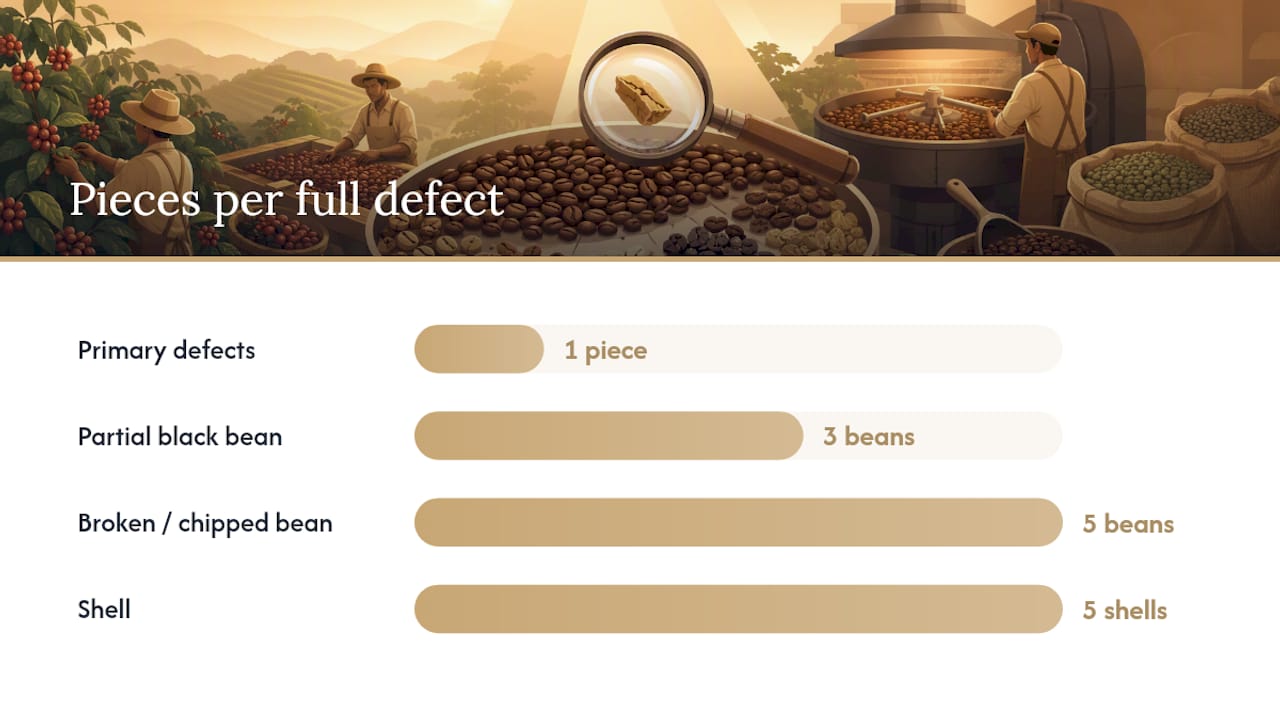
Defects fall into two categories: primary and secondary. Primary defects, including full black beans, full sour beans, dried cherry, fungus-damaged beans, foreign matter, and severe insect damage, carry a high cup-impact risk and are weighted heavily. Secondary defects, such as partial blacks, partial sours, broken or chipped beans, shells, and slight insect damage, are less severe individually but accumulate into full-defect equivalents.
The counting protocol most trade references follow uses a 300 g sample. According to FAO classification procedures, specialty grade requires no primary defects and no more than 5 full defects per 300 g. Commercial lots tolerate significantly more.
| Defect type | Category | Full-defect equivalent |
|---|---|---|
| Full black bean | Primary | 1 bean = 1 full defect |
| Full sour bean | Primary | 1 bean = 1 full defect |
| Dried cherry / pod | Primary | 1 pod = 1 full defect |
| Foreign matter (stone) | Primary | 1 piece = 1 full defect |
| Partial black bean | Secondary | 3 beans = 1 full defect |
| Broken / chipped bean | Secondary | 5 beans = 1 full defect |
| Shell | Secondary | 5 shells = 1 full defect |
Screen size
Screen numbers measure bean diameter in 1/64-inch increments. Screen 18 equals approximately 7.1–7.2 mm and is the threshold for Kenya AA. Screen 15 is roughly 6.0 mm. Larger screens often correlate with denser beans, but the relationship is not absolute.
Screen uniformity matters as much as average size. Mixed-screen lots roast unevenly because smaller beans reach development temperature faster than larger ones, increasing the risk of under- or over-development within a single batch.
Common screen-size labels by origin:
- Kenya AA — retained on screen 18
- Kenya AB — retained on screen 15–16
- Colombia Supremo — retained on screen 17 or larger
- Colombia Excelso — retained on screen 14–16
Moisture and density
Specialty lots typically target a moisture content of 10–12%. Beans above that range are prone to mold and uneven roasting; beans below it become brittle and roast too fast. Density sorting, often done with gravity tables, separates lighter, less-developed beans from denser ones before screen sizing.
Pro Tip: When reading a spec sheet quickly, check three numbers first: defect count per 300 g, screen range (minimum and maximum), and SCA or Q cupping score. If any of the three is missing, ask for it before signing off.
How is grading actually performed?
The process runs from dry mill to export certificate, typically in four stages.
Sampling comes first. A 300 g draw is standard for defect counting in most export protocols; some national systems use 100 g for preliminary sorting checks. Sample size matters because a smaller draw increases the statistical chance of missing a defect cluster concentrated in one section of the lot.
Mechanical and manual sorting follows. A practical grading workflow runs beans through mechanical screens by size, then density separation on gravity tables, then optical or color sorters that flag discolored beans, and finally hand-sorting for anything the machines miss. Each stage removes a category of defect.
Defect counting on the final 300 g sample produces the certificate number. Export Preparation (EP) is a tighter preparation standard, often capping total defects at 8 or fewer per 300 g and removing undersized screen beans. EP indicates cleaner physical preparation, not guaranteed cup quality.
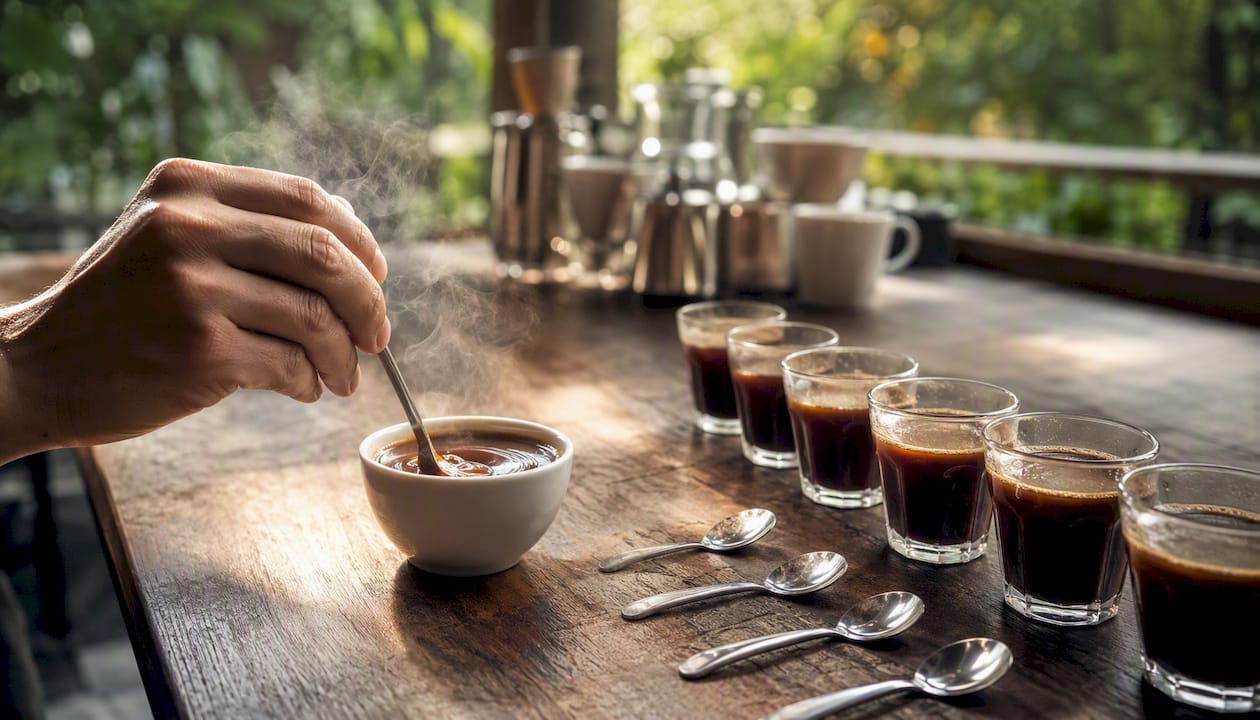
Cupping closes the loop. The SCA protocol evaluates ten attributes: fragrance/aroma, flavor, aftertaste, acidity, body, balance, uniformity, clean cup, sweetness, and overall. Each is scored on a structured scale; the total determines the final cup score. Lots scoring 80 or above qualify as specialty. Cupping is always performed separately from physical grading and by a trained Q Grader or SCA-certified cupper for results buyers can trust.
How do grading systems differ by country?
No single universal grading system exists, which is why the same label can mean different things depending on origin.
- Brazil / NY system — Brazil classifies lots by defect count using specific defect coefficients, then assigns a New York market reference (NY2, NY3, etc.) based on the total. NY2 is the highest commercial grade; specialty Brazilian lots carry separate cupping documentation. Brazil’s defect-coefficient approach weights each defect type differently, so two lots with the same defect count can carry different grade numbers depending on defect composition.
- Indonesia (SNI) — The Indonesian National Standard grades Robusta and Arabica on a 1–6 scale based on defect values per 300 g, with Grade 1 allowing the fewest defects and a capped moisture level, and Grade 6 representing the lowest commercial export grade.
- Ethiopia — Grades run from 1 (best) to 5. Physical defect count and cup quality both factor into export classification, making Ethiopia’s system one of the few that formally integrates sensory evaluation into the grade itself.
- Kenya — AA and AB are screen-size labels. Kenya AA retains beans on screen 18 and typically commands a price premium, though size alone does not guarantee cup quality. Kenya also uses a separate cup-quality grading layer administered through the Nairobi Coffee Exchange.
- Colombia — Supremo (screen 17+) and Excelso (screen 14–16) are screen-size categories administered under the oversight of the Federación Nacional de Cafeteros. Colombia’s system emphasizes bean size and physical preparation rather than defect weighting.
- Vietnam — Primarily Robusta, graded on defect count, moisture percentage, and broken-bean percentage. Export specs typically define maximum defects per 300 g and a moisture cap aligned with international commercial standards.
Two labels worth clarifying: SHB (Strictly Hard Bean) and SHG (Strictly High Grown) refer to altitude-based density classifications used in Central America, not direct cup-quality measures. EP (European Preparation) is a preparation-cleanliness standard, not an origin grade.
Common misconceptions about coffee grades
Myth: AA or AAA means the best-tasting coffee. AA is a screen-size label in certain origins, most notably Kenya. It means the bean is large, retained on screen 18. It says nothing about flavor. A Kenya AA can cup at 78 points; a Kenya AB from the same farm can cup at 84.
Myth: There are three universal coffee grades. There is no standard three-grade system. Ethiopia uses five grades; Indonesia uses six; Brazil uses a numeric NY scale; Colombia uses two screen-size categories. The number of grades and what they measure varies entirely by country.
Myth: Grade 4 is always low quality. In Ethiopia’s system, Grade 4 sits toward the lower end of the export range and typically indicates higher defect counts and less rigorous physical preparation, placing it in commercial rather than specialty territory. In other national systems, “Grade 4” may not exist at all or may carry a different meaning.
The clearest distinction to carry forward: specialty = 80+ SCA points, a sensory standard. Grade = physical cleanliness and uniformity, a preparation standard. A lot needs both a clean physical grade and a verified cup score to be sold with confidence as specialty.
How grades influence price and what buyers should request
Lower defect counts and higher SCA scores command premiums. Large, uniform screen sizes raise prices in origins where size is a recognized quality signal, particularly Kenya and Colombia. EP preparation adds a modest premium over standard export prep because of the additional sorting labor involved.
A practical checklist for purchase conversations:
- Maximum defects per 300 g — confirm the number and ask whether it follows SCA, ICO, or national protocol
- Screen range — request minimum and maximum screen numbers, not just an average
- Moisture cap — verify it falls within 10–12% for specialty; ask how and when it was measured
- Processing method and preparation — washed, natural, or honey; EP or standard
- SCA cupping score or sample — ask for the Q Grader’s registration number and the cupping date
- Red flags — vague “Grade 1” claims with no defect certificate, missing moisture data, or cupping scores with no grader credentials attached
How processing methods shape grading results
Processing method directly affects how many defects appear in the final green lot. Washed (wet-processed) coffees tend to produce cleaner, more uniform beans because the mucilage is removed before drying, reducing the risk of fermentation-related defects like full sours. Natural (dry-processed) coffees dry inside the fruit, which increases the chance of partial sours, mold damage, and uneven drying defects if conditions are not carefully controlled. Honey-processed coffees sit between the two: some mucilage remains during drying, which can introduce secondary defects if drying beds are not managed attentively.
Processing also affects moisture uniformity. Naturally processed lots can show higher moisture variance across the lot, which complicates grading because a single 300 g sample may not capture the full range. Buyers sourcing natural-process lots should request multiple sample draws or ask for moisture mapping across the drying batch.
Visual grading versus sensory evaluation: what each one can and cannot do
Visual grading is fast, repeatable, and objective within a defined protocol. It tells you what is physically present in the bag: defect counts, screen distribution, foreign matter, moisture level. What it cannot do is predict flavor. A visually clean lot can still produce flat, underdeveloped, or fermented cups if the variety, terroir, or processing introduced flavor defects that leave no visible trace on the bean surface.
Sensory evaluation through cupping captures what visual grading misses: acidity brightness, sweetness, body texture, and the presence of off-notes that only emerge when the bean is ground and brewed. The limitation of cupping is that it is subjective, time-intensive, and dependent on the skill and calibration of the cupper. Two Q Graders can score the same lot two points apart on a given day.
The practical conclusion: neither method alone is sufficient. Verified Q Grader cupping and lab checks are necessary to trust the labels suppliers provide. Use physical grading to screen lots efficiently; use cupping to confirm what the grade cannot tell you.
From farm to export: the grading timeline
The grading process begins at harvest and runs through several distinct stages before a lot reaches an export certificate.
At the farm or cooperative level, cherries are sorted by ripeness at intake, either by hand or through flotation tanks that separate underripe and overripe fruit by density. Processing follows: pulping, fermentation, washing, and drying for washed lots; direct drying on raised beds for naturals. Drying typically takes two to six weeks depending on climate and method.
At the dry mill, parchment is hulled and the green bean is exposed for the first time. Mechanical screens sort by size; gravity tables separate by density; color sorters remove discolored beans. Hand-sorting adds a final pass. The lot is then sampled for defect counting and moisture measurement, and a cupping session is scheduled.
Export documentation, including the defect certificate, moisture report, and cupping score, is compiled before the lot is approved for shipment. ICO and FAO grading references define the sampling and classification procedures that underpin these documents in many producing countries. From cherry to export-ready bag, the full timeline typically runs three to five months for washed lots and slightly longer for naturals.
Why grade and cup score together are the only honest signal
The conventional wisdom in specialty coffee is that a high grade guarantees quality. It does not. Grade is a gatekeeping tool, not a quality promise. What it guarantees is that a lot met a defined physical standard at the time of grading, under the protocol of a specific national system, using a sample that represented the lot as presented.
The gap between a clean physical grade and an exceptional cup is where sourcing skill lives. A roaster who relies only on grade data is essentially buying a clean bag with unknown contents. A buyer who relies only on a cupping score without a physical certificate is trusting a single sensory snapshot with no information about what the rest of the lot looks like.
The most useful shift in thinking: treat grade as a minimum threshold and cup score as the actual selection criterion. If a lot does not pass physical grading, reject it. If it passes but the cup score is missing or unverified, request a sample before committing. Grading systems exist to make trade efficient, not to replace the judgment of a skilled cupper or a roaster who knows their equipment.
Rowst sources graded, cupped, and roasted specialty lots
Sourcing raw graded lots takes time, documentation, and direct relationships with dry mills and exporters. Rowst has already done that work. Every coffee in the Rowst selection carries a verified cupping score alongside its origin details, so you are not buying a grade label. You are buying a lot that passed both physical and sensory evaluation before it was roasted.
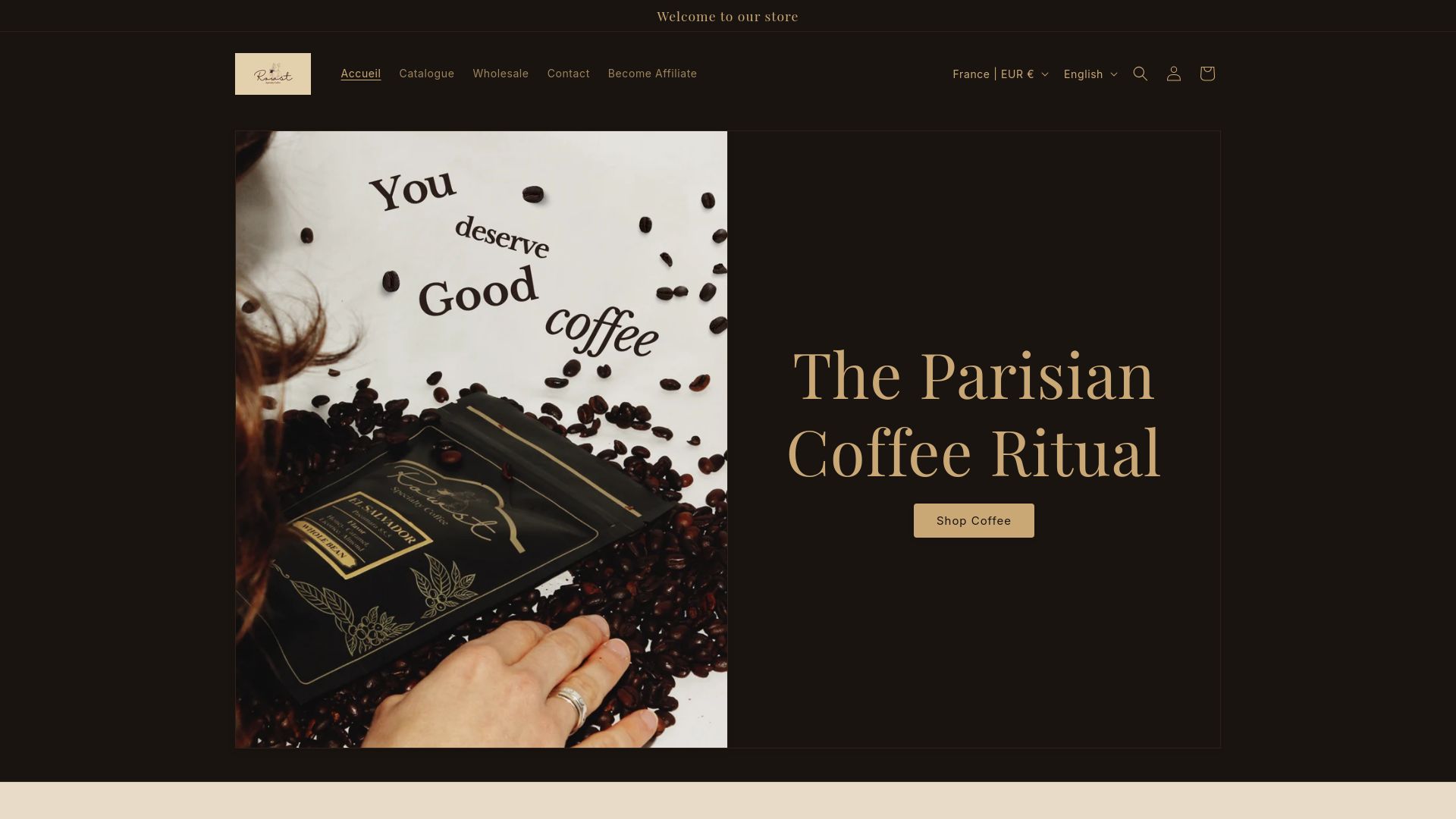
The Rowst Coffee Lover Pack is a curated selection of single-origin specialty coffees sourced directly from small-scale producers in regions like Uganda, El Salvador, and Mexico. Each lot is selected for low defect values and a confirmed SCA-range cup score. This is an alternative to managing raw-graded green lots yourself. If you want to explore individual origins, the Mexico Veracruz (86-point Arabica) and El Salvador Pacamara (85-point Arabica) show exactly how Rowst presents both grade-level and cup-score details for buyer confidence. Visit Rowst to browse the full selection.
Sources
- Annex 7: Green Coffee Classification and Grading
- Coffeeresearch
- Green Coffee Grading Explained: How the Coffee Grading System Works
- Green Coffee Grading: SHB, EP, Grade 1 for Roasters
When relying on a reported cup score, ask the supplier for the Q Grader’s registration number and the date of the cupping session. Grading standards and national thresholds are updated periodically; verify current specifications directly with the relevant national coffee authority or a certified lab before finalizing a contract.