

Farm to Cup Coffee: What It Means and Why It Matters
Farm-to-cup coffee is specialty coffee with a traceable, direct line from a named farm or lot to your cup, with no anonymous blending, no opaque supply chains, and no guessing about when it was roasted. When the label is genuine, it signals meaningful quality and a direct relationship with the people who grew the coffee. When it is marketing shorthand, it signals nothing at all. Here is how to tell the difference.
What to look for immediately:
- A named farm or cooperative, not just a country or region
- A specific lot or harvest identifier
- A roast date printed on the bag (not a “best by” date)
- A processing method listed with expected flavor notes
- A sourcing statement describing a direct or near-direct relationship with the producer
Key Takeaways
Farm-to-cup coffee is only as meaningful as the traceability behind it: a named farm, a roast date, and a direct producer relationship are the three non-negotiable proof points.
| Point | Details |
|---|---|
| Farm and lot specificity | Look for a named farm or cooperative, harvest season, and lot ID, not just a country. |
| Roast date over best-by date | A roast date within the past 4 weeks confirms freshness; a best-by date tells you almost nothing. |
| Processing method on the bag | Washed, natural, or honey processing shapes flavor; credible roasters always list it. |
| Grind fresh, brew immediately | Grinding right before brewing preserves the origin clarity that selective harvesting and careful processing built. |
| Rowst for traceable micro-lots | Rowst’s single-origin listings and discovery packs include full origin notes, processing details, and roast dates. |
Table of Contents
- What farm-to-cup coffee really means
- The farm-to-cup journey as a series of quality gates
- How to verify a farm-to-cup claim before you buy
- Why farm-to-cup sourcing matters for flavor, ethics, and the environment
- How to buy and brew farm-to-cup coffee well
- Key production timelines and surprising facts
- What sourcing decisions actually look like from a roaster’s perspective
- Rowst brings farm-to-cup coffee directly to your door
- Sources
What farm-to-cup coffee really means
The phrase “farm to cup” is not a regulated certification. Any roaster can print it on a bag. What separates a genuine farm-to-cup coffee from a commodity product is lot-level traceability, a direct or near-direct producer relationship, and roast-date transparency handled in small batches.
In a commodity supply chain, green coffee passes through brokers, exporters, and blending facilities before it reaches a roaster. Origin information dissolves at each handoff. The roaster may know the country, sometimes the region, rarely the farm. The coffee may have sat in a warehouse for a year before roasting. None of that appears on the bag.
A genuine farm-to-cup roaster works differently:
- They buy from a specific farm, cooperative, or micro-lot, often directly or through a trusted import partner who maintains farm-level records
- They can name the producer, the harvest season, and the processing method
- They roast in small batches and print the roast date so you know exactly how fresh the coffee is
- They share that information openly, on the bag or on a product page
Concrete examples of traceable claims you should expect: “Lot 14, Finca El Paraíso, Huila, Colombia, washed, harvested November 2025, roasted January 12, 2026.” That level of specificity is the standard. “Single origin Ethiopia” with no further detail is not.
The farm-to-cup journey as a series of quality gates
Excellent coffee results from a chain of quality gates, where a mistake at any stage can undo everything that came before it. Understanding each stage tells you where flavor is built, where it can be lost, and what questions to ask.
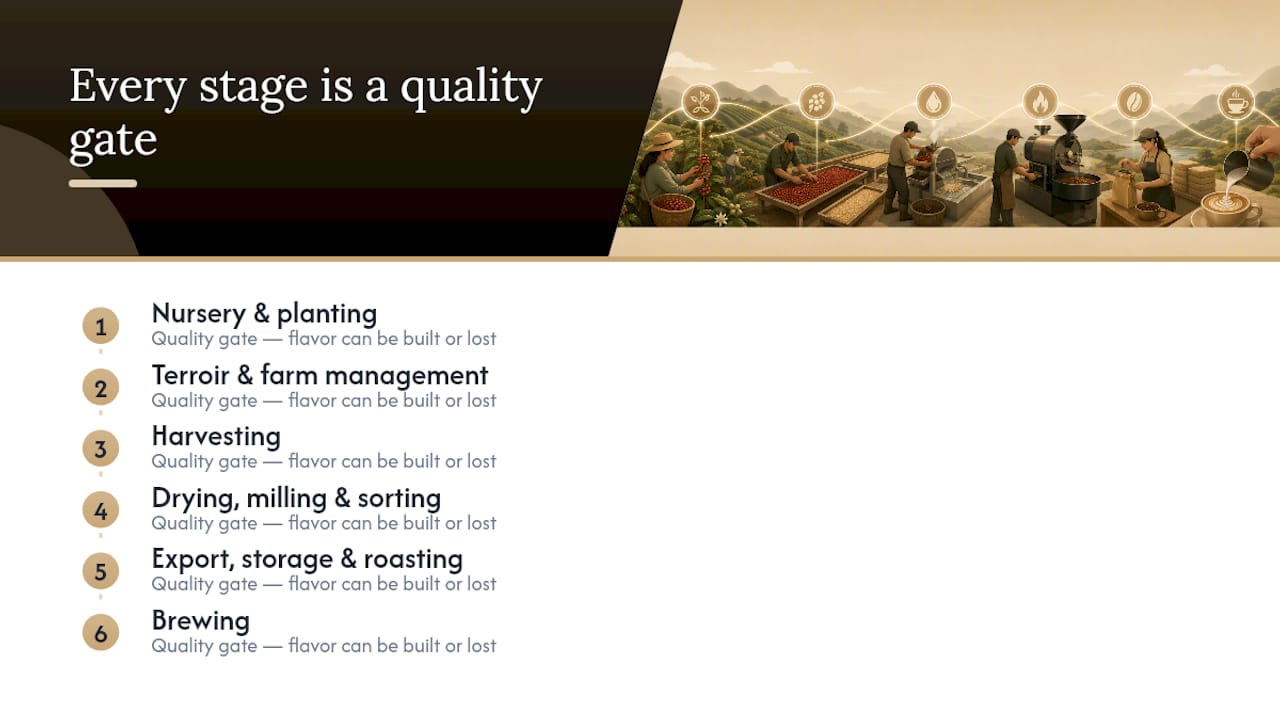
1. Nursery and planting
A coffee seed is germinated in a shaded nursery, then transplanted to the farm after several months. Varietal choice at this stage shapes everything downstream: Bourbon, Gesha, Pacamara, and Typica each carry distinct flavor potential. A newly planted tree takes 3–5 years to produce its first harvestable fruit, which is why quality producers treat each tree as a long-term investment rather than a commodity crop.
2. Terroir and farm management
Elevation, soil composition, rainfall patterns, and shade cover all influence how a cherry develops. High-altitude farms in volcanic soils, like those in Uganda’s Bugisu region or Mexico’s Veracruz highlands, produce denser beans with more complex acids and sugars. Shade management and soil health are not incidental, they are flavor decisions made years before harvest.
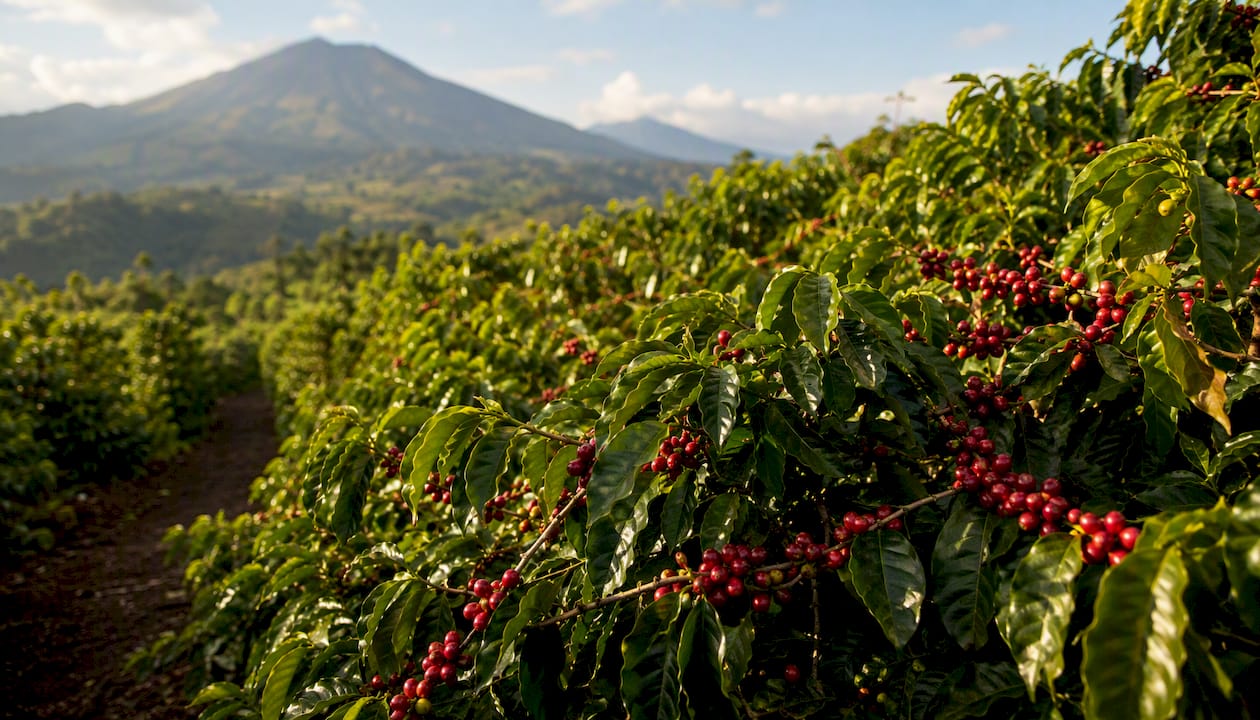
3. Harvesting: selective picking vs. strip picking
This is where farm-to-cup sourcing diverges most sharply from commodity production. Strip picking pulls all cherries from a branch in one pass, ripe and unripe together. Selective picking, or “selective hand-picking,” targets only ripe cherries, often requiring multiple passes through the same trees across several weeks because cherries on a single branch ripen at different rates. The labor cost is real. So is the flavor payoff: unripe cherries introduce harsh, astringent notes that no amount of roasting skill can fix.
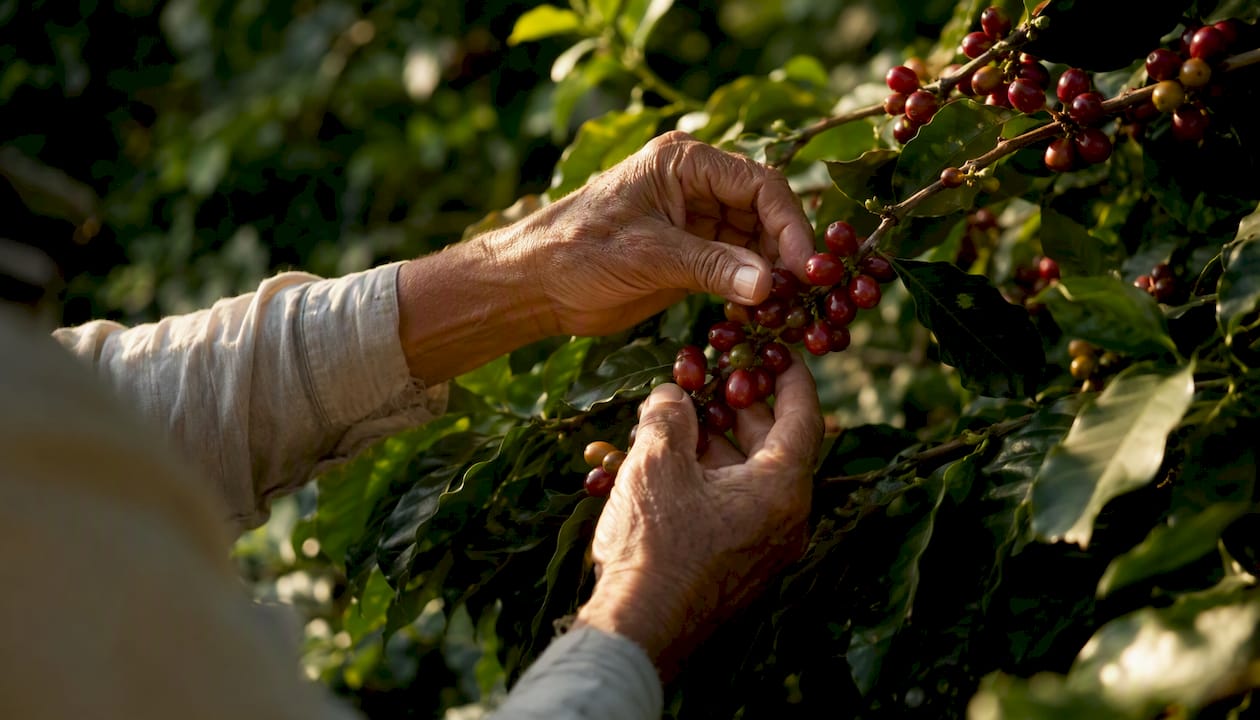
4. Processing: washed, natural, and honey
Once picked, the fruit must be removed from the seed. Processing choices shape sweetness, acidity, and body, and no single method is universally superior. Control is what matters.
- Washed (wet): Fruit is removed mechanically before drying. The result is a clean, bright cup where origin character and acidity are most transparent.
- Natural (dry): Whole cherries dry with the fruit intact, imparting fruity, wine-like sweetness. Higher risk of fermentation defects if not managed carefully.
- Honey: A middle path. Some fruit mucilage is left on the bean during drying, producing sweetness and body without the fermentation risk of a full natural.
5. Drying, milling, and sorting
After processing, beans are dried to a target moisture level, typically around 11%, then rested, hulled, and sorted. Manual sorting after drying removes defective beans that would otherwise ruin an entire brew. A single fermented or insect-damaged bean in a grinder can taint the whole cup. This is where traceability functions as quality control, not just marketing.
6. Export, storage, and roasting
Green coffee is bagged in grain-pro or jute sacks and shipped, sometimes resting in a controlled warehouse before roasting. Small-batch roasting preserves lot integrity and allows the roaster to dial in a profile specific to that coffee’s density, moisture, and varietal character. The roast date on the bag is the timestamp that tells you whether the roaster’s care survived the journey to your door.
7. Brewing: the final quality gate
Brewing is where farm-protected flavor is either realized or lost. Grind size, water temperature, and brew ratio all matter. Freshness degrades quickly after roasting and even faster after grinding, which is why specialty baristas recalibrate grind settings daily as humidity and temperature shift.
Pro Tip: Grind immediately before brewing, not the night before. Even 30 minutes of exposure after grinding accelerates oxidation and flattens the cup.
How to verify a farm-to-cup claim before you buy
Most roasters who do the work are proud to show it. The ones who are not tend to hide behind vague language.
Farm and lot information. A credible listing names the farm or cooperative, the growing region, the harvest season, and ideally a lot identifier. “Uganda, Bugisu region, Sipi Falls cooperative, washed, 2025 harvest” is traceable. “Uganda single origin” is not.
Roast date vs. best-by date. A roast date tells you when the coffee was roasted. A best-by date tells you almost nothing useful, since it is calculated backward from an arbitrary shelf-life estimate. Look for the roast date. For most brewing methods, the sweet spot is 7–21 days post-roast, after CO₂ off-gassing has settled but before peak freshness fades.
Traceability documentation. Some roasters include lot codes, QR links to farm profiles, or import partner notes. These are not gimmicks. They are the paper trail that confirms the sourcing story holds up.
Red flags to watch for:
- No roast date on the bag
- “Single origin” with only a country listed
- Vague language like “ethically sourced” or “sustainably grown” with no supporting detail
- No mention of processing method
- A “best by” date two years out (suggesting large-batch, pre-roasted inventory)
Pro Tip: Search the roaster’s website for the farm name listed on the bag. If nothing comes up, the traceability chain likely ends at the bag itself.
Why farm-to-cup sourcing matters for flavor, ethics, and the environment
The case for traceable sourcing is not sentimental. It is practical, and it runs in three directions at once.
Flavor clarity. When a coffee comes from a single farm, processed consistently and roasted fresh in small batches, the cup reflects a specific place and moment. You taste the volcanic soil of a Ugandan hillside or the shade-grown sweetness of a Veracruz micro-lot rather than a blended average designed for consistency at scale. Origin notes, floral, fruity, chocolatey, bright, are most legible in traceable coffees because nothing has been averaged out.
Producer livelihoods. Direct or near-direct sourcing means a larger share of the purchase price reaches the farmer. Commodity pricing, set by the C-market futures exchange, often falls below the cost of production for small farms. Direct trade relationships, by contrast, are negotiated on quality and relationship, not market floors. Producer materials from Colombia’s coffee sector illustrate how institutional support and quality-focused sourcing can stabilize farmer income across generations.
- Farmers who receive fair, quality-based premiums have a financial incentive to invest in better processing and selective harvesting
- Transparent supply chains make it easier to verify labor and environmental standards
- Direct relationships create feedback loops: roasters can communicate flavor preferences, and farmers can adjust processing accordingly
Environmental practices. Farms producing for traceable, quality-focused buyers tend to maintain shade canopy, manage water use in processing more carefully, and avoid the monoculture practices that degrade soil over time. These are not universal outcomes, but the incentive structure of direct trade pushes in that direction.
How to buy and brew farm-to-cup coffee well
Buying well is half the work. Brewing well is the other half.
Buying checklist:
- Farm or cooperative name and region listed
- Roast date within the past 4 weeks
- Processing method noted with flavor direction
- Packaging with a one-way valve (indicates fresh-roasted, not pre-aged)
- A sourcing statement or direct-trade note, not just a certification logo
Suggested purchase types. Single-origin micro-lots give you the clearest expression of one place and one harvest. Discovery packs, like Rowst’s curated discovery sets, let you compare origins side by side, which is the fastest way to train your palate to recognize what terroir actually tastes like. For roast level, lighter roasts preserve the most origin character; medium roasts balance origin notes with roast sweetness; dark roasts tend to obscure both.
Brew recipes that highlight origin clarity:
- Pour-over (Hario V60 or Chemex): 15:1 water-to-coffee ratio, 93°C water, medium-fine grind, 3–4 minute total brew time. This method strips away nothing and shows the coffee’s full character.
- French press: 15:1 ratio, 94°C water, coarse grind, 4-minute steep. Adds body and texture; works especially well with natural-processed coffees.
- Espresso: 2:1 output ratio (18g in, 36g out), 9 bars, 25–30 second extraction. Concentrates flavor; best with medium roasts from washed-process lots for clarity.
Storage and grinding tips:
- Store whole beans in an airtight, opaque container away from heat and light
- Never freeze beans you plan to use within two weeks
- Grind only what you need, immediately before brewing
- Recalibrate your grinder setting when you open a new bag, since density varies by origin and roast level
Pro Tip: Buy smaller quantities more often rather than a large bag that sits open for weeks. Freshness is the single variable most within your control as a home brewer.
Key production timelines and surprising facts
The numbers behind coffee production are worth knowing. They explain why traceable, small-farm coffee costs what it does, and why seasonality matters.
A note on U.S. coffee production. Hawaii is the only U.S. state with a commercial coffee industry, with Kona and Kaʻū producing in volcanic soils under high-elevation cloud cover. For most American coffee drinkers, the coffee in their cup traveled from Central America, East Africa, or Southeast Asia, which makes the traceability of that supply chain all the more worth verifying.
The cherry-to-green conversion ratio is the figure that most surprises people. A skilled picker working a full day produces enough cherries to yield roughly 20–40 pounds of green coffee, which roasts down further still. That compression of labor into a small bag is what makes the roast date so consequential: all of that work deserves to reach you at peak freshness.
What sourcing decisions actually look like from a roaster’s perspective
The conventional wisdom about farm-to-cup coffee tends to flatten the sourcing relationship into a feel-good story: roaster visits farm, shakes hands, buys coffee, everyone wins. The reality is more textured, and understanding it makes you a better buyer.
Roasters who source directly face genuine constraints. Volume is one. A small farm producing a single micro-lot may yield only a few hundred pounds of green coffee, enough for a roaster to offer for one season but not enough to build a menu around. Timing is another. Green coffee arrives when the harvest and export cycle allows, not when a roaster’s inventory runs low. Processing consistency is a third: a natural-process lot from a first-time producer carries more risk than a washed lot from a farm with ten years of relationship history.
What separates a thoughtful sourcing model from a marketing exercise is how a roaster manages those constraints. Do they communicate openly when a lot sells out rather than substituting a different coffee under the same label? Do they share the harvest year alongside the roast date? Do they return to the same producers season after season, which is the only way a direct relationship actually develops?
As a consumer, you support ethical sourcing most directly by buying traceable coffees and paying what they cost. The price premium on a genuine micro-lot reflects the selective harvest labor, the small-batch roast, and the direct relationship. Choosing it over a cheaper, anonymous alternative sends the signal that the work is worth it.
Rowst brings farm-to-cup coffee directly to your door
Rowst sources single-origin micro-lots directly from small-scale producers in Uganda, El Salvador, and Mexico, with no intermediaries between the farm and your bag. Every product listing names the origin, the processing method, and the roast date, so the traceability chain the article describes is visible before you check out.
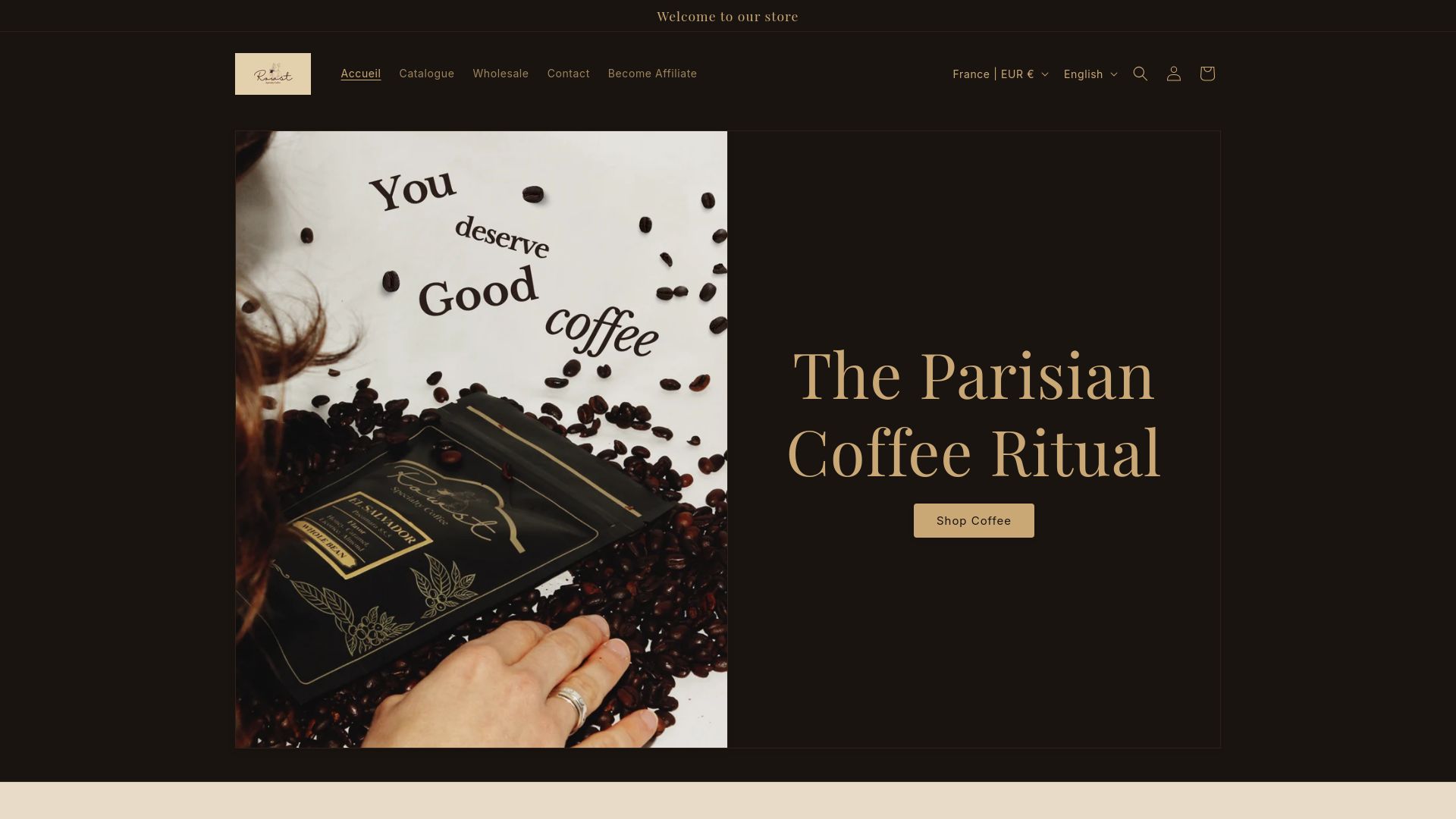
For readers who want to taste the difference between origins side by side, the Rowst Discovery Pack is the most direct path: curated micro-lots, each with full origin notes, roast date, and tasting profile. If you already know what you are looking for, the El Salvador Pacamara and Uganda Bugisu single-origin listings show exactly how farm-level sourcing translates into a specific, traceable cup. Browse the full catalog at Rowst and order the freshest roast available today.
Sources
The facts in this guide draw from the following primary sources. Each is worth reading directly for deeper technical detail on production, processing, and traceability.
- Harvesting (Ohio State University Coffee Beans Commodity Chain)
- What is coffee? A basic explanation from seed to cup (Perfect Daily Grind)
- From seed to mug (Cafe de Colombia)
- Coffee traceability (TraceX)