

What "French Coffee Drinks" Really Means for Discerning Buyers
Here, “French coffee drinks” means Parisian-style single-origin specialty coffees and curated packs, not recipes for café au lait or espresso at home. It refers to precision-roasted, traceable beans made for cafés and home baristas who want the flavor clarity and craftsmanship Paris’s new-wave coffee scene has come to expect. Rowst built its catalog around exactly this idea: direct-sourced, small-batch beans from named farms, sold whole or ground.
Two examples show what that looks like in practice:
- El Salvador Pacamara Specialty Coffee: a large-bean varietal known for bright acidity and a syrupy body, the kind of showpiece origin a café rotates onto a seasonal pour-over menu.
- Coffee Lover Pack: a curated multi-origin sampler built for anyone comparing flavor profiles before committing to a full bag or wholesale order.
Key Takeaways
Parisian-style single-origin coffee works because traceable sourcing, correct moisture content, and fresh roast dates together produce the flavor clarity that defines the modern specialty category.
| Point | Details |
|---|---|
| Definition matters | “French coffee drinks” here means Parisian-style single-origin beans and curated packs, not prepared café recipes. |
| Roast philosophy shifted | Paris’s new-wave cafés favor lighter, nuanced roasts over old-school dark, bitter espresso. |
| Ask for hard numbers | Request moisture content (10 to 12 percent) and bean uniformity before committing to a wholesale order. |
| Test before you commit | Sample bags and discovery packs let cafés trial origins without disrupting the existing menu. |
| Start with Rowst | Rowst’s Discovery Pack and single-origin bags like El Salvador Pacamara offer roast-date transparency and direct-sourced traceability for buyers ready to order. |
Table of Contents
- What Makes a Parisian-Style Single-Origin Coffee
- Brewing and Menu Presentation for Single-Origin Beans
- Sourcing and Ethics: What a Real Specialty Supplier Looks Like
- Buying Checklist for Cafés and Home Buyers
- The Traditional French Coffee Drinks Behind the Culture
- Coffee’s Place in Daily French Life
- How Regional Preferences Shape French Coffee Habits
- French Coffee Drinks Compared to Other Coffee Cultures
- Start With a Sample, Not a Commitment
- Sources
What Makes a Parisian-Style Single-Origin Coffee
Paris spent decades associated with a certain kind of coffee: dark, bitter, pulled fast at a zinc counter. That’s changed. A new wave of cafés has pushed the city toward lighter, more nuanced roasts and a slower, more deliberate café experience, one where the barista talks about altitude and varietal instead of just steam pressure. That shift is the real definition of “Parisian-style” in the specialty world: it’s a roasting philosophy and a hospitality standard, not a blend recipe.
Single-origin coffee is what makes that philosophy possible. Because the beans come from one farm or cooperative rather than a mixed lot, roasters can highlight the specific terroir, varietal, and processing method behind each cup instead of averaging out the differences. A washed Ugandan Bugisu tastes nothing like a natural-processed Salvadoran Pacamara, and that contrast is the whole point for a menu trying to differentiate itself.
Freshness discipline matters just as much as origin. Paris’s specialty market has grown fast enough that transparency and consistent execution now separate serious roasters from generic ones. Practically, that means:
- Roast dates printed on every bag, not just “best by” stamps
- Small-batch roasting runs tied to harvest windows, not year-round mass production
- Packaging that protects volatile aromatics (one-way valve bags, not clear plastic)
A café that gets these details right builds trust with customers who now expect them.
Brewing and Menu Presentation for Single-Origin Beans
Single-origin coffee rewards the brew method that shows off its specific character, and cafés serve two purposes with two different formats.
Espresso concentrates body and sweetness, making it the right choice for a bean with a heavier mouthfeel, like a natural-processed Pacamara. Filter brewing (pour-over or batch drip) lets acidity and floral or fruit notes come through cleanly, which suits washed origins like a Ugandan Bugisu or a Mexican Veracruz.
For dialing in service:
- Espresso dose and grind: start around 18 to 20 grams per double shot, grind fine enough to hit a 25 to 30 second extraction, and adjust daily as roast date and humidity shift the bean’s behavior.
- Filter ratio: a 1:16 coffee-to-water ratio is a reliable starting point for pour-over, coarser grind than espresso, water just off boiling.
- Portioning for consistency: pre-weigh single-origin doses in service rather than eyeballing them. Origin coffees are pricier per cup, and inconsistent dosing erodes both flavor and margin.
Menu copy is where a lot of cafés leave value on the table. Listing a bean simply as “Guatemala” tells the customer nothing they couldn’t get from a supermarket bag. Listing it as “Uganda Bugisu, washed, notes of black tea and brown sugar, roasted March 3” gives the customer a reason to pay a premium and gives your staff a script for recommending it.
Pro Tip: Print the roast date directly on your menu board next to the origin name. It signals freshness at a glance and quietly discourages customers from asking for a “regular coffee” instead of trying the single-origin pour-over.
Sourcing and Ethics: What a Real Specialty Supplier Looks Like
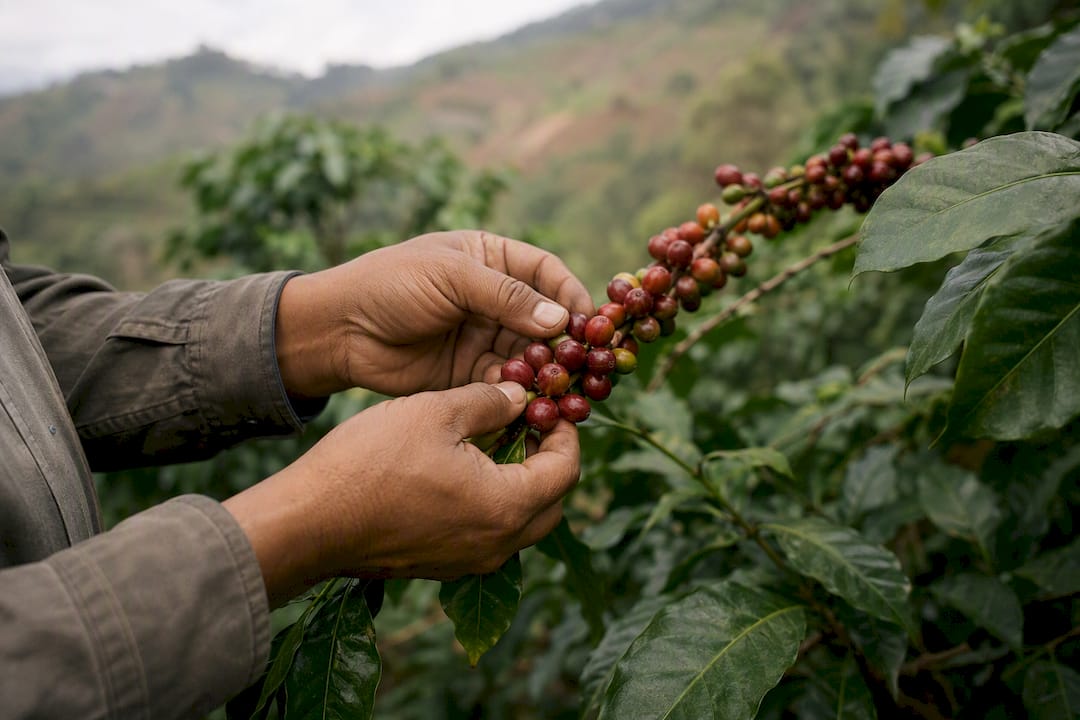
Direct sourcing removes the layers of brokers and exporters that typically sit between a farm and a roaster. Fewer intermediaries means clearer traceability back to a specific region, and it means more of what a customer pays actually reaches the people who grew, harvested, and sorted the beans.
Buyers evaluating a supplier should ask for specifics, not marketing language:
- Moisture content: green beans held at 10 to 12 percent moisture roast more predictably and store longer without degrading.
- Bean uniformity: consistent size and color in a sample bag is a fast visual check for careful harvesting and sorting.
- Roast date transparency: a supplier that won’t print or share roast dates is hiding freshness problems.
- Named farm or region: “Central America blend” is not traceability. “El Salvador, Pacamara varietal, single farm” is.
Rowst’s model was built around these exact standards.
Rowst sources directly from small-scale producers in regions like Uganda, El Salvador, and Mexico, without intermediaries, so each purchase fairly rewards the farmers who grow, harvest, and sort the coffee.
That direct relationship isn’t just an ethical talking point. It’s also why the Uganda Bugisu Specialty Coffee and Mexico Veracruz Specialty Coffee can carry specific farm-level tasting notes instead of vague regional generalizations. Traceability and flavor precision come from the same sourcing decision.
Buying Checklist for Cafés and Home Buyers
Testing a new supplier or origin doesn’t need to be complicated, but skipping steps here is how cafés end up with inconsistent shelves and disappointed regulars.
Before committing to a wholesale order, run through this:
- Request a sample bag, not just a spec sheet. Cup it black to evaluate acidity, body, and finish without milk masking flaws.
- Check the roast date on arrival. Anything older than three to four weeks has likely lost aromatic complexity.
- Taste at two temperatures: hot, and again once it cools to room temperature. Defects hide in a hot cup and show up as it cools.
- Ask about moisture content and bean uniformity directly. A supplier that answers specifically, rather than generically, is one worth trusting.
- Confirm minimums and format options before ordering: whole bean versus ground, bag sizes, and whether smaller trial quantities are available.
For logistics, a few practical notes matter:
- Whole bean holds freshness longer than pre-ground and should be the default for any café grinding to order.
- Store bags away from light and heat, and use within four to six weeks of the roast date for peak flavor.
- A Discovery Pack or similar multi-origin sampler is the lowest-friction way to test several beans against your existing menu before placing a larger wholesale order.
Cafés testing a new supplier should treat the first order as a controlled trial: same brew recipe, same staff, same tasting notes logged, so the comparison against your current beans is fair.
The Traditional French Coffee Drinks Behind the Culture
Understanding the single-origin category makes more sense alongside the traditional drinks that shaped French coffee habits in the first place. Espresso (un café) is the default order at a French counter, a short, concentrated shot taken standing, often in two sips. Café au lait blends equal parts strong brewed coffee and steamed milk, traditionally a breakfast-only drink served in a wide bowl rather than a cup. Café crème is the café version of that same idea: espresso topped with steamed milk, closer in size and texture to what many countries call a latte, but typically lighter on foam.
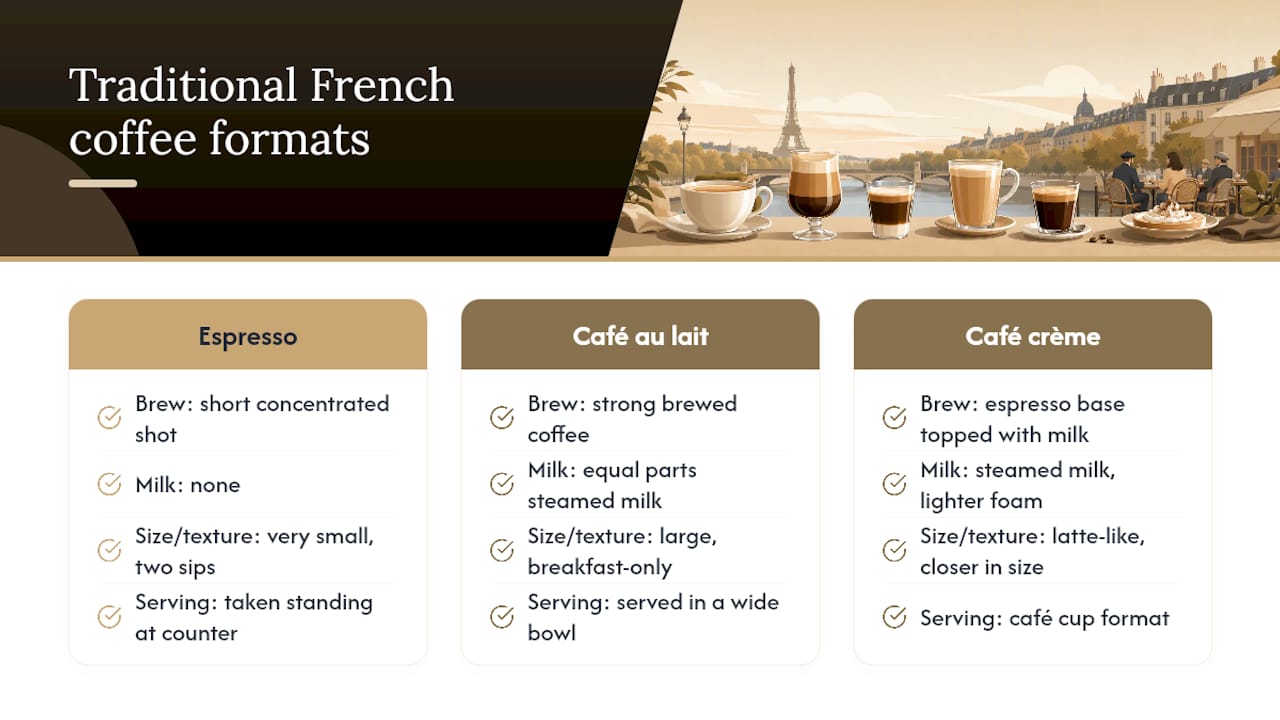
These drinks were built around brewing methods, not bean origin, which is exactly why the modern single-origin movement represents such a shift. A café crème made with a washed Mexican Veracruz bean tastes noticeably different from one made with a heavier natural-processed bean, a distinction that simply didn’t exist when most French cafés ran on a single dark-roasted house blend. The traditional drink names still describe the format. The bean behind them is where the real flavor conversation happens now.
Coffee’s Place in Daily French Life
Coffee in France functions less as fuel and more as punctuation. A morning café au lait marks the start of the day at home, usually with bread, and rarely to go. A post-lunch espresso, taken standing at the counter or seated for a few minutes, signals the meal is over and the afternoon is beginning.
That ritual pacing is part of why Paris’s café culture has resisted the disposable cup entirely. Sitting for a coffee, even a quick one, is treated as a small event rather than an errand. The city’s café landscape has expanded significantly over the past 15 years, and specialty shops have layered onto that ritual rather than replacing it. Customers now expect both: the traditional zinc-counter espresso and a slower, cupping-style single-origin pour-over experience depending on the moment. Coffee remains social currency in France, something ordered to justify sitting down with a friend, not just a stimulant consumed on the move.
How Regional Preferences Shape French Coffee Habits
France’s coffee habits aren’t uniform. Southern regions, closer to Italian influence, lean toward stronger, more concentrated espresso service and smaller portions. Northern and Parisian cafés have historically served slightly milder roasts alongside a wider embrace of milk-based formats like café au lait at breakfast.
Paris itself has become something of a regional outlier within France, now positioning itself as an international specialty coffee hub with new operators opening at a pace unmatched elsewhere in the country. That concentration of specialty roasters and cafés means Parisian coffee culture increasingly diverges from smaller French towns, where the traditional dark-roast, milk-forward breakfast pattern still dominates. For a café outside Paris looking to differentiate, offering a single-origin option alongside the traditional house blend is often the clearest way to signal ambition without abandoning what regular customers already expect.
French Coffee Drinks Compared to Other Coffee Cultures
French coffee culture prizes ritual and pacing over customization. Italian espresso culture shares the standing-counter tradition but rarely embraces milk-based drinks past mid-morning, a stricter rule than France applies. American coffee culture, by contrast, is built around volume and customization: large cups, extensive modification, and coffee consumed continuously through the day rather than at defined moments.
Scandinavian coffee culture, often cited alongside Nordic light-roast preferences, actually shares more with the new-wave Parisian movement than with old-school French tradition; both favor lighter roasts that showcase acidity and origin character over heavy, bitter extraction. That overlap is part of why Paris’s specialty shift has felt less like an import and more like a natural evolution, one that single-origin sourcing fits into cleanly. Where French tradition kept the drink formats fixed and let the roast stay dark and uniform, the specialty movement flips that: the format stays familiar, and the bean is where all the variation now lives.
How Rowst Approaches Parisian Single-Origin Curation
Curation, done honestly, is mostly restraint. Rowst’s catalog stays intentionally narrow, a handful of named origins rather than a sprawling list, because depth of relationship with each producer matters more than shelf variety. [brand_signal]
For a café, that restraint translates into lower risk when testing something new. A discovery pack removes the guesswork of committing to a full case before knowing whether a bean fits the menu or the clientele. The goal isn’t just selling coffee. It’s giving a café the tools to build a moment, the kind of pause a customer takes between sips, that feels distinctly Parisian even far from Paris.
Start With a Sample, Not a Commitment
Rowst gives cafés and home buyers a way to taste before they commit, which is the opposite of how most wholesale coffee relationships start. Instead of a case-minimum order sight unseen, you can begin with a Discovery Pack covering multiple origins, or the Coffee Lover Pack if you already know you want variety across everyday drinking.
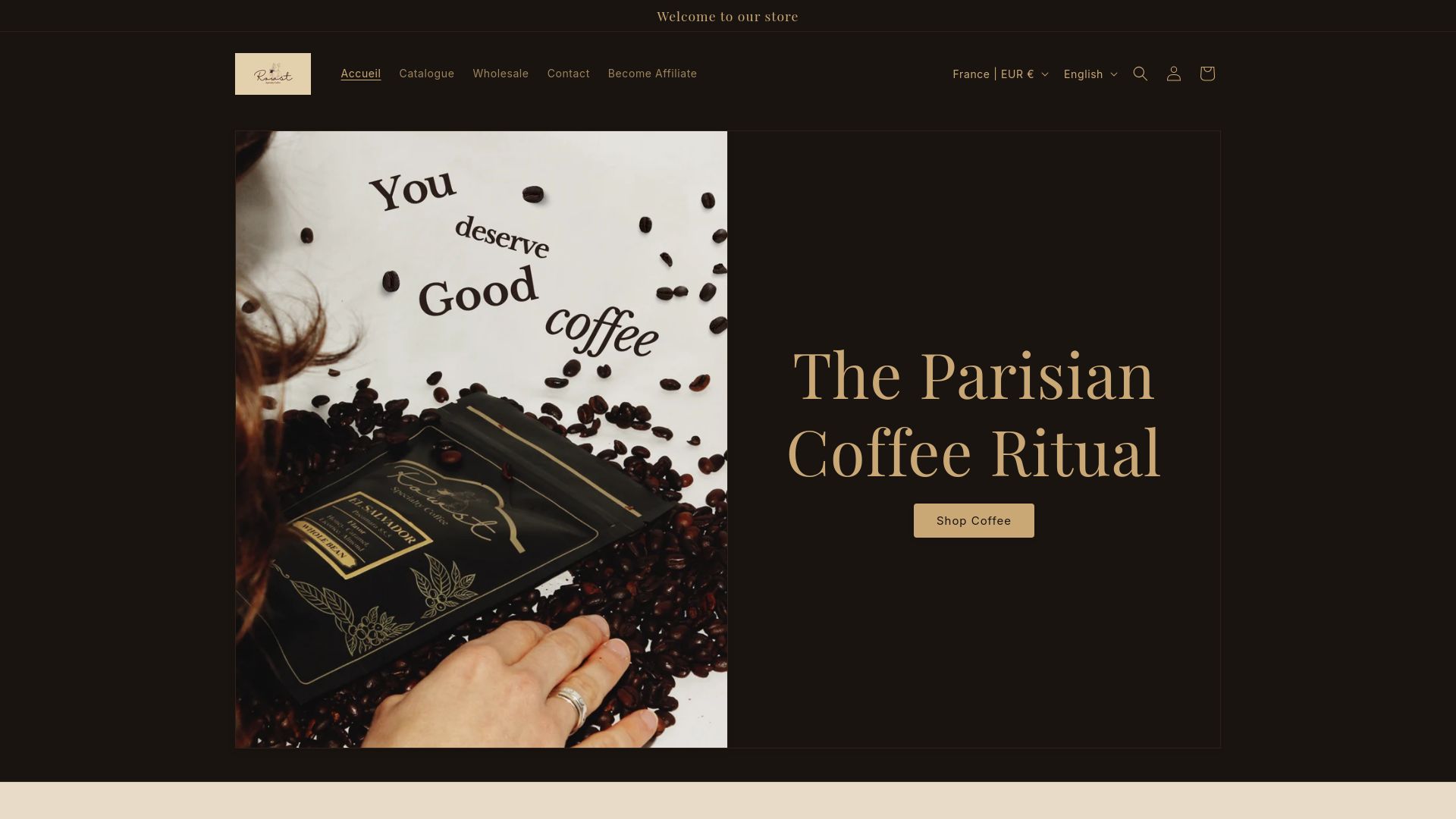
Every bag ships with a printed roast date and small-batch freshness as standard, not a premium add-on, and wholesale support is available once a café settles on which origins fit the menu. If a specific origin already stands out, the El Salvador Pacamara is a strong single-bean starting point for cafés wanting a showpiece pour-over option. Visit Rowst to browse the current lineup and place a sample order today.
Sources
- A new wave of cafes are changing the Parisian coffee scene — National Geographic
- 10 takeaways from Le Paris Café Festival 2026 — World Coffee Portal
- Specialty coffee shops and Parisian cafes — The New York Times
- What Makes Single‑Origin Coffee Beans So Unique? — VintFint