

Chemex Brew Guide for Home Baristas Who Want Precision
Brew 30 grams of coffee to 480 grams of water at 200°F, with a 30 to 45 second bloom and a total brew time of 4:00 to 5:30 minutes. That’s a 1:16 ratio, medium-coarse grind, and a three-part pour schedule after the bloom. Every variable in this recipe has a job: the ratio sets strength, the temperature range controls how fast extraction happens, and the brew time tells you whether your grind is doing its job or working against you.
That’s the whole method in one sentence. The rest of this Chemex brew guide exists to help you understand why those numbers work, and how to adjust them once you start tasting the difference between a good cup and a genuinely exceptional one.
Quick recipe to memorize:
- Coffee: 30g, medium-coarse grind (like coarse sea salt)
- Water: 480g at 200°F (90 to 96°C)
- Bloom: 60g water, 30 to 45 seconds
- Pours: two or three additional pours, finishing at the target water weight
- Total brew time: 4:00 to 5:30 minutes
| Point | Details |
|---|---|
| Baseline ratio | Start at 1:16 (coffee to water) and adjust by roast and taste. |
| Water temperature | Keep it between 195 and 205°F for balanced extraction. |
| Bloom timing | Pour twice the coffee weight and wait 30 to 45 seconds. |
| Total brew time | Target 4:00 to 5:30 minutes from first pour to final drawdown. |
Key Takeaways
A consistently excellent Chemex cup comes down to a 1:16 starting ratio, medium-coarse grind, 195 to 205°F water, and a 4:00 to 5:30 minute drawdown you use as your main diagnostic tool.
| Point | Details |
|---|---|
| Rinse thoroughly | Pour hot water through the filter to remove papery flavor and preheat the glass. |
| Measure by weight | Use a gram scale for coffee and water instead of scoops or cups. |
| Watch drawdown time | Total brew time between 4:00 and 5:30 minutes signals a well-matched grind. |
| Adjust one variable at a time | Change only ratio or only grind between brews to isolate what’s working. |
| Pour gently and evenly | Slow spirals from the center out keep extraction consistent across the bed. |
| Start with beans built for clarity | Light and medium single-origin roasts like those from Rowst suit Chemex’s clean profile. |
Where to go for official Chemex brewing resources
- The official Chemex how-to guide demonstrates filter folding, orientation, and rinse technique through branded videos straight from the source.
- The Baratza Chemex brew guide breaks down grind size reasoning and timing benchmarks with a grinder manufacturer’s technical perspective.
- The Cup-Timer Chemex recipe breakdown walks through the classic method with step photos and filter mechanics explained in detail.
- The Keep Roasting ratio calculator lets you generate a custom recipe based on your roast level, batch size, and preferred strength.
Table of Contents
- What You Need for a Reliable Chemex Brew Guide
- How Do You Brew Coffee With a Chemex Step by Step?
- What’s the Best Chemex Coffee Ratio for Your Batch Size?
- What Grind Size Works Best for a Chemex?
- Why Does Water Temperature Matter So Much for Chemex?
- Why Is My Chemex Coffee Sour, Bitter, or Slow to Drain?
- How Do You Fine-Tune Ratio for a Better Extraction?
- Does Altitude or Water Hardness Change Your Chemex Recipe?
- Which Coffees Actually Shine in a Chemex?
- Pair Your Chemex Technique With the Right Coffee
- Sources
What You Need for a Reliable Chemex Brew Guide
A Chemex is unforgiving of shortcuts. The glass carafe and its thick paper filter reward precision, and skipping a piece of equipment usually shows up in the cup as inconsistency you can’t explain. Here’s what actually earns a place on your counter.
- Chemex brewer: the 6-cup model (30 fl oz) is the most versatile for daily brewing; the 3-cup works well for solo drinkers who want a smaller, more manageable batch.
- Chemex bonded filters (FP-1 for smaller brewers, FP-2 for 6, 8, and 10-cup models): these filters run roughly 20 to 30% thicker than standard V60 or Kalita Wave filters, which traps more oil and fine sediment for a cleaner, lighter-bodied cup.
- Burr grinder: something in the Baratza Encore family gives you the consistency a Chemex demands. Blade grinders produce uneven particle sizes that muddy extraction no matter how careful your pour is.
- Digital gram scale: a basic kitchen scale like a Jennings or J Scale model is enough. Volume measurements (scoops, cups) are too imprecise for a method this sensitive to ratio.
- Gooseneck kettle: controls your pour rate and pattern, which matters more with Chemex than almost any other pour-over device.
- Timer: your phone works fine, but start it the moment water touches coffee.
Filter choice matters more than most guides admit. Bleached (white) filters are neutral in flavor; natural (brown) filters can carry a papery note unless rinsed thoroughly. Whichever you choose, fold the filter into a cone with the triple-layered side facing the spout. That orientation keeps the air channel open so water drains evenly instead of pooling and stalling.
Pro Tip: Clean your grinder’s burrs every few weeks if you brew daily. Stale coffee oils build up on burr surfaces and skew grind consistency in ways that look identical to a dull burr, even when the burr itself is fine.
How Do You Brew Coffee With a Chemex Step by Step?
This is the sequence that turns the recipe above into a repeatable habit rather than a lucky accident.
- Fold your filter into a cone, triple layer facing the spout, and set it into the Chemex.
- Rinse the filter with hot water, pouring enough to fully saturate it and preheat the glass. Discard the rinse water.
- Add ground coffee to the filter and give the brewer a gentle shake to level the bed.
- Zero your scale with the Chemex on top, then start your timer as you begin the bloom pour.
- Bloom: pour about twice the coffee weight (60g water for a 30g dose) in a slow spiral, saturating all the grounds. Wait 30 to 45 seconds for CO2 to release.
- First pour: bring the total weight up to roughly 240g, pouring in slow concentric circles and avoiding the filter’s paper walls.
- Second pour: continue to around 360g, pausing briefly if the water level rises too close to the rim.
- Final pour: finish at 480g total, then let the bed drain completely.
- Check your time: total brew time should land between 4:00 and 5:30 minutes from the start of the bloom to the last drips.
- Swirl and decant: give the Chemex a gentle swirl before serving to even out any stratification in the brewed coffee.
| Chemex size | Coffee dose | Water | Approx. yield |
|---|---|---|---|
| 3-cup | 20g | 320g | ~2 mugs |
| 6-cup | 30g | 480g | ~3 to 4 mugs |
| 6-cup (larger batch) | 50g | 800g | ~5 to 6 mugs |
That 50g to 800g combination is a well-known everyday formula among home baristas brewing for a household, and it lands right around the 5-minute mark when your grind is dialed in.
What’s the Best Chemex Coffee Ratio for Your Batch Size?
The 1:16 ratio is a starting line, not a finish line. Light roasts often taste better closer to 1:15 because a slightly stronger brew highlights their acidity and clarity without tipping into thinness. Darker roasts frequently do better loosened to 1:17 or even 1:18, since a lighter concentration keeps heavier, more soluble compounds from turning bitter.
Here’s how that plays out across common serving sizes at a 1:16 baseline:
- 1 cup (personal brew): 15g coffee, 240g water
- 2 cups: 25g coffee, 400g water
- 3 cups: 30g coffee, 480g water
- 6 cups (full batch): 50g coffee, 800g water
If you want to skip the math entirely and dial in a recipe by roast level or desired strength, a ratio calculator can generate a custom starting point in seconds. Use it as a launchpad, then adjust based on what you taste.
What Grind Size Works Best for a Chemex?
Chemex wants a medium-coarse grind, visibly coarser than what you’d use for a V60 and noticeably coarser than a French press setting. Think coarse sea salt: individual particles you can see and feel between your fingers, not a fine powder and not chunky pebbles either.
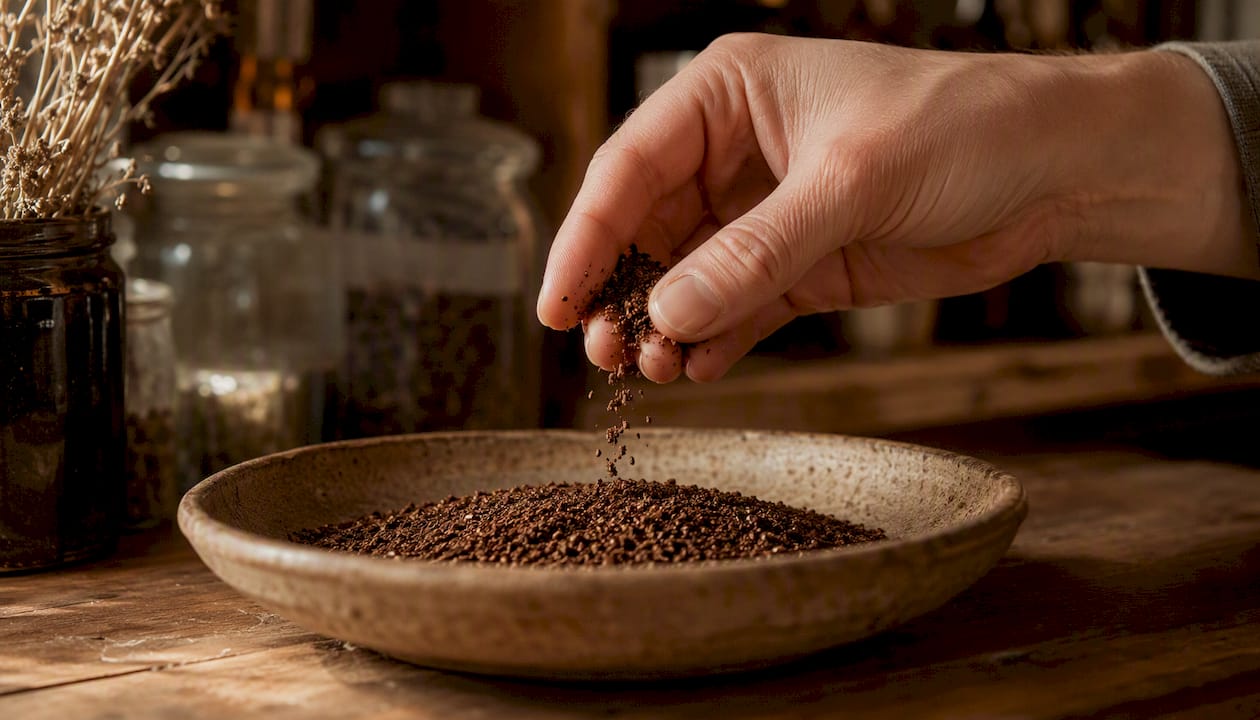
The thick bonded filter is why grind size matters so much here. That filter traps more fines than thinner papers, and if your grind produces too many fine particles to begin with, they compound the filtration’s natural slowdown and stall your drawdown entirely.
Use brew time as your primary diagnostic, not a stopwatch obsession but a genuine feedback signal.
- Drawdown under 4:00 minutes: grind is likely too coarse, producing a thin, sour, underdeveloped cup.
- Drawdown over 5:30 minutes: grind is likely too fine, and the filter is stalling flow, often leading to bitterness.
- Uneven drainage or sudden stalling: check filter orientation first; the triple-fold seam needs to face the spout to keep the air channel clear.
- Muddy or gritty cup: your burr grinder may need cleaning, or the grind setting has drifted finer than intended.
Adjust in small steps. Move your grinder one or two notches at a time and re-brew before making another change. Chasing consistency by overcorrecting in large jumps just adds noise to what should be a controlled experiment.
Pro Tip: Keep a small notebook or notes app entry with your grind setting, dose, and brew time for every batch. Patterns emerge after five or six brews that are invisible after just one or two.
Why Does Water Temperature Matter So Much for Chemex?
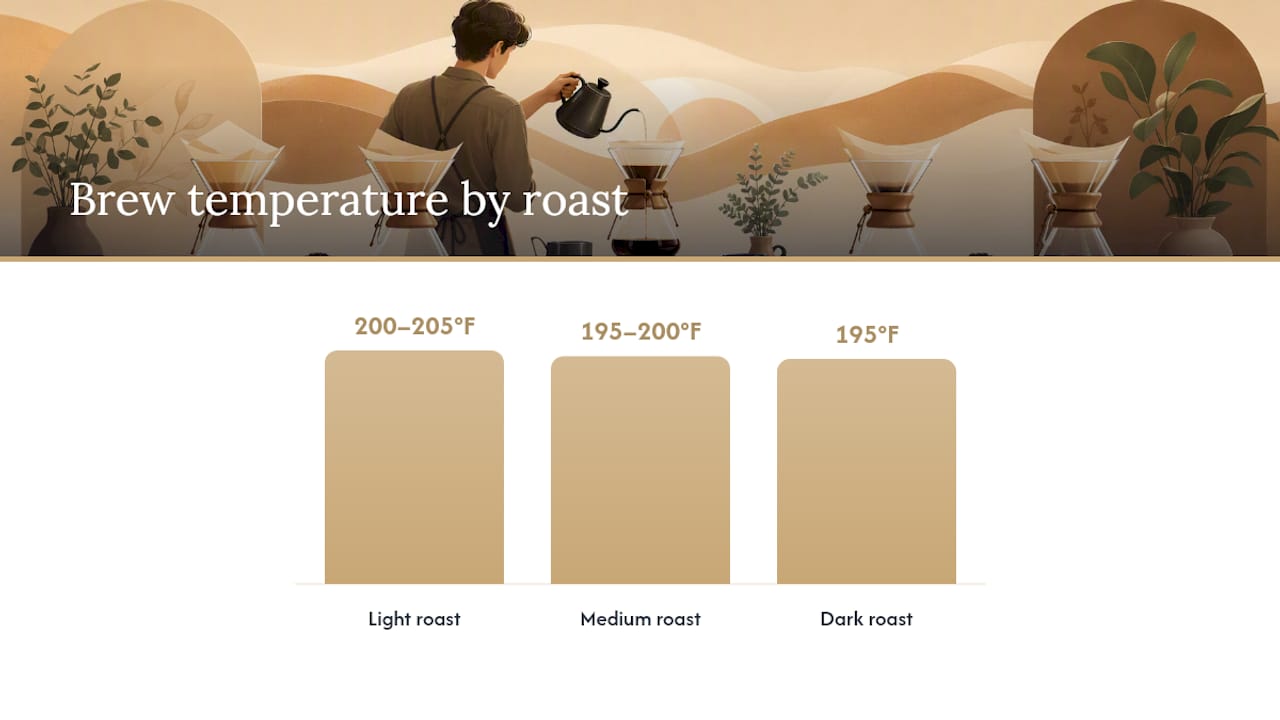
Water between 195 and 205°F (90 to 96°C) is the accepted range for Chemex and most manual pour-over methods. Hotter water extracts faster and pulls more solubles per second, which can push a light roast into pleasant complexity or a dark roast into ashy bitterness depending on your grind and timing. Cooler water slows things down, which sometimes flatters delicate light roasts but can leave darker, denser beans tasting underdeveloped and sour.
Pour technique matters just as much as temperature. A gooseneck kettle gives you the control to pour a thin, steady stream in slow, deliberate spirals, starting from the center and working outward without touching the filter’s paper walls. Pouring against the walls channels water down the sides instead of through the coffee bed, which shortchanges extraction in that section of grounds while over-extracting elsewhere.
| Roast level | Suggested temperature | Reasoning |
|---|---|---|
| Light roast | 200 to 205°F | Higher heat draws out acidity and complexity fully. |
| Medium roast | 195 to 200°F | Balanced extraction without pushing into bitterness. |
| Dark roast | 195°F | Lower heat avoids over-extracting bitter compounds. |
Pro Tip: A thorough pre-rinse does double duty: it eliminates papery flavor and preheats the glass, which helps your water stay closer to your target temperature throughout the pour instead of losing heat to a cold carafe.
- Pour in a slow spiral, avoiding the outer edge of the filter.
- Let the water level drop slightly between pours rather than topping off constantly.
- Keep your pour stream steady and thin, not a fast splash.
Why Is My Chemex Coffee Sour, Bitter, or Slow to Drain?
Most Chemex problems trace back to one of two root causes: extraction speed or filter mechanics. Here’s how to read the symptoms.
- Sour, thin, tea-like cup with fast drawdown: under-extraction. Grind finer or raise your water temperature slightly.
- Bitter, harsh, ashy cup with slow drawdown: over-extraction. Grind coarser or lower your water temperature.
- Papery or cardboard taste: insufficient filter rinse. Pour more hot water through the filter before adding coffee.
- Severe stalling or uneven drainage: filter oriented incorrectly, with the triple-fold seam not facing the spout.
- Muddy, gritty cup: grinder producing excess fines, often from a dull or dirty burr set.
Timing thresholds give you a fast read without needing to taste every cup analytically:
- If total brew time runs under 4:00 minutes, your grind is probably too coarse for the amount of coffee you’re using.
- If it runs over 5:30 minutes, your grind is probably too fine, or the filter has become partially clogged by excessive fines.
- If drawdown time looks right but flavor is off, check your water temperature and pour consistency before touching the grinder again.
A few maintenance habits prevent most of these issues before they start: store coffee in an airtight container away from light, use filters within a reasonable window of opening the package, and clean your grinder’s hopper and burrs on a regular schedule so residual oils don’t skew future brews.
How Do You Fine-Tune Ratio for a Better Extraction?
Ratio isn’t a rule carved into the side of your Chemex. It’s a lever, and once you understand what it controls, you can use it deliberately instead of defaulting to 1:16 out of habit.
Ratio determines strength, and strength interacts with extraction to shape everything you taste in the cup, from body to how long the finish lingers. A cup can be correctly extracted and still taste wrong if the ratio doesn’t match your preference or the roast’s character.
Run a one-variable experiment to find your ideal recipe. Brew the same coffee twice, changing only the ratio or only the grind size between batches, and record the result. Adjusting two variables at once tells you nothing useful about which change actually caused the difference.
- Cup tastes thin or watery: tighten the ratio (more coffee per gram of water) or grind slightly finer.
- Cup tastes drying, ashy, or harsh: loosen the ratio (less coffee per gram of water) or grind slightly coarser.
- Extraction seems right but strength feels off: adjust ratio first, since it changes concentration without touching extraction mechanics.
- Extraction seems wrong (sour or bitter) regardless of strength: adjust grind first, since that’s the lever that actually controls extraction speed.
If you own a refractometer and want to chase a specific total dissolved solids reading, treat that number as a checkpoint, not the goal itself. Taste still has the final word.
Does Altitude or Water Hardness Change Your Chemex Recipe?
Home baristas at higher elevations often notice water boils at a lower temperature, which can pull your effective brew temperature below the 195 to 205°F target even when your kettle reads correctly. If you’re brewing above roughly 3,000 feet, compensate by grinding slightly finer or extending your bloom time a few seconds to help offset the lower effective heat.
Water hardness plays an equally large role, though it’s easier to overlook. Water that’s very soft (low mineral content) tends to under-extract and produce flat, muted cups no matter how well-tuned your grind and ratio are. Very hard water, high in calcium and magnesium, can over-extract and introduce a chalky or mineral aftertaste, and it accelerates scale buildup inside your kettle and Chemex over time. If your tap water tastes off on its own, filtered water (a simple pitcher filter is usually enough) will give you a more consistent baseline to tune the rest of your recipe against.
Which Coffees Actually Shine in a Chemex?
The Chemex’s thick filter and clean brewing style favor coffees with distinct, expressive flavor notes rather than heavy, syrupy body. Light to medium roasts from single-origin lots tend to perform best, since the method’s clarity highlights acidity, florals, and fruit notes that get muddied in immersion brewing methods like French press.
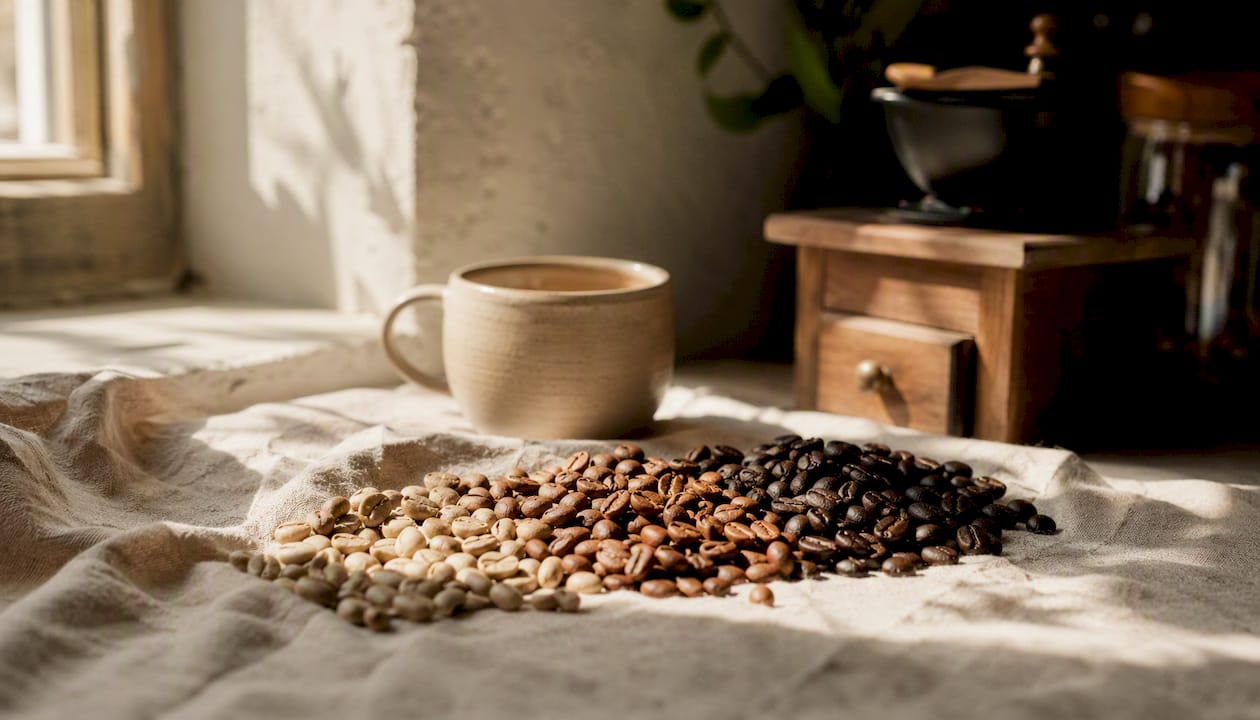
Washed process coffees are a particularly strong match, since their cleaner, brighter profiles align with what Chemex naturally emphasizes. Naturally processed coffees with pronounced fruit character can also work beautifully, provided the grind and ratio are dialed in carefully enough to avoid over-extracting their more delicate sugars into bitterness.
A brewer’s honest take on chasing the perfect cup
Getting comfortable with a Chemex is less about memorizing one perfect number and more about building a feel for cause and effect. Change your grind two notches, watch what happens to drawdown time, taste the result, and write it down. Do that consistently for a couple of weeks and you’ll develop an intuition that no calculator can hand you outright.
The numbers in this guide, the 1:16 ratio, the 200°F target, the 4:00 to 5:30 brew window, are starting coordinates, not destinations. Some of the best cups I’ve read about in brewing forums and roaster notes break at least one of these rules deliberately, because the brewer tasted their way there instead of trusting the recipe blindly. Record what you taste more than you trust what you measure, and let the numbers serve the cup rather than the other way around.
Pair Your Chemex Technique With the Right Coffee
A dialed-in brew method only gets you halfway there. The other half is starting with beans that reward the Chemex’s clarity instead of fighting against it, and that’s where sourcing actually matters. Rowst works directly with small-scale producers, which means the light and medium roasts in its lineup are picked and processed with pour-over methods like Chemex in mind, not just roasted for a generic blend shelf.

The Uganda Bugisu offers the fruit-forward brightness that a Chemex’s clean extraction really shows off, while the Mexico Veracruz leans rounder and more balanced for readers who want a gentler cup without losing definition. If you’d rather test your new brewing skills across several origins before committing, the Coffee Lover Pack gives you that range in one order. Pick a bag, weigh out your dose, and see how differently each origin behaves under the same recipe.
Sources
- Chemex Brew Guide
- Chemex Coffee Recipe: Classic Method, Ratio & James Hoffmann’s Technique | Pour Over Timer
- How to brew with CHEMEX – Chemex Coffeemakers & Filters
- Chemex Ratio Calculator | Perfect Coffee to Water Ratio for Chemex — Keep Roasting