

Coffee and Chocolate Pairing: Rules Every Enthusiast Should Know
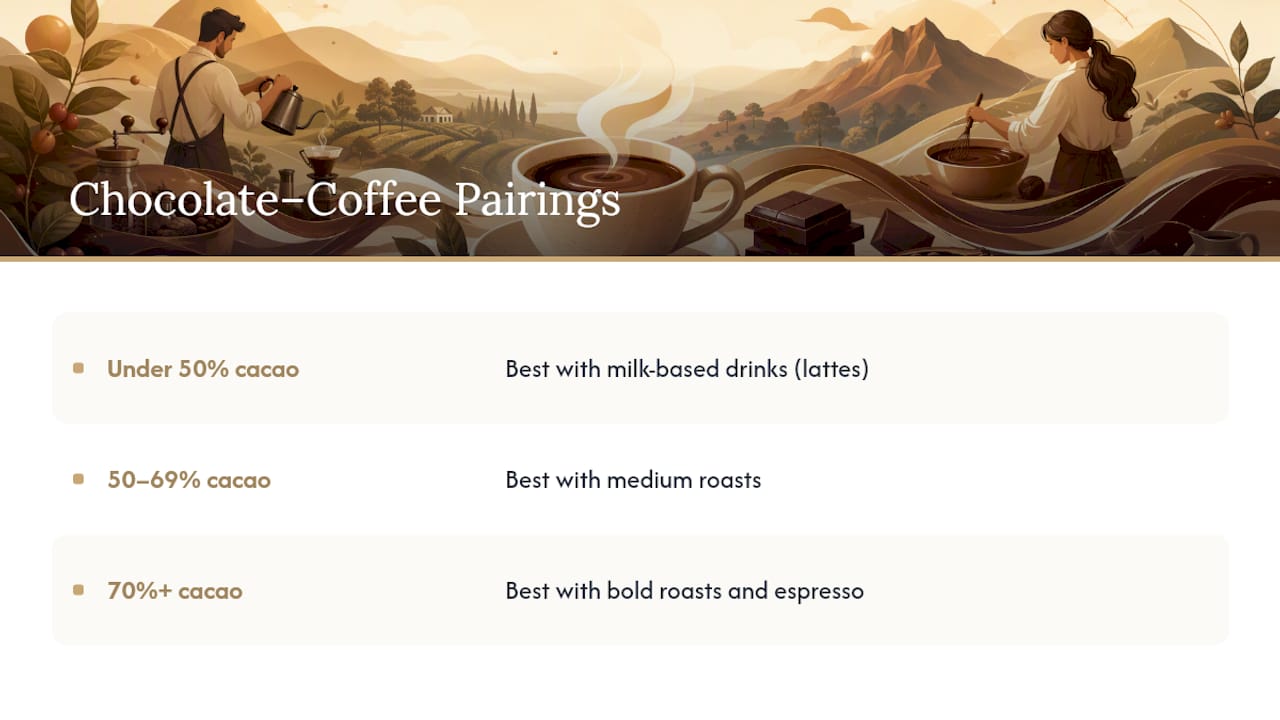
The rule at the heart of every good coffee and chocolate pairing is simple: match cacao percentage to roast intensity. Dark chocolate above 70% wants a bold roast or a shot of espresso; chocolate in the 50 to 69% range prefers a medium or medium-dark roast; anything under 50% cacao is happiest next to a milk-based drink, according to the pairing framework a professional chocolatier outlined for Tasting Table.
A few combinations to try tonight include pairing your coffee with a custom chocolate coffee cup shaped bar for a delightful novelty experience.
- Espresso + 70% dark chocolate — concentrated intensity meets concentrated intensity.
- Latte + milk chocolate — the milk softens both, so nothing competes.
- Pour-over Ethiopian + 65 to 70% Madagascar bar — bright fruit notes echo each other.
- Cold brew + a square of dark caramel chocolate — low acidity lets the caramel shine.
Key Takeaways
Matching cacao percentage to coffee roast level, then refining by flavor note and brew method, is the fastest route to a pairing that actually works.
| Point | Details |
|---|---|
| Match cacao to roast | Use 70%+ cacao with bold/dark roasts or espresso, 50 to 69% with medium roasts, and under 50% with milk drinks. |
| Read beyond the percentage | Inclusions like sea salt or dried fruit raise a chocolate’s effective intensity regardless of its cacao number. |
| Match flavor notes and watch acidity | Bridge fruity coffees with fruit-forward chocolate, but avoid pairing two high-acid components together. |
| Let brew method guide texture | Espresso favors dense chocolate, pour-over favors bright fruit notes, and cold brew suits high-fat pairings. |
| Taste with a method | Use the sip-bite-sip protocol and change one variable at a time to learn what actually shifted the flavor. |
| Start with single-origin beans | Rowst’s Coffee Lover Pack and single-origin bags like El Salvador Pacamara give you a direct way to test these rules. |
Table of Contents
- What Makes Coffee and Chocolate Pairing Work in the First Place
- How to Match Roast Level to Cacao Percentage
- Pairing by Flavor Notes and Origin
- How Brew Method Changes the Right Chocolate
- A Tasting Method That Works Like a Pro’s
- Your Fast-Reference Coffee and Chocolate Cheat Sheet
- Common Pairing Mistakes to Avoid
- Try These Pairings With Rowst’s Single-Origin Coffees
- Frequently Asked Questions
- Sources
What Makes Coffee and Chocolate Pairing Work in the First Place
Coffee and chocolate start life in strikingly similar ways. Both come from fermented, dried, and roasted seeds, and that shared processing builds overlapping flavor compounds, an origin story that runs deeper than most tasters realize, as Vosges Chocolate points out. Roasting drives the real chemistry: pyrazines create nutty and toasted notes, aldehydes bring fruitiness, and esters contribute the floral, jammy quality you taste in a washed Ethiopian or a fruit-forward bar, per The Manual’s breakdown of shared aromatics.
The physical side matters just as much as the chemistry. Chocolate’s fat content coats your palate, which can either soften a coffee’s sharp edges or expose aromatics you missed on the first sip.
- Fat and bitterness offset each other, so a fatty chocolate tames a bitter dark roast.
- Sugar in the chocolate balances coffee’s natural acidity.
- Coffee’s viscosity (thin filter versus syrupy espresso) changes how much chocolate flavor survives on the palate.
How to Match Roast Level to Cacao Percentage
Once you understand why the pairing works, the next step is building a reliable rulebook you can use without a lab coat. Cacao percentage is your fastest signal, and it maps almost directly onto roast level.
- 70%+ cacao → bold or dark roasts, or straight espresso. The intensity of one won’t get lost against the other.
- 50 to 69% cacao → medium to medium-dark roasts. This is the most forgiving band, and where most people start experimenting.
- Under 50% cacao (milk chocolate) → milk-based drinks like lattes, cortados, or cappuccinos, where the dairy in both elements meets in the middle.
This scaling method, confirmed by the same chocolatier interview, works as a starting point, not gospel. “Intensity” isn’t only about the cacao number on the wrapper.
Rules exist to be tested, too. Experts who spend their careers pairing flavors will tell you that an occasional “clash,” like a light roast against a spicier dark chocolate, sometimes produces something more interesting than the safe choice, an idea worth taking seriously when Tasting Table’s expert encourages deliberate experimentation.
Pairing by Flavor Notes and Origin
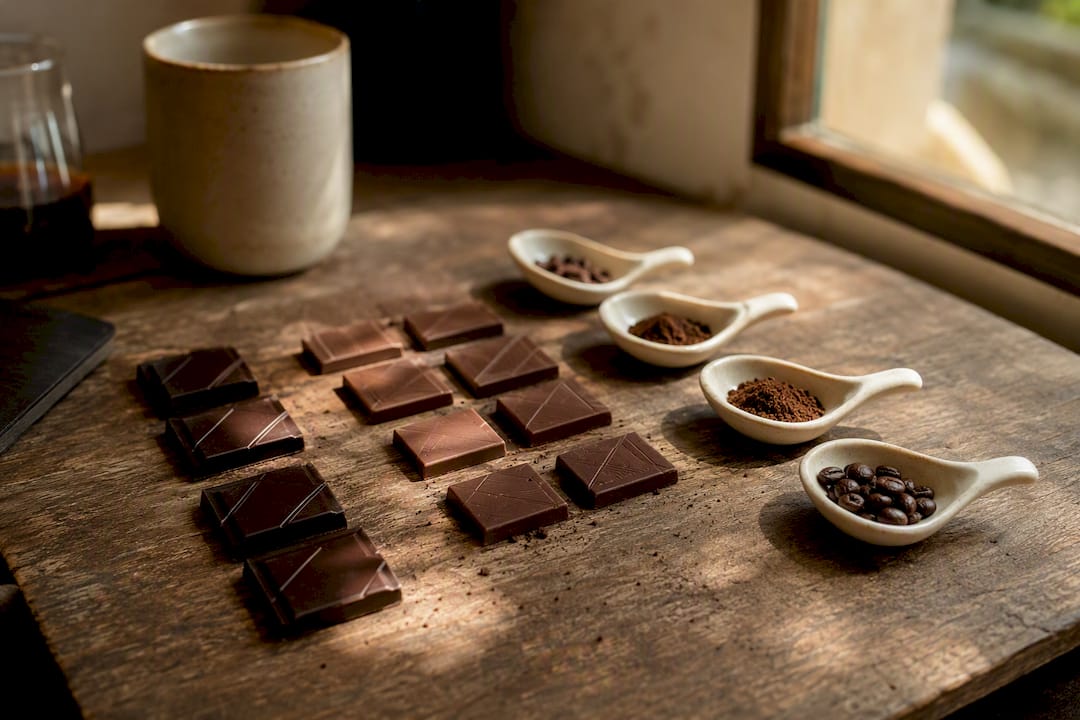
Roast and cacao percentage get you in the right neighborhood. Flavor notes get you to the exact address. Start by naming what you taste in each: berry or citrus brightness, roasted nut, caramel, floral perfume, or baking spice. Once you have those words, look for a chocolate or coffee that either mirrors or complements them.
Origin-based “bridge” pairings are where advanced tasters spend most of their time. A washed Ethiopian coffee, with its blueberry and jasmine character, finds a natural partner in a fruit-forward Madagascar chocolate, since both carry bright, high-toned notes that reinforce each other rather than compete.
- Nutty Brazilian or Colombian coffees pair naturally with hazelnut or almond-inclusion chocolates.
- Caramel-forward Central American coffees echo caramelized or brown-butter chocolate bars.
- Spiced coffees (cardamom, cinnamon notes from natural processing) work well against chocolates with chili or warm baking spice.
Watch the acidity, though. Pairing a high-acid natural Ethiopian with an equally sharp, high-acid dark chocolate can create an unpleasant edge rather than harmony, a pitfall The Manual specifically flags for tasters chasing origin matches. When in doubt, let one side carry the acidity and the other carry the richness.
How Brew Method Changes the Right Chocolate
The same coffee tastes like a different drink depending on how you brew it, and that shift changes what belongs next to it. Espresso is concentrated and syrupy, which is exactly why it wants a dense, high-cacao chocolate that can stand up to it without disappearing.
Pour-over does the opposite job. Its clarity highlights bright, fruit-forward chocolates because nothing muddies the cup, a distinction CafeSerre’s pairing guide draws out clearly. French press, with its oils and heavier body, favors richer, fudgier chocolate textures that match its weight rather than fighter for attention.
- Espresso → dense, high-cacao chocolate.
- Pour-over → bright, fruit-forward chocolate.
- French press → rich, oily-textured chocolate.
- Milk drinks (latte, cappuccino) → milk or white chocolate, since dairy softens bitterness on both sides.
- Cold brew → low-acid profile pairs surprisingly well with drinking chocolate or higher-fat bars, since there’s little sharpness to compete with.
A Tasting Method That Works Like a Pro’s
Good pairing judgment comes from a repeatable process, not luck. Try this:
- Cleanse your palate with water or a plain cracker.
- Sip the coffee alone and note two or three descriptors.
- Bite the chocolate and let it melt rather than chewing it down.
- Sip the coffee again and notice what changed, not just whether you liked it.
- Write down whether the pairing amplified a note, canceled one out, or created something new.
Treat coffee the way a sommelier treats wine: origin, roast, and processing all shape the glass, and chocolate’s fat content makes it an unusually revealing tasting partner, an approach Bon Appétit recommends for anyone serious about the craft. Change one variable at a time (roast, cacao percentage, origin, brew method, or serving temperature) so you actually learn which factor moved the needle.
Pro Tip: Drop a small square of milk chocolate into the bottom of a hot cup before pouring your coffee over it. As it melts, it thickens the texture and softens acidity, essentially building an improvised mocha that reveals how much texture alone can shift a pairing.
Your Fast-Reference Coffee and Chocolate Cheat Sheet
Keep this nearby the next time you’re shopping for beans or bars:
- 70%+ cacao → bold/dark roast or espresso
- 50 to 69% cacao → medium/medium-dark roast
- Under 50% cacao → milk-based drinks
- Bright, fruity coffee → fruit-forward or floral chocolate
- Rich, nutty coffee → caramel or nut-inclusion chocolate
To adjust any combo, add milk to soften and sweeten, or switch to a brighter roast to sharpen the acidity if the pairing feels flat.
Common Pairing Mistakes to Avoid
Don’t pair a high-acid light roast with an equally sharp dark chocolate. Two acidic elements amplify each other into an unpleasant edge rather than balance.
- Don’t overpower a delicate single-origin filter coffee with a heavy, dense dessert. One will erase the other.
- Do use bridge flavors like nuts, dried fruit, or caramel to link two components. Matching intensity, not just flavor, prevents nuance from being lost, a balance point that Expresso’s pairing guide emphasizes for beginners and advanced tasters alike.
Why single-origin pairing still surprises us
Pairing never gets old because single-origin coffee changes with every harvest, so the “right” chocolate shifts too. That constant recalibration, testing origin against bar after bar, is what keeps a tasting session honest and interesting.
Try These Pairings With Rowst’s Single-Origin Coffees
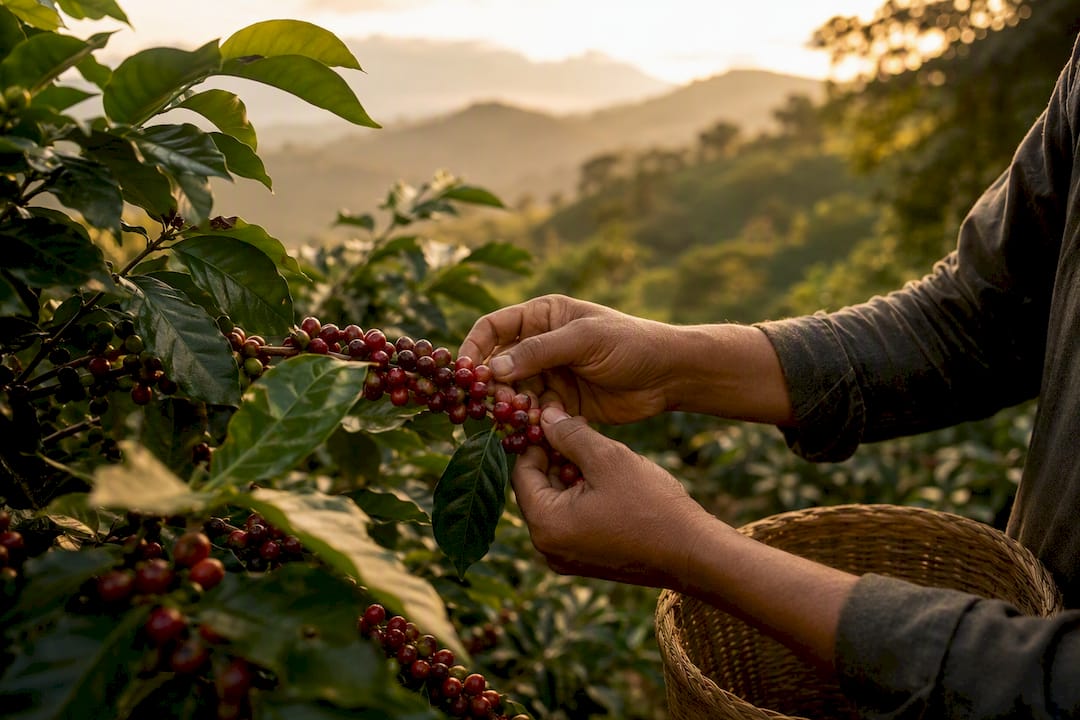
Rowst built its selection around exactly the kind of single-origin character that makes pairing rewarding: distinct, traceable beans sourced directly from small-scale producers rather than blended for consistency. If you want to start testing the rules above without guessing at beans, the Coffee Lover Pack gives you several origins in one box, so you can run the sip-bite-sip method across roasts in a single sitting.
One combination worth testing first: the El Salvador Pacamara, with its rounded, low-acid profile, against a 70% dark chocolate bar. If you lean toward brighter, more floral cups, the Mexico Veracruz offers a different bridge point for fruit-forward chocolates. Order a pack, set aside twenty minutes, and taste your way through the cheat sheet above.
Frequently Asked Questions
Does chocolate pair well with coffee? Yes. Shared origins, similar roasting chemistry, and overlapping aromatic compounds mean coffee and chocolate reinforce each other far more often than they clash, provided you match intensity and flavor notes rather than grabbing anything on the shelf.
What type of chocolate pairs best with coffee? It depends on the roast. Dark chocolate above 70% cacao suits bold roasts and espresso, chocolate between 50 and 69% works with medium roasts, and milk chocolate under 50% cacao pairs best with milk-based drinks like lattes.
Is it good to eat chocolate with coffee? It can enhance both. Chocolate’s fat coats the palate and can reveal subtle aromatics in the coffee, while the coffee’s bitterness and acidity cut through the chocolate’s sweetness, creating a more balanced tasting experience than either on its own.
Sources
- A Chocolatier Explains Exactly How To Pair Coffee And Chocolate
- These coffee and chocolate origins were made for each other - The Manual
- Bon Appetit: Chocolate and coffee pairing guidance
- Coffee and food pairing guide 2026 | CafeSerre
- Why Coffee and Chocolate Are the Perfect Pairing | Vosges Chocolate
Check origin- and product-specific tasting notes whenever they’re available. They’re the fastest shortcut to knowing what a specific bar or bean will actually do in the cup.