

1:16 Kalita Wave Recipe: 20g → 320g in 3:30 for Repeatable Cups
A 1:16 coffee-to-water ratio is your starting point for any Kalita Wave brew, and its flat bottom with three small holes makes it more forgiving than a cone dripper. For the Wave 155: 22g coffee, 350g water at 200°F, medium grind, total brew around 2:45. For the Wave 185: 20g coffee, 320g water, same temperature, finishing near 3:30.
TL;DR:
- Using a consistent 1:16 coffee-to-water ratio and scalable recipes ensures repeatable pour-over results with the Kalita Wave.
- Proper tools such as a gooseneck kettle, accurate scale, and thermometer, plus rinsing filters, are essential for optimal brewing.
- Maintaining water temperature between 195°F and 205°F and controlling pour timing significantly influences extraction and flavor clarity.
- Adjust grind size and drawdown time to troubleshoot brewing issues like under-extraction, over-extraction, or uneven flow.
- Fresh, high-quality single-origin beans, especially lighter roasts from regions like Uganda or Mexico, maximize the Kalita Wave’s clarity and sweetness.
Table of Contents
- Standard Kalita Wave Recipes for the 155 and 185
- What You Need Before You Start Brewing
- How to Pour: A Step-by-Step Timed Schedule
- Fixing a Brew That’s Too Fast, Too Slow, or Just Off
- Small Adjustments That Change Body, Clarity, and Sweetness
- Rowst’s Brewing Resources and Choosing Beans for Your Wave
- When I Stick to the Recipe and When I Break It
- Ready to Brew? Start With Beans Worth the Ritual
- Sources
Standard Kalita Wave Recipes for the 155 and 185
Both sizes follow the same architecture. Only the numbers change. Once you know the ratio, scaling up or down for a bigger mug or a second cup at the table is arithmetic, not guesswork.
Kalita Wave 155 (the smaller dripper, ideal for a single 12 oz cup):
- Dose: 20 to 22 grams of coffee
- Water: 320 to 350 grams, off the boil and cooled to 195°F to 205°F
- Grind: medium, similar to coarse sand
- Total brew time: 2:30 to 3:15
Kalita Wave 185 (the standard cafe size, built for larger servings or two cups):
- Dose: 20 to 25 grams of coffee
- Water: 320 to 400 grams at the same 195°F to 205°F range
- Grind: medium
- Total brew time: 3:00 to 3:45
If you want more coffee without breaking the recipe, scale the dose and water together and keep the 1:16 ratio intact. Thirty grams of coffee simply becomes 480 grams of water. That consistency is what separates a repeatable pour-over ritual from a coin flip. A 20g dose typically yields roughly one generous cup, while a larger dose produces more servings accordingly.
What You Need Before You Start Brewing
Good technique cannot compensate for the wrong tools. Before you touch a kettle, gather these:
- Kalita Wave dripper, 155 or 185, matched to your server
- Kalita Wave filters (the flat-bottom shape only fits this filter style, not cone filters)
- Gooseneck kettle for controlled, thin pours
- A scale accurate to 0.1 gram
- A burr grinder set to medium
- A thermometer, unless your kettle has one built in
- A timer, or your phone
Rinse the filter with hot water before adding coffee. This clears papery taste and preheats the dripper and server, which keeps your brew temperature stable from the first pour to the last drop. Skip this step and you will taste it, especially in a lighter roast where paper flavor has nowhere to hide.
Use filtered water heated to 195°F to 205°F. Water that is too hot scorches delicate coffee; too cool, and you will struggle to dissolve enough flavor before drawdown ends.
Pro Tip: A gooseneck kettle isn’t a luxury here. Its narrow spout is what lets you control pour rate precisely enough to keep the Kalita Wave’s flat bed saturated evenly, instead of carving a crater in the middle.
How to Pour: A Step-by-Step Timed Schedule
This walkthrough uses the Wave 185 with 20g coffee and 320g water, a ratio drawn from widely used cafe recipes. Adjust proportionally for the 155.
- Start the timer at your first pour. Pour 40g of water (twice your coffee weight) directly onto the grounds in a slow spiral, saturating the bed evenly.
- Let it bloom for 30 to 45 seconds. Watch for the bed to puff up and release gas. This is degassing, and skipping it means uneven extraction later.
- First main pour, around the 0:45 mark. Pour to bring the total weight to about 160g, moving in a steady spiral from the center outward.
- Second pour, near 1:30. Bring the total to roughly 240g. Keep the pour rate gentle so the water level in the dripper never rises much above the filter’s midpoint.
- Third and final pour, around 2:15. Top off to your full 320g target.
- Let it draw down fully. The bed should finish draining by 3:15 to 3:45 total. A classic Gota recipe built on this exact structure lands around 3:30.
- Give the dripper a gentle tap once drawdown slows, to settle the last of the slurry and pull remaining water through the bed rather than letting it pool at the edges.
- Remove the dripper and serve as soon as dripping stops. Letting it sit on the server after drawdown ends risks drawing out bitter compounds.
For the Wave 155, scale everything down: 22g coffee, a 44g bloom, and total water landing near 350g by the final pour.
Fixing a Brew That’s Too Fast, Too Slow, or Just Off
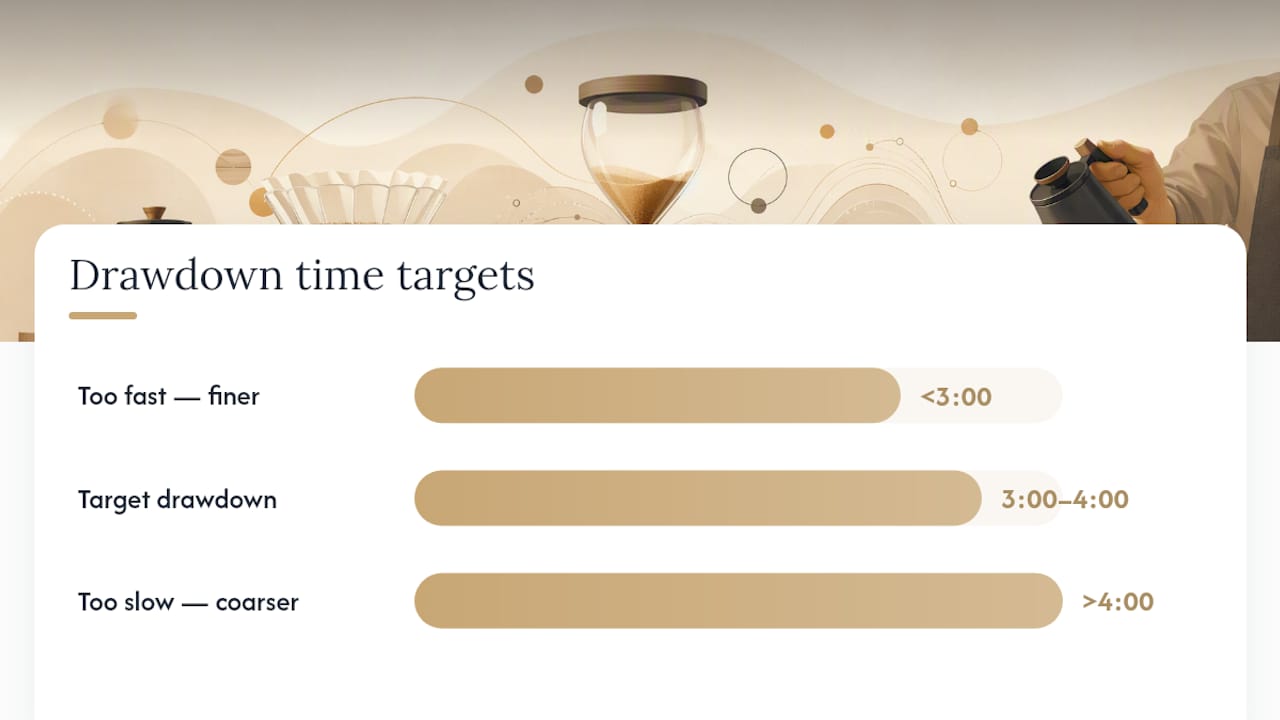
Drawdown time is your best diagnostic tool, and the fix is almost always one of two moves.
- Finished under 3:00 total? Your grind is too coarse. Go finer on your next brew.
- Running past 4:00? Grind is too fine, or you agitated too much. Go coarser.
- Tastes sour or thin? Extraction stopped too early. Grind finer, raise your water temperature slightly, or both.
- Tastes bitter or harsh? You overextracted. Grind coarser, drop the temperature a degree or two, or pick up your pour rate slightly.
The Kalita’s flat bed is what makes these fixes reliable. A cone dripper concentrates flow through a single point at the bottom, so uneven grounds distribution shows up immediately as channeling. The Wave’s three-hole flat bottom spreads flow more evenly, which buys you room for a slightly imperfect pour without ruining the cup.
Change only one variable per brew: grind, temperature, or pour rate, never all three at once. Log your drawdown time each time. A consistent baseline recipe with a written log is genuinely the fastest way to land on your ideal cup, because you’re comparing single changes against a known result instead of guessing at three variables simultaneously.
Small Adjustments That Change Body, Clarity, and Sweetness
Once the base recipe is dialed in, small technique changes shape the cup more than most people expect.
Spiral pours versus pulsed pours. A steady, slow spiral keeps the bed level and tends to produce a cleaner, more balanced cup. Pulsed pours, pausing between pours to let the bed partially drain, can boost body with fast-draining coffees, but on the Wave they often just add unnecessary minutes to your brew time. Reach for pulsing selectively, not as a default.
Kettle height and pour rate matter more than you’d think. Pouring from higher up agitates the bed more, which can pull extra extraction from a coffee that’s resisting. A closer, slower pour keeps things gentle, useful for delicate light roasts you don’t want to push too hard.
Finish with a tap, then a pause. Letting the slurry settle for a few seconds before you tap the dripper consolidates the last bit of coffee and pulls it cleanly through the bed instead of dripping unevenly down the sides.
Pro Tip: If your brew stalls mid-pour because of a fine grind, a gentle swirl of the dripper early on can break up channels without forcing you to change your grind setting on the spot.
Rowst’s Brewing Resources and Choosing Beans for Your Wave
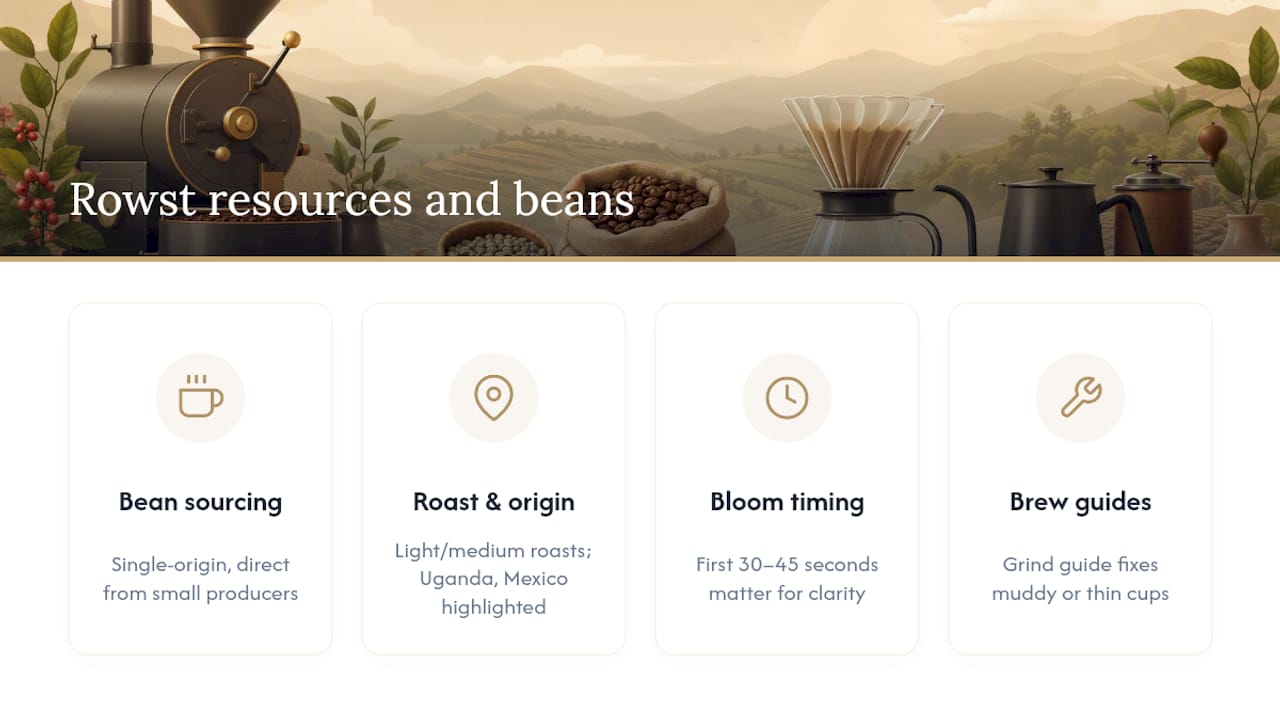
A great recipe only gets you halfway. The bean matters just as much as the pour. Rowst sources single-origin specialty coffee directly from small-scale producers, and lighter or medium roasts from origins like Uganda or Mexico tend to reward the clarity and sweetness the Kalita Wave is built to highlight.
If you’re dialing in grind settings, Rowst’s guide to coffee grind size walks through fixing muddy or thin cups in more depth than a single troubleshooting list can cover. Curious about bloom mechanics? The coffee bloom breakdown explains why that first 30 to 45 seconds matters so much. And if summer has you brewing over ice, the iced pour-over guide adapts this same recipe logic for a cold glass.
When I Stick to the Recipe and When I Break It
On weekday mornings, I run the exact recipe: same dose, same temperature, same pours, because consistency beats experimentation when I’m half awake. Weekends are for tinkering. A different origin, a slightly coarser grind, a slower pour. That’s when a Kalita Wave earns its reputation as a forgiving lab, not just a brewer.
— Diego
Ready to Brew? Start With Beans Worth the Ritual
A dialed-in recipe only shows its full potential with coffee that deserves the attention. Freshly roasted, traceable single-origin beans reveal the sweetness and clarity a Kalita Wave is built to draw out, while stale or blended coffee flattens all that careful pouring into something forgettable.

Rowst’s single-origin coffee collection gives you direct-sourced beans from small producers in regions like El Salvador and Uganda, each with a distinct profile worth exploring cup by cup. If you’re not sure where to start, a discovery pack lets you run the same recipe across a few origins and taste the difference technique alone can’t create. Pick a bag, set your scale to 20 grams, and see what your next pour actually tastes like.
Sources
- Kalita Wave Guide — Coffee Studies
- How to Brew with a Kalita Wave — Sprudge
- Classic — Recipe for Kalita Wave 185 — Gota