

Rest Coffee Beans to Peak: Day 1, 7, 14 Tests for Home & Pro Brewers
Rest whole beans a minimum of 12 to 24 hours before brewing, and let most coffees breathe for a week or more before you judge them at their best. Roast level and brew method decide the rest of the equation: darker roasts and filter brewing forgive a shorter wait, while light roasts and espresso reward patience. Taste the same coffee on day 3, day 7, and day 14, and let your cup tell you when it has arrived.
TL;DR:
- Beans should rest for 12 to 24 hours after roasting, with some scenarios requiring up to four weeks for optimal flavor development.
- Light roasts and espresso demand longer resting periods, often two to three weeks, due to denser cell structures and higher CO2 retention.
- Resting helps reduce uneven extraction and sourness caused by excess CO2, while too little rest results in lively blooms, sour taste, and channeling.
- Proper storage involves venting beans initially, then transferring them to airtight, opaque containers, avoiding refrigeration and re-freezing.
- Tasting the coffee at multiple points—days 3, 7, and 14—clarifies when it reaches peak flavor, guided by bloom behavior, shot stability, and flavor balance.
Table of Contents
- What Resting Coffee Beans Actually Does
- What the Science Says About Degassing Timelines
- How Long to Rest Coffee Beans by Roast and Brew Method
- Storing Coffee Beans While They Rest
- How to Tell When Your Coffee Has Peaked
- Why Rowst Tests Every Batch Before It Peaks
- The Problem With Treating Resting as a Fixed Rule
- Test Your Own Resting Window With Rowst
- Sources
What Resting Coffee Beans Actually Does
Resting coffee beans, or degassing, is the slow release of carbon dioxide that roasting locks inside the bean. Heat breaks down sugars and cell structures during roasting, and CO2 becomes trapped in the bean’s porous interior as a byproduct. That gas has nowhere to go but out, and it escapes gradually through the bean’s surface for days after the roast finishes.
CO2 plays a strange double role in your cup. Too much of it, and it pushes back against water during brewing, causing uneven saturation, an aggressive bloom, and extraction that tastes thin or sour despite a strong aroma. But a little residual CO2 also acts as a shield, slowing the oxygen exposure that eventually turns fresh coffee stale and flat.
That trade-off is why resting exists as a deliberate step, not an inconvenience:
- Fresh-roasted beans push out water unevenly, which mutes sweetness and clarity in the cup.
- Whole beans hold onto CO2 far longer than ground coffee, since grinding shreds the cell walls that were containing the gas.
- Grinding coffee releases most of its remaining CO2 within minutes, which is exactly why grinding right before brewing preserves more of that flavor-protecting buffer.
What the Science Says About Degassing Timelines
Roughly 40% to 70% of a roasted batch’s trapped CO2 escapes in the first 24 hours after roasting, which explains why brewing same-day coffee often tastes chaotic no matter how good the roast was. That initial burst is the most violent phase of the entire resting period.
The fast fact: Nearly half a roast’s total CO2 can vanish in a single day, but the coffee still needs weeks to finish settling into balance.
After that first rush, the pace slows dramatically. The Specialty Coffee Association notes that degassing runs fastest through roughly the first 20 days, making the initial three weeks the period when aroma and extraction change the most from one day to the next. Whole beans commonly hold a practical freshness peak for about three weeks under good storage, after which flavor starts a slower decline even if some CO2 remains.
A handful of variables stretch or compress that window:
- Roast profile and machine type: air roasters and lighter roasts often need longer rest, sometimes one to four weeks, while drum-roasted dark coffees can settle within days.
- Bean density and processing: natural-processed and high-altitude, dense beans degas more slowly than washed or lower-density lots.
- Packaging and temperature: beans sealed in one-way valve bags degas at a steadier pace than beans left in an open jar, and warmer storage speeds the whole process up, for better and worse.
How Long to Rest Coffee Beans by Roast and Brew Method
Treat these as starting windows, not deadlines. Every origin and roast profile behaves a little differently, so use these ranges to set your first test, then adjust from what you taste.
- Dark roast, filter brew: 3 to 5 days. Dark roasts arrive with a more open, brittle cell structure, so they shed CO2 quickly and rarely need more than a work week.
- Medium roast, filter brew: 5 to 10 days. This is the most forgiving combination, and most drip or pour-over coffee tastes balanced somewhere in this window.
- Light roast, filter brew: 10 to 18 days. Denser, less-developed cell walls trap gas longer, so light roasts need real patience before their sweetness comes through cleanly.
- Dark roast, espresso: 5 to 8 days. Espresso concentrates every flaw resting is meant to fix, so give even a fast-degassing dark roast a few extra days beyond its filter timeline.
- Medium roast, espresso: 8 to 14 days. This is the range most café pros default to when dialing in a new espresso lot.
- Light roast, espresso: 14 to 21 days, sometimes longer. Light, dense, naturally processed beans pulled as espresso are the slowest coffees to settle, and rushing them usually shows up as channeling or a sour, unstable shot.
Espresso needs more patience than filter brewing across the board, because the method is more sensitive to residual CO2: pressure forces water through a compact puck, and trapped gas disrupts that contact far more visibly than it does in a gravity-fed pour-over. If you’re working with a naturally processed or high-altitude lot, push toward the longer end of whichever range applies, and if you switched roast machines recently, expect your usual timing to shift too.
Storing Coffee Beans While They Rest
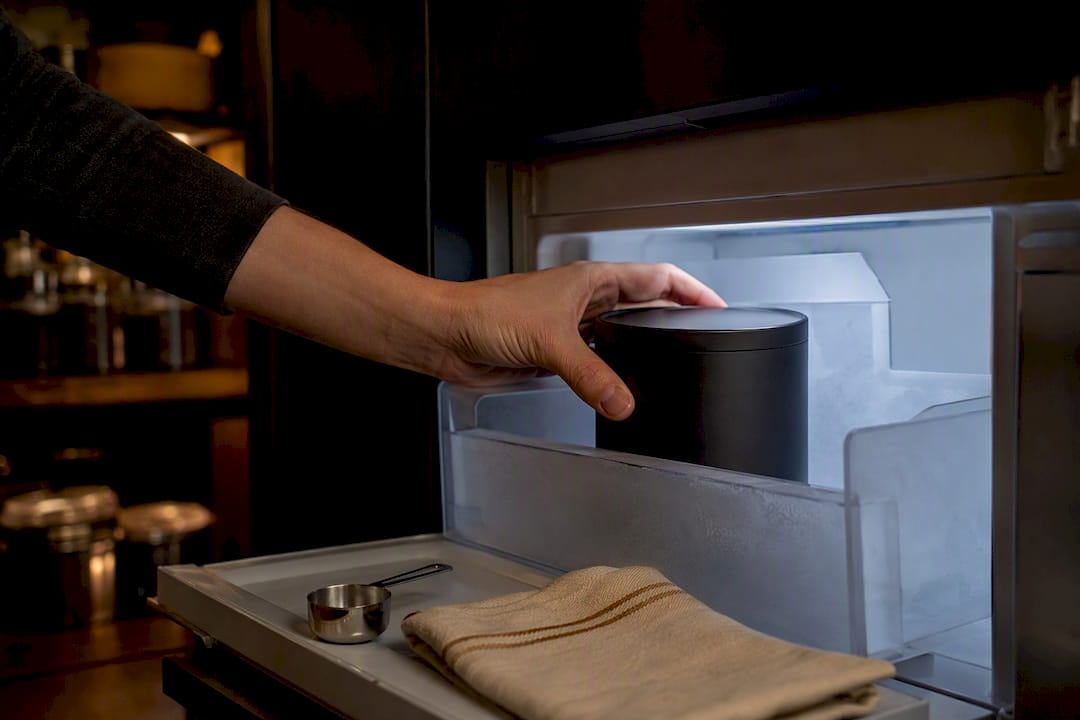
Storage decisions made in the first day shape everything that follows. Right after roasting, beans need to cool completely and vent, since sealing hot, gassy coffee into an airtight container traps moisture and speeds staling instead of slowing it.
The routine that works for most home setups and cafés alike:
- Let beans vent loosely, or in a bag with the top folded rather than sealed, for the first 12 to 24 hours.
- Transfer to a one-way valve bag or an airtight, opaque container once that initial rapid release has passed.
- Skip the refrigerator. Fridge air carries moisture and food odors that beans absorb readily, which undoes any freshness you were trying to protect.
- Freeze only if you plan to hold beans past their peak window, and only in fully airtight portions you defrost once and use completely, since repeated freeze-thaw cycles introduce the condensation that ruins texture and flavor.
- Portion beans into smaller amounts before freezing so you’re never thawing more than a week’s worth at a time.
- Label every bag with its roast date, and pull from the oldest bag first (rotating “first in, first out” instead of grabbing whatever’s newest).
Pro Tip: Every time you open a bag, you let in oxygen and let out CO2. Keep a small daily container for grinding from, and leave your main stash sealed as much as possible.
Details like proper airtight storage and correct freezing technique matter more than most people assume. A coffee resting on a sunny counter in a clear jar will peak and fall faster than the same coffee resting sealed in the dark, even on an identical day count.
How to Tell When Your Coffee Has Peaked
Numbers on a calendar only get you close. The real test happens in the cup, and it starts with the bloom.
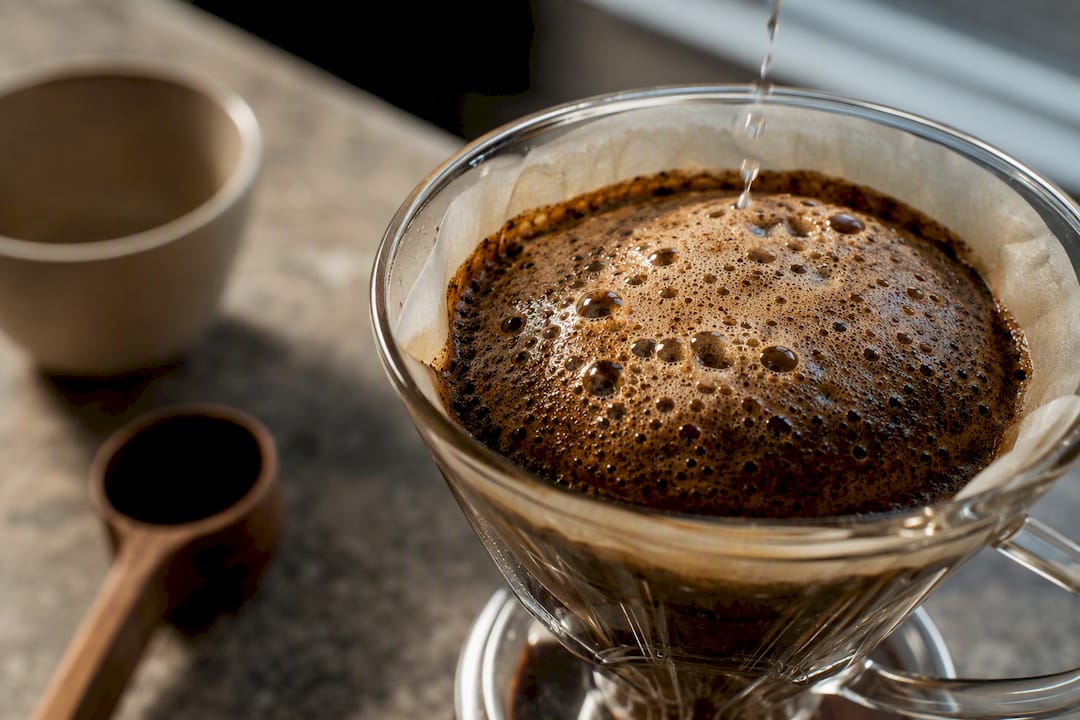
For filter brewing, watch what happens the moment water hits the grounds. A bloom that surges violently, doubles in size, and hisses is telling you there’s still plenty of CO2 fighting the water. A moderate, even bloom that settles calmly usually means the coffee is close to ready for that recipe.
For espresso, three signals matter most: flow consistency (does the shot run smoothly or does it channel and spurt), crema texture (thick and tan versus thin and pale), and taste (sour or hollow points to too little rest, flat or muted points to too much). Channeling especially, that unpredictable fast trickle mid-shot, is one of the clearest technical fingerprints of an under-rested bean.
- Brew the identical recipe on day 1, day 3, day 7, and day 14 of a new bag.
- Log grind setting, brew time, and tasting notes for each attempt.
- Mark the day the flavor tastes most balanced, sweet, and stable, and use that as your benchmark for the next bag of that same coffee.
| Day | What to watch for | Likely verdict |
|---|---|---|
| 1 to 2 | Aggressive bloom, sour or hollow taste | Too early, wait |
| 3 to 7 | Bloom calming, flavors starting to clarify | Approaching peak |
| 7 to 14 | Balanced bloom, stable shots, rounded sweetness | Likely peak window |
| 14+ | Muted aroma, flatter body | Past peak for most light/medium roasts |
Why Rowst Tests Every Batch Before It Peaks
Rowst tracks roast dates on every bag for a reason unrelated to marketing and everything to do with the cup. Small-batch roasting lets us taste and log each lot’s behavior instead of guessing at a universal timeline.
- Every bag carries its roast date, so you’re never resting a coffee blind.
- Small-batch lots get repeated tasting passes as they rest, the same day 3, day 7, day 14 rhythm this guide recommends.
- Diego’s notes on bloom mechanics and whole bean versus ground coffee come directly from that hands-on tasting process, not from a fixed rulebook.
- Origin and process notes travel with each bag, so you know upfront whether you’re likely dealing with a faster or slower degasser.
If you want to see this play out yourself, pick one coffee and run the tasting schedule above against its printed roast date. The pattern becomes obvious after one bag.
The Problem With Treating Resting as a Fixed Rule
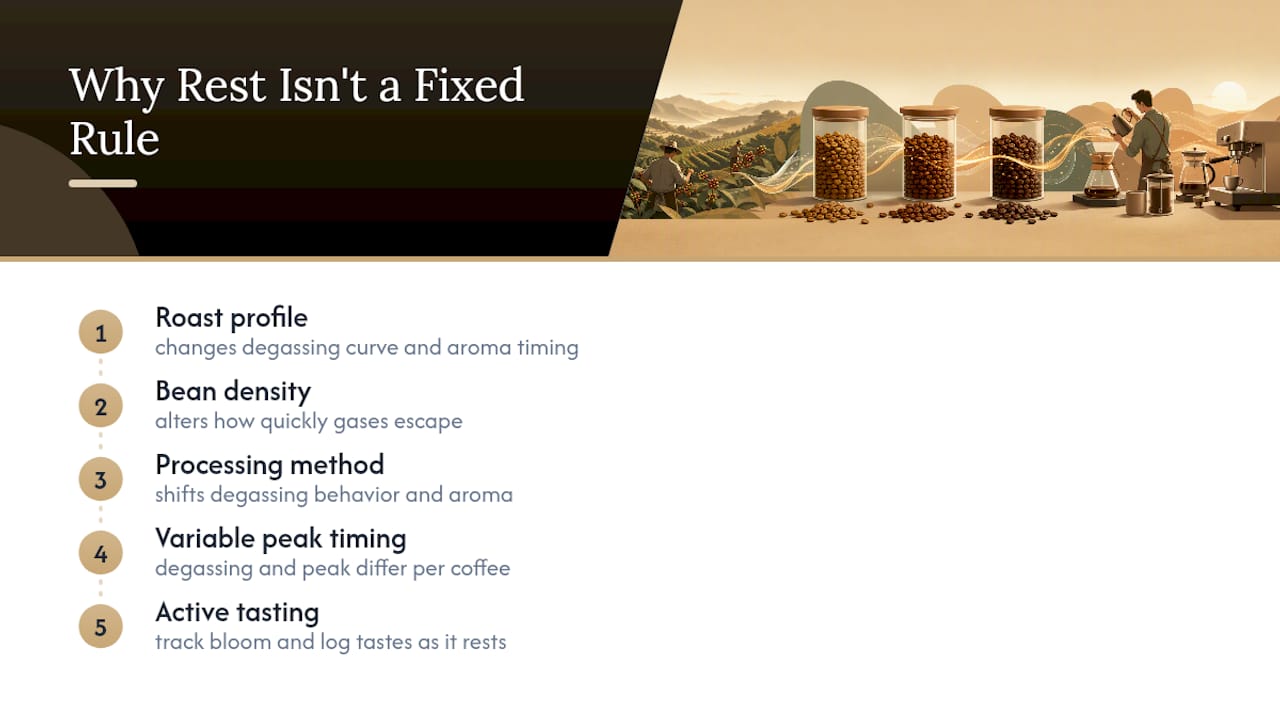
Most advice on resting coffee beans treats it like a countdown timer: wait exactly this many days, then brew. That framing gets the mechanism right and the application wrong. Degassing curves differ by roast profile, density, and processing method enough that a fixed number will serve one coffee well and completely mislead you on the next.
The conventional wisdom undersells how much resting is a form of active tasting, not passive waiting. Aromatic compounds are still integrating and settling well into the second week for many light and medium roasts, which is exactly why a single day-10 cup can taste noticeably different from day 3, even with identical brewing. Tracking bloom behavior and running a short tasting log beats memorizing someone else’s day count, because it adapts to the actual bean in front of you instead of a generic average.
If there’s one habit worth adopting from all of this, it’s simpler than any range in this guide: taste the same coffee more than once as it rests. The data explains why the cup changes. Only your own palate can tell you when it’s changed enough.
— Diego
Test Your Own Resting Window With Rowst
Some specialty coffee roasters roast in small batches and print the roast date on every bag, so you can know how old a coffee actually is when you start your own resting experiments. Each single-origin lot, whether from Uganda, El Salvador, or Mexico, behaves a little differently as it degasses, and that variation is exactly what makes tasting through a rest period worthwhile.

If you want to run the day 1, day 7, day 14 tasting schedule from this guide, the Discovery Pack gives you a curated set of origins sized for exactly that kind of side-by-side testing. Prefer to compare resting times across a longer stretch with a single favorite? The Coffee Lover Pack gives you enough volume to brew daily through the full three-week window without running dry midway. Browse the full single-origin collection, check the roast date on the bag, and start your own tasting log the day it arrives.
Sources
- A novel dynamic gravimetric method to assess degassing of roasted coffee
- Coffee decoded: fresh coffee
- RESTING ROASTS: IS FRESHER BETTER? — Scott Rao
- How long do coffee beans last?
- Storing your roasted coffee — Sweet Maria’s