

Paying ₹10,000/kg? Nanolot Coffee From Direct Producers for Collectors
A nanolot coffee is the smallest, most exclusive parcel a farm can offer, often limited to a very small quantity, sometimes just a single bag, harvested from one plot and processed as one uninterrupted experiment. Buyers are specialty roasters, competition cuppers, and collectors chasing a flavor that will likely never repeat itself. Pre-sale is the norm, prices run high, and casual drinkers rarely encounter these lots outside a curated release.
TL;DR:
- Nanolots are extremely small, often limited to a single bag from one plot, with traceability including farm name, plot ID, harvest date, and processing details.
- Producers harvest selectively and experiment with unique processing methods like anaerobic fermentation and natural drying, preserving detailed logs for buyers.
- Buyers should verify authenticity by requesting fermentation and drying logs, as true nanolots are tied to specific plots and processing runs, not just marketing labels.
- Pricing can exceed ten thousand rupees per kilogram and involves pre-sales, limited batches, and fixed shipping costs, which can significantly raise the per-cup cost.
- Proper tasting requires light roasting, pour-over brewing, and immediate flavor tracking to appreciate the nuanced complexity of these rare lots.
Table of Contents
- What Makes a Lot a “Nanolot”
- How Farmers Produce and Process a Nanolot
- Nanolot vs. Microlot vs. Single-Farm Coffee
- Where to Buy Nanolot Coffee and What to Expect
- How to Taste and Get the Most From a Nanolot
- How Rowst Sources Ultra-Small Lots
- Why I Point Collectors Toward Nanolots
- Start With Rowst’s Single-Origin Collection
- Sources
What Makes a Lot a “Nanolot”
Weight is the first marker. Most nanolots are exceptionally small parcels of green coffee, and some releases amount to a single bag rather than a pallet. That scale forces a different kind of attention at every step, from picking to packing.
A genuine nanolot product page reads more like a farm dossier than a spec sheet. Look for:
- The producer’s name and farm, not just a country or region
- A specific plot or block identifier, sometimes tied to a cultivar like Gesha or Pacamara
- A batch or lot number tied to one processing run
- Harvest date and altitude, which shape sugar development and acidity
Marketing copy borrows this language loosely. Real traceability shows a name you can search, a farm you can locate, and a batch number that maps to a single harvest window, not a recurring product line dressed up with a plot-sounding label.
How Farmers Produce and Process a Nanolot
Selective harvesting drives everything here. Instead of stripping a tree of ripe and semi-ripe cherries together, pickers return multiple times to select only fully ripe fruit from one small parcel, sometimes just a few rows of trees.
That parcel then becomes a processing lab. Producers experiment with:
- Extended anaerobic fermentation in sealed tanks
- Carbonic maceration borrowed from winemaking
- Natural or honey process variations tuned to a single microclimate
Drying happens slowly, often on raised beds, with the farmer or mill manager checking moisture and taste daily rather than relying on volume-based schedules. Every stage gets documented: fermentation hours, temperature, drying days. That paperwork is part of what buyers pay for, since it turns a cup into a traceable, repeatable story instead of a guess.
Pro Tip: Ask any seller for the fermentation and drying log before buying a nanolot. A producer proud of the process will hand it over without hesitation.
Nanolot vs. Microlot vs. Single-Farm Coffee
Single-origin is a spectrum, not a single tier. It runs from country-level blends down to one plot on one farm, and Wikipedia’s overview of single-origin coffee frames micro and nanolots as the smallest, most granular expressions of that idea.
- Single-farm coffee covers an entire property’s harvest, often several tons, blended across multiple plots and pickings.
- Microlot coffee narrows that down to a specific field or processing run, typically a few hundred kilograms, still substantial enough for a café’s regular menu rotation.
- Nanolot coffee shrinks further still, down to a single plot and a single processing moment, which is why the traceability and batch notes matter far more here than on a standard single-origin bag.
Café buyers building a menu usually want microlots for consistency and volume. Competition roasters and collectors want nanolots precisely because no two batches will taste the same twice.
Where to Buy Nanolot Coffee and What to Expect
Four channels dominate the nanolot market: specialty importers who run curated auctions, roasters with direct producer relationships, competition circuits like the Cup of Excellence, and increasingly, direct pre-sales straight from the farm or cooperative.
Pre-sale is standard practice, not a marketing gimmick. Because nanolots are frequently allocated to existing buyer relationships before public release, a release can vanish within hours of going live, especially when a rare cultivar or an award-winning processing method is involved.
Expect pricing that reflects the scarcity. Some releases have debuted at roughly ₹10,000 per kilogram, a figure that signals just how far nanolot pricing can climb above standard specialty rates. When shopping, watch for:
- Minimum order sizes that may not apply to nanolots the way they do to bulk green coffee
- Shipping costs that stay fixed regardless of the small lot size, which raises the effective price per cup
- Limited numbered batches, similar to how importers present rare Gesha lots as boxed, sequentially numbered releases
How to Taste and Get the Most From a Nanolot
Brewing method matters more here than with everyday coffee, since a nanolot’s whole value lies in details that rough extraction can flatten. A few practices consistently protect nuance:
- Brew pour-over, not drip. A manual method with a 1:15 to 1:18 coffee-to-water ratio gives you control over extraction that automated brewers lack.
- Shorten the bloom. Delicate, high-acid lots often show better with a brief 20 to 30 second bloom rather than the standard 45.
- Roast light to medium. Specialty cupping guidance favors conservative roast profiles that let fermentation-driven aromatics survive the roast.
During cupping, track aroma intensity, acidity quality (bright and clean versus sharp and sour), sweetness, body, and how the finish lingers or drops off. Log those notes immediately. Our flavor notes guide walks through the vocabulary if you want a shared language for recording impressions batch to batch.
Pro Tip: Store nanolot beans in an airtight container away from light, and brew within four to six weeks of the roast date. These lots peak fast and fade faster.
How Rowst Sources Ultra-Small Lots
Rowst builds relationships directly with small-scale producers in places like El Salvador, Uganda, and Mexico, cutting out intermediaries so more of what you pay reaches the farmer who grew and sorted the beans. That direct line matters most with lots this small, where a farmer’s name and plot are the entire product.
Rowst brings that same sourcing philosophy to how it packages coffee:
- Single-origin product pages that name the farm, region, and process
- Discovery packs built to sample multiple origins side by side
- Limited releases tied to a specific harvest rather than a rotating blend
If you want to start exploring lot-driven coffee without committing to a full nanolot purchase, our single-origin buying guide is a practical place to begin.
Why I Point Collectors Toward Nanolots
Most coffee writing treats rarity as a marketing hook. I treat it as a shortcut to understanding terroir, because a nanolot removes every variable except one plot and one processing decision. My habit: buy small, log everything, and compare the same origin across two harvest years before judging a producer’s ceiling. Start with a discovery pack if you want that comparison without the nanolot price tag first.
— Diego
Start With Rowst’s Single-Origin Collection
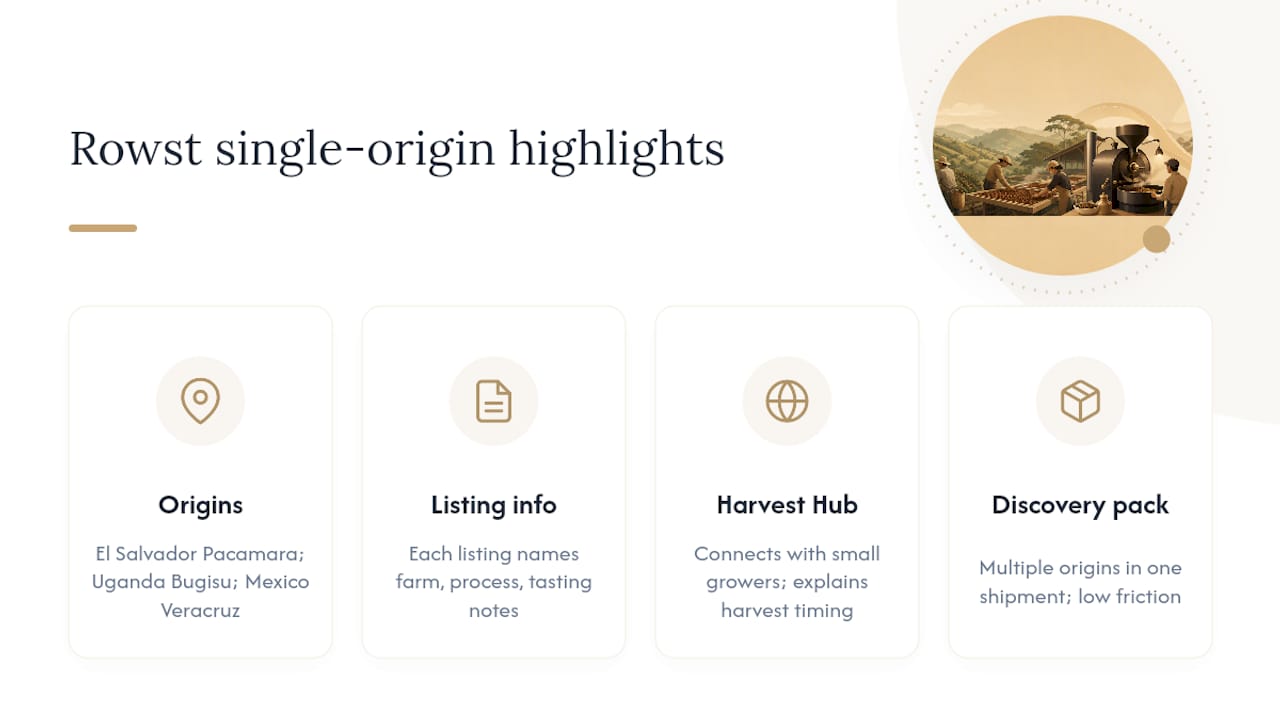
You don’t need to hunt down an auction house to taste what makes small-lot coffee worth chasing. The Rowst Coffee Collection gathers single-origin lots from producers Rowst works with directly, including standout pages like the El Salvador Pacamara, Uganda Bugisu, and Mexico Veracruz. Each listing names the farm, the process, and the tasting notes, the same information you’d expect on a true nanolot page.
If you’re curious about direct-to-producer sourcing more broadly, Harvest Hub is a useful resource for connecting with small growers and understanding how harvest timing shapes what ends up in your cup.
A discovery pack is the lowest-friction way to experience Rowst’s small-lot philosophy: multiple origins, one shipment, no guessing which single bag to commit to first. Browse the collection and pick your next cup while the current harvest releases are still available.
Sources
For deeper technical grounding, the Green Coffee Collective’s nanolot glossary entry explains allocation practices in detail, while Wikipedia’s single-origin coffee overview maps the broader labeling spectrum this article references throughout.
- Understanding Single Origin, Single Farm & Micro/Nano Lot Coffee – Perfect Daily Grind
- Nano-Lot Coffee: Rarer Than a Micro-Lot | GCC Glossary
- Single-origin coffee – Wikipedia
- Crown Jewel Ecuador Pichincha Galo Morales Washed Gesha - Royal Coffee