

Peaberries Are 5–10% of Harvests: When the Premium Pays for Roasters
A peaberry is a single, round coffee seed that forms when only one ovule in the cherry develops instead of the usual two. Fans describe the resulting cup as brighter, sweeter, and cleaner than standard beans, though that reputation deserves a caveat: origin, variety, and processing shape flavor far more than the mutation itself. The premium price mostly reflects rarity and the hand labor needed to sort these round seeds out of the harvest.
TL;DR:
- Peaberries are about 5% to 10% of a harvest, and their rarity, labor-intensive sorting, and marketing position primarily drive their higher price.
- The flavor profile tends to be brighter and sweeter, but origin and processing methods have a greater impact on taste than the seed shape itself.
- Roasters often roast peaberries separately for consistency, requiring careful adjustment of temperature and timing to avoid uneven development.
- Choosing a recent, single-origin, traceable lot with clear grading information ensures better value and authenticity in a peaberry purchase.
- Side-by-side tastings of peaberry and flat beans from the same origin reveal that origin explains more flavor differences than shape, making origin knowledge crucial.
Table of Contents
- What Peaberry Coffee Beans Are and How They Form
- Why Peaberry Coffee Costs More Than Regular Beans
- What Peaberry Coffee Tastes Like (and Where That Reputation Breaks Down)
- Roasting Peaberry: Why It Behaves Differently in the Drum
- Notable Origins Known for Peaberry Coffee
- Brewing Peaberry: Grind and Extraction Adjustments That Actually Help
- Should You Buy Peaberry Coffee? What to Look for Before You Do
- One Roaster’s Honest Take on Peaberry
- Try a Peaberry Lot from Rowst’s Single-Origin Collection
- Sources
What Peaberry Coffee Beans Are and How They Form
Most coffee cherries contain two flat seeds pressed against each other, which is why a normal bean has that familiar flat side. When pollination or growing conditions leave only one seed to develop, it grows unobstructed into a round, dense little pearl. That’s the peaberry.
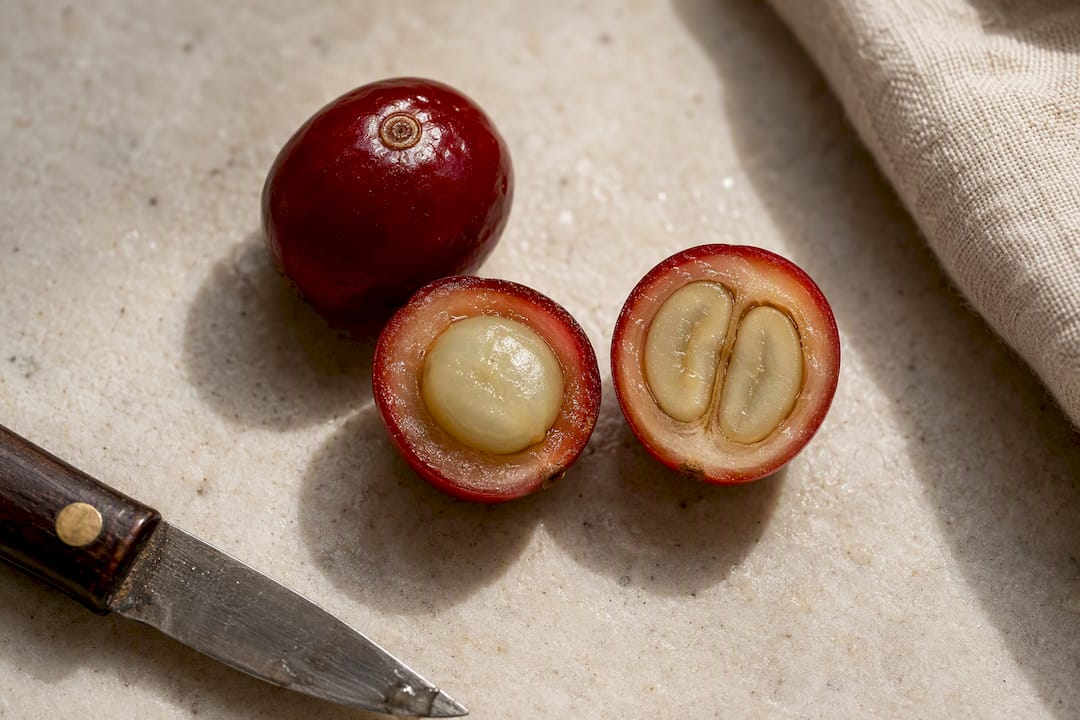
The mutation shows up unpredictably across a farm. It’s not tied to a specific variety or region, and no grower can plan for it. Estimates put peaberry frequency at roughly 5% to 10% of a typical harvest, which is exactly why it gets pulled out and sold separately rather than blended back in.
Separating peaberries from flat beans happens in a couple of ways:
- Mechanical screening, which uses perforated screens sized to catch round seeds as beans tumble through.
- Density sorting, where air or water separates beans by weight and shape.
- Hand-sorting, still common on smaller farms, where workers pick peaberries off a table by eye.
That last method is slow, and slow means expensive, which sets up the price story that follows.
Why Peaberry Coffee Costs More Than Regular Beans
Sorting labor is the biggest driver of peaberry’s price tag. Pulling round seeds out of a much larger flat-bean harvest takes time, and time on a farm or at a mill costs money that gets passed downstream. Combine that with low yield, since peaberries are a small slice of any lot, and you get a genuinely scarce product before it ever reaches a roaster.
Scarcity alone doesn’t explain the full markup, though. A few other forces are at work:
- Specialty positioning: peaberry is marketed as a distinct grade, which lets roasters charge more even when the green cost difference is modest.
- Traceability appeal: single-lot, single-shape coffee feels more curated to buyers, and curation commands a price.
- Novelty: it’s simply less common on a shelf, and less common sells.
The real question buyers ask: does the extra cost buy a better cup, or just a rarer one? Blind cupping comparisons between peaberry and flat-bean lots from the same crop have produced mixed results, with some tasters preferring peaberry and others finding no consistent difference at all.
That mixed record matters. It suggests you’re often paying for hand-sorted rarity and a good marketing story, not a guaranteed upgrade in the cup.
What Peaberry Coffee Tastes Like (and Where That Reputation Breaks Down)
Ask around and you’ll hear a consistent shorthand: peaberry tends to taste brighter in acidity, a touch sweeter, and cleaner in the finish compared to flat beans from the same lot. Some cuppers also report a slightly fuller, rounder body, which some attribute to the seed’s density and shape, though that link isn’t firmly established.
Origin bends that profile considerably:
- Tanzania peaberry often shows wine-like acidity with dark berry fruit, the style most responsible for peaberry’s reputation.
- Kona peaberry from Hawaii tends toward a smoother body with caramel and nutty undertones.
- Kenya peaberry frequently carries the floral, winey complexity Kenyan coffee is known for generally.
Here’s the honest caveat worth sitting with: variety, altitude, and processing method typically explain more of the variance in your cup than the peaberry mutation does. A washed Kenyan peaberry and a washed Kenyan flat-bean lot, picked from the same farm on the same day, will likely taste more alike than a peaberry from Tanzania and a peaberry from Brazil. If you want to get sharper at spotting these distinctions, learning to read coffee flavor notes helps you separate what’s genuinely origin-driven from what’s just seed shape.
Roasting Peaberry: Why It Behaves Differently in the Drum
Peaberry’s round shape and density change how heat moves through the bean, which is why roasters typically roast peaberry lots separately rather than blending them into a flat-bean batch. Mixed sizes in one drum mean uneven development. Uniform peaberries, roasted on their own, develop far more consistently.
If you’re roasting peaberry at home or dialing in a small commercial batch, work through this checklist:
- Sample roast first. Run a small batch before committing your full lot to a profile, since peaberry often behaves differently than you’d expect from experience with flat beans.
- Ease the charge temperature. Denser beans can scorch if you hit them too hard at the start; a slightly gentler charge protects the exterior while the core catches up.
- Watch first crack closely. Peaberry can crack a little later or in a tighter window than flat beans from the same origin, so don’t roast on autopilot.
- Build a dedicated profile. Once your sample roast tells you how the batch behaves, save that curve specifically for future peaberry lots from that origin.
The most common mistake is assuming a profile that works for a flat-bean lot will transfer cleanly. It usually won’t, and the result is an underdeveloped or unevenly roasted batch.
Pro Tip: Set a timer the moment you hear the first crack pop and log the interval to second crack (or your drop point) separately for every peaberry batch. That interval, more than temperature alone, is often the clearest sign of whether the roast is on track.
Notable Origins Known for Peaberry Coffee
Not every origin produces peaberry with the same personality, and knowing the regional signatures helps you choose a lot worth trying.
- Tanzania is the classic reference point, prized for bright, wine-like acidity paired with dark berry fruit. It’s the style most people picture when they hear “peaberry.”
- Kona, grown on Hawaii’s volcanic slopes, leans smoother and rounder, with caramel and light nutty notes replacing Tanzania’s acidity.
- Kenya and Ethiopia both produce peaberries with floral aromatics and winey complexity, echoing the flat-bean profiles those countries are already famous for.
- Brazil and Colombia peaberries tend toward chocolatey, balanced cups, which fits their broader reputation for approachable, low-acid coffee.
Origin, in every one of these cases, is doing more work than the seed shape. That’s worth remembering before you pay a premium expecting the shape alone to transform the cup.
Brewing Peaberry: Grind and Extraction Adjustments That Actually Help
Peaberry’s density means water needs slightly more contact time or a slightly finer grind to extract fully, depending on your method. Start from the grind setting you already use for a comparable single-origin lot, then nudge from there rather than guessing blind.
A few method-specific notes:
- Pour-over: try a marginally finer grind or a slower, more deliberate pour to give the denser beans more contact time.
- Espresso: dial in with small dose adjustments before changing grind size dramatically. Peaberry can channel if the grind is uneven.
- Immersion (French press, cold brew): extend steep time slightly rather than going much finer, since immersion is more forgiving of density differences.
Watch for these signs and correct accordingly:
- Thin, sour cup: grind slightly finer or extend contact time.
- Bitter, harsh finish: back off to a coarser grind or shorten extraction.
- Uneven espresso flow: check for channeling before assuming the peaberry itself is the problem.
Refining a grind for cold brew or single-origin pour-over is a broader skill worth building, and Rowst’s guide to choosing the right single-origin coffee for cold brew walks through the same logic that applies here.
Pro Tip: Adjust in small steps, roughly 0.2 to 0.4 millimeters on a burr grinder or one micro-click on a dial grinder, and change one variable at a time. Treat peaberry as denser and adjust your extraction time before you touch your dose.
Should You Buy Peaberry Coffee? What to Look for Before You Do
Peaberry tends to reward a specific kind of coffee drinker: espresso lovers who want a rounder shot, single-origin explorers chasing distinct regional signatures, and anyone who finds standard beans occasionally harsh or bitter. If that’s not your profile, the premium may not be worth chasing.
Before buying, check for a few signals that tell you whether a bag is worth the price:
- A recent roast date, since freshness affects flavor more than almost anything else you can control.
- Single-origin traceability, ideally naming the farm or cooperative, not just the country.
- Clear grading and tasting notes, which tell you the roaster actually evaluated the lot rather than just labeling it “peaberry” for the markup.
If a bag lacks those details, a well-sourced flat-bean lot from the same origin, roasted with care and priced fairly, is very often the better value. Understanding how coffee grading works helps you separate a genuinely well-evaluated peaberry lot from one riding on novelty alone.
One Roaster’s Honest Take on Peaberry
Taste a well-roasted Tanzania or Kona peaberry, and see for yourself. The most useful comparison is a side-by-side cupping: same origin, same roast date, one peaberry lot and one flat-bean lot from the same farm if you can find it. Log what you notice, acidity, sweetness, body, rather than trusting memory. That habit tells you more about your own palate than any peaberry myth ever will.
— Diego
Try a Peaberry Lot from Rowst’s Single-Origin Collection
Rowst is built for exactly this kind of exploration. Instead of guessing which peaberry claim to trust, you get direct-sourced, traceable single-origin lots where the story behind the bean, and the price you’re paying, is transparent from farm to cup. When you’re browsing, prioritize roast-date freshness and single-origin lots with real grading notes over vague “peaberry” labels alone.
The Rowst Coffee Collection features curated single-origin lots and discovery packs suited to exactly this kind of side-by-side tasting. Pick a fresh-roasted bag, note the origin and processing method, and start building your own read on whether peaberry earns its place in your rotation.
Sources
Rowst builds direct relationships with small-scale producers in regions like Uganda, El Salvador, and Mexico, cutting out intermediaries so more of what you pay reaches the people who grow, harvest, and sort the coffee. That direct line matters most with a category like peaberry, where sorting labor is exactly what you’re paying for. Traceability lets you confirm the premium is buying real work, not just a label.
Rowst’s educational resources on coffee terroir and flavor language exist to help you read a bag’s story and its notes with the same eye a buyer would. Sustainability signals, like Bird Friendly certification, show up in specialty pricing for similar reasons: they represent real cost and real practice on the farm, not just marketing gloss on the label.
- Peaberry — Wikipedia
- What Are Peaberry Coffee Beans? The Myths & The Reality — Perfect Daily Grind
- What Makes Peaberry Coffee So Special? — Serious Eats
- Peaberry vs regular coffee: what’s the real difference? (2026 Buyer’s Guide) — Indonesia Specialty Coffee