

Coffee Flavor Notes: What They Mean and How to Taste Them
Coffee flavor notes are the aroma and taste descriptors roasters use to map coffee’s natural chemistry to familiar foods, things like “blueberry” or “brown sugar” on a bag of beans. They’re not flavoring added to the coffee. They’re the closest words for what’s already there. The fastest way to start recognizing them is simple: smell the dry grounds before you brew, then smell and taste the cup itself, comparing what you notice against a flavor wheel.
This guide walks you through:
- What the Coffee Taster’s Flavor Wheel is and why professionals rely on it
- The main flavor families and real examples you’ll see on bags
- Why origin, processing, and roast level create different notes
- A repeatable tasting routine and a checklist you can use today
Key Takeaways
Coffee flavor notes describe real aromatic compounds shaped by origin, processing, and roast, and a short staged tasting routine trains you to recognize them reliably.
| Point | Details |
|---|---|
| Notes are chemistry, not additives | Descriptors like “blueberry” or “jasmine” point to compounds also found in those foods, not flavoring. |
| Use the flavor wheel structure | Start with a broad family (fruity, floral, nutty), then narrow to a specific note. |
| Origin, process, and roast decide the outcome | Washed Ethiopian coffees lean floral; dark roasts push roast flavor over origin character. |
| Expect two to four notes, not ten | Most specialty coffees show a handful of dominant notes in an actual cup. |
| Practice with contrasting origins | Rowst’s Coffee Lover Pack pairs distinct single-origin coffees for side-by-side tasting practice. |
Table of Contents
- What Is the Coffee Flavor Wheel and Coffee Flavor Notes?
- The Main Flavor Families You’ll Find on a Bag
- How Origin, Processing, and Roast Create Flavor Notes
- A Step-by-Step Tasting Routine You Can Use at Home
- Why You Might Not Taste What the Bag Promises
- Your Copyable Tasting Checklist
- Why Rowst Builds Sourcing Around Traceable Flavor
- Practice Your Palate With a Rowst Sampler
- Sources
What Is the Coffee Flavor Wheel and Coffee Flavor Notes?
The Coffee Taster’s Flavor Wheel, maintained by the Specialty Coffee Association in collaboration with World Coffee Research, is the closest thing the industry has to a shared language. Before it existed, one roaster’s “fruity” could mean another roaster’s “sour,” and nobody had a way to settle the argument.
The wheel works in three layers. Nine primary categories sit at the center, things like fruity, floral, sweet, and roasted. Each branches into subcategories (fruity splits into berry, citrus, and stone fruit, for instance), which then narrow into specific notes like raspberry or grapefruit. Roasters and cuppers use this structure to describe a coffee with precision instead of vague enthusiasm.
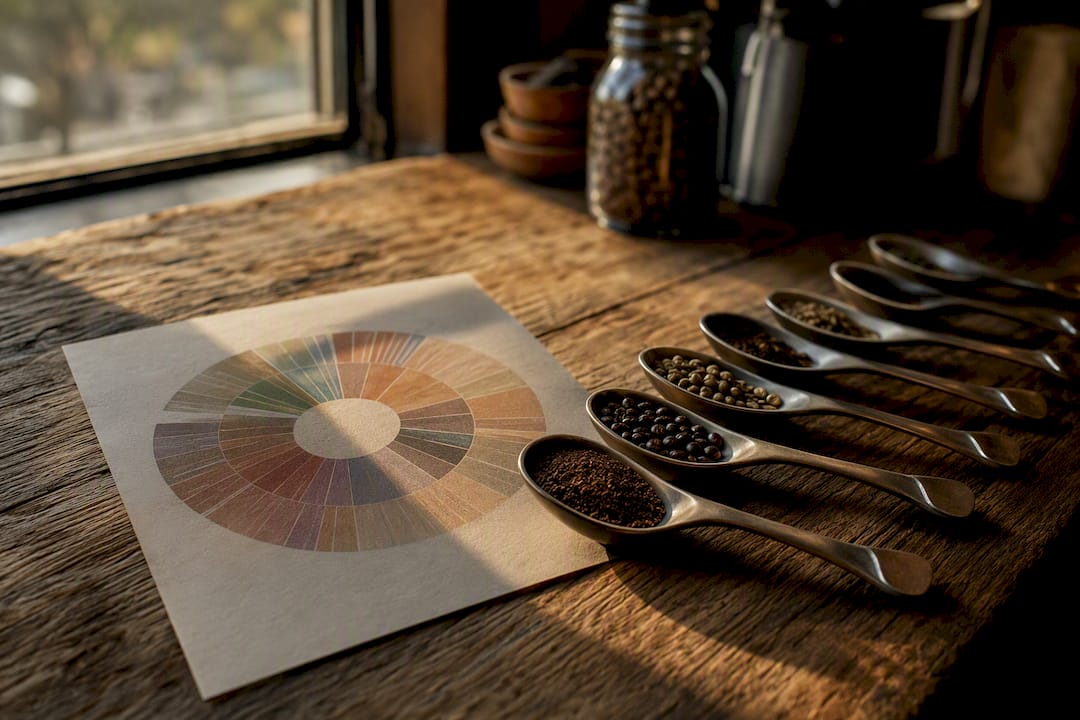
Behind the wheel sits the World Coffee Research Sensory Lexicon, which assigns reference standards and intensity scales to each attribute. That’s why trained tasters across different countries and companies tend to land on the same words for the same coffee: they’re calibrated against the same benchmarks, not just guessing.
The Main Flavor Families You’ll Find on a Bag
When you’re learning to read a coffee flavor profile, work from broad to specific. Start by asking which family the coffee falls into, then narrow toward the exact note. Most specialty coffees show two to four dominant notes, not a dozen. If a bag lists eight descriptors, treat it as a poetic reach, not a taste-by-taste guarantee.
Here’s how the major families tend to show up in a cup:
- Fruity: berry (blueberry, blackberry), citrus (lemon, grapefruit), and stone fruit (peach, apricot) are among the most common, especially in East African coffees.
- Floral: jasmine and rose show up most often in high-altitude washed coffees, particularly from Ethiopia.
- Sweet: caramel, honey, and brown sugar usually surface in medium roasts and coffees with heavier body.
- Nutty/Cocoa: hazelnut and dark chocolate are classic in Central American and Brazilian coffees.
- Roasted: tobacco, smoke, and burnt-toast notes intensify as roast level darkens.
- Spice, cereal, and earthy: clove, grain, and hay notes tend to appear in aged or drier-processed lots.
- Defect notes: papery, musty, or chemical flavors signal poor storage or processing issues, not a stylistic choice.
Reading a bag this way turns a marketing blurb into a prediction you can test in your cup.
How Origin, Processing, and Roast Create Flavor Notes
Three variables decide what ends up in your cup: origin, processing method, and roast level. Origin sets the baseline. High-altitude Ethiopian coffees, grown from heirloom varieties in cooler air, tend toward floral and berry characteristics. Brazilian coffees, grown at lower elevation, usually lean nutty and chocolatey instead.
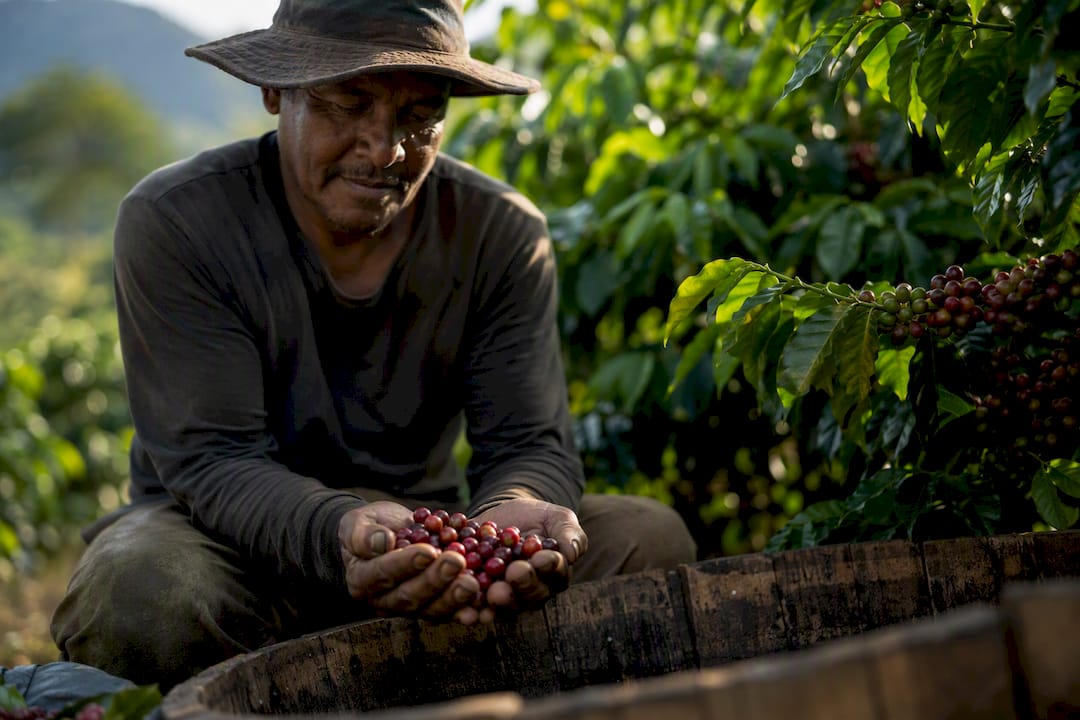
Processing changes what survives from the cherry to the cup. Washed coffees ferment the fruit off before drying, which produces a cleaner, brighter profile. Natural processing dries the whole cherry around the bean, pushing fruity, winey, almost fermented notes to the front. Honey processing sits in between, keeping some mucilage on the bean for a rounder sweetness without the intensity of a full natural.
Roast level then decides which of those notes actually survives:
- Light roasts preserve origin character, so a floral Ethiopian stays floral.
- Medium roasts add caramelization, layering in chocolate and caramel notes.
- Dark roasts push roast-derived flavors (smoke, char) to the front, often masking origin entirely.
That last point explains something a lot of home brewers miss: two dark-roasted coffees from different continents can taste nearly identical, while two roast levels of the same bean can taste like different coffees entirely.
A Step-by-Step Tasting Routine You Can Use at Home
Professional cuppers don’t just take a sip and guess. They move through distinct stages, and each one reveals something the others miss. Here’s the sequence adapted for a home cup:
- Smell the dry grounds. Before water touches the coffee, bury your nose in the grounds and take short sniffs. This is where you’ll catch faint florals and spice notes that vanish once brewing starts.
- Smell the wet aroma during bloom. When hot water first hits the grounds and they puff up, lean in. This burst of steam carries volatile aromatics, often fruity or floral, that are strongest right here and fade fast.
- Take a first sip. Slurp if you can stand the sound. Aerating the coffee across your tongue spreads it over more taste receptors and pulls in retronasal aroma at the same time.
- Pay attention mid-palate. This is where sweetness, acidity, and body register. Ask yourself: is the acidity bright like citrus, or soft like grape?
- Notice the finish. What lingers after you swallow tells you the most. A note that shows up only in the finish is often the most distinctive thing about that coffee.
Calibrate as you go by keeping simple reference foods nearby, a fresh blueberry, a strip of lemon peel, a square of dark chocolate, a spoonful of honey. Smelling the real thing right after tasting the coffee trains your brain to make the connection faster than any wheel alone can.
Keep your variables controlled between sessions: same grind size, same water temperature, same brew method. Changing more than one thing at a time makes it impossible to tell whether a shift in flavor came from the coffee or your setup.
Pro Tip: Do this in short 10 to 15 minute sessions once a week rather than one long marathon tasting. Palate fatigue is real, and your nose adapts to strong aromas within minutes, dulling everything you smell after that.
Why You Might Not Taste What the Bag Promises
A few misconceptions trip up almost everyone starting out. Tasting notes describe naturally occurring aromatic compounds also found in blueberries or jasmine flowers, not additives dropped into the bag. Nothing is flavored.
Professional cupping happens at room temperature, which reveals more subtle notes than a hot mug brewed at home ever will. It’s normal to taste only one or two clear descriptors in your own cup rather than all four listed on the bag. If you’re close to the family (fruity when the bag says “berry,” sweet when it says “caramel”), you’re reading the coffee correctly. Treat the roaster’s note list as a starting hypothesis, not a checklist you have to complete.
Your Copyable Tasting Checklist
Keep this next to your mug and run through it every time you want to sharpen your palate:
- Dry smell: What’s the first impression before water touches the grounds?
- Wet aroma: What comes through during the bloom?
- First sip: What family does it land in, fruity, nutty, floral, roasted?
- Mid-palate: Rate sweetness and acidity type (bright, soft, or nonexistent).
- Finish: What note lingers longest after you swallow?
Write down one word per step and date the entry. After four or five sessions with different coffees, patterns emerge that no amount of reading about coffee flavor descriptors will teach you as fast as your own notes will.
Why Rowst Builds Sourcing Around Traceable Flavor
. Rowst sources single-origin coffee directly from small-scale producers precisely because traceable origin makes flavor notes easier to pin down. When you know a lot came from a specific altitude and process, the notes on the bag stop being marketing copy and start being a testable claim…
— Diego
Practice Your Palate With a Rowst Sampler
Reading about flavor families only gets you so far. The fastest way to actually recognize a floral note versus a fruity one is to taste two contrasting origins side by side, which is exactly what a curated sampler is built for.
The Coffee Lover Pack pairs distinct single-origin coffees so you can run the tasting routine above on beans that are meant to taste different from each other, not just different bags of the same roast style. If you want to isolate one origin’s character, the El Salvador Pacamara is a good one to sit with slowly, since Pacamara varieties tend to show pronounced fruit and body that make family identification easier for a beginner palate. Order a bag, run the five-step checklist above, and see how many notes you can name by your third cup.
Sources
- Coffee Flavor Wheel - Interactive SCA Tasting Guide | CoffeeTrove
- Coffee Flavors - Roastopedia
- Coffee Tasting Notes: What They Mean & How to Read Them | Cafy