

Office Coffee Setup Guide: Solo to Team of 50+
The right office coffee setup depends almost entirely on how many people you’re serving. For a solo desk setup, a compact single-serve brewer or a small French press paired with a quality burr grinder is typically affordable to start, with ongoing monthly costs for beans and supplies. A small team of a few people is best served by a batch drip brewer or a superautomatic bean-to-cup machine with moderate upfront costs and monthly expenses. Larger offices need a commercial-grade batch brewer or a managed bean service, with correspondingly higher initial and monthly costs that scale with headcount.
Solo setup at a glance:
- Compact single-serve brewer or 3-cup French press
- Hand or entry-level electric burr grinder
- Electric kettle (gooseneck optional but useful)
- Small airtight canister for beans, paper filters or reusable filter
- Starter cost: affordable initial purchase; moderate monthly supply expenses
Small team (a few people):
- Thermal-carafe drip brewer or superautomatic bean-to-cup machine
- Burr grinder if the brewer lacks one
- Filtered water source or pitcher
- Mugs, a spill mat, and a small organizer tray
- Starter cost: moderate initial investment; moderate monthly costs
Larger office (multiple people):
- Commercial batch brewer or managed service
- Whole-bean subscription or bulk supply with consistent roast dates
- Thermal carafes, a dedicated water line if possible
- Cups, lids, sugar/cream station, cleaning kit
- Starter cost: higher investment expected; monthly expenses scale with usage
Table of Contents
- What does a well-matched office coffee setup actually look like?
- Which brewing methods work best in an office setting?
- What gear and logistics keep a station running smoothly?
- How do you keep a shared coffee station clean and safe?
- How do you organize people, budgets, and policies for office coffee?
- How do you make coffee for a meeting or a large group?
- Does a good coffee setup actually improve the workplace?
- Key Takeaways
- What I’ve learned from watching offices get coffee right (and wrong)
- Rowst brings specialty coffee to your office without the logistics headache
- Useful sources and further reading
What does a well-matched office coffee setup actually look like?
The difference between a coffee station people love and one they tolerate usually comes down to three things: the right machine for the volume, beans that are actually fresh, and a layout that makes the whole ritual frictionless. Here’s how each configuration plays out in practice.
Small-team shared station (3–15 people)
Shared stations introduce one complication: you’re no longer optimizing for one palate or one skill level. The goal shifts to consistency and speed. A thermal-carafe drip brewer in the 8–12 cup range or a superautomatic bean-to-cup machine with an integrated grinder handles this well. Superautomatics deliver espresso-style drinks with minimal operator skill, which matters when a dozen different people are using the machine throughout the day.
- Brewer: — Thermal-carafe drip brewer (Technivorm Moccamaster, OXO Brew 9-Cup) or superautomatic (Jura E8, Breville Oracle Touch)
Capacity for a thermal-carafe drip brewer typically covers multiple cups per batch and can complete several batches per hour. A superautomatic generally produces drinks continuously at a rate that supports a moderate team size. For a team with a morning rush, plan accordingly with multiple batches or a machine rated for the expected demand.
Larger office (15–50+ people)
At this scale, a consumer-grade machine simply can’t keep up. A commercial batch brewer, a twin-brewer setup, or a managed office coffee service becomes the practical answer. A managed service handles restocking and maintenance, removing the internal operational burden that tends to cause shared stations to fall apart over time.
| Setup type | Best for | Capacity | Startup cost | Monthly cost | Ease of use | Maintenance |
|---|---|---|---|---|---|---|
| Single-serve / pod | Small teams | Individual cups brewed on demand | Affordable initial cost | Moderate monthly cost | Very easy | Low |
| Thermal drip brewer | Small to medium teams | Multiple cups per batch | Moderate initial cost | Moderate monthly cost | Easy | Regular cleaning needed |
| Superautomatic | Medium teams | Multiple drinks per hour | Higher initial cost | Moderate monthly cost | Easy to moderate | Routine cleaning required |
| Commercial batch brewer | Large teams | Larger volume batches | High initial cost | Higher monthly cost | Easy | Regular and deep maintenance |
| Managed service | Any team size | Scales with usage | Variable | Variable | Minimal | Vendor handled |
For the largest offices, two commercial brewers running in parallel, each feeding a dedicated thermal carafe, keeps service continuous during peak hours. Budget for a dedicated water line if possible; it removes the single biggest maintenance headache (scale buildup) and improves flavor consistency.
Which brewing methods work best in an office setting?
Not every brewing method belongs in a shared office space. The best ones share two qualities: they’re repeatable without a barista’s skill, and they scale to the volume the team actually needs.
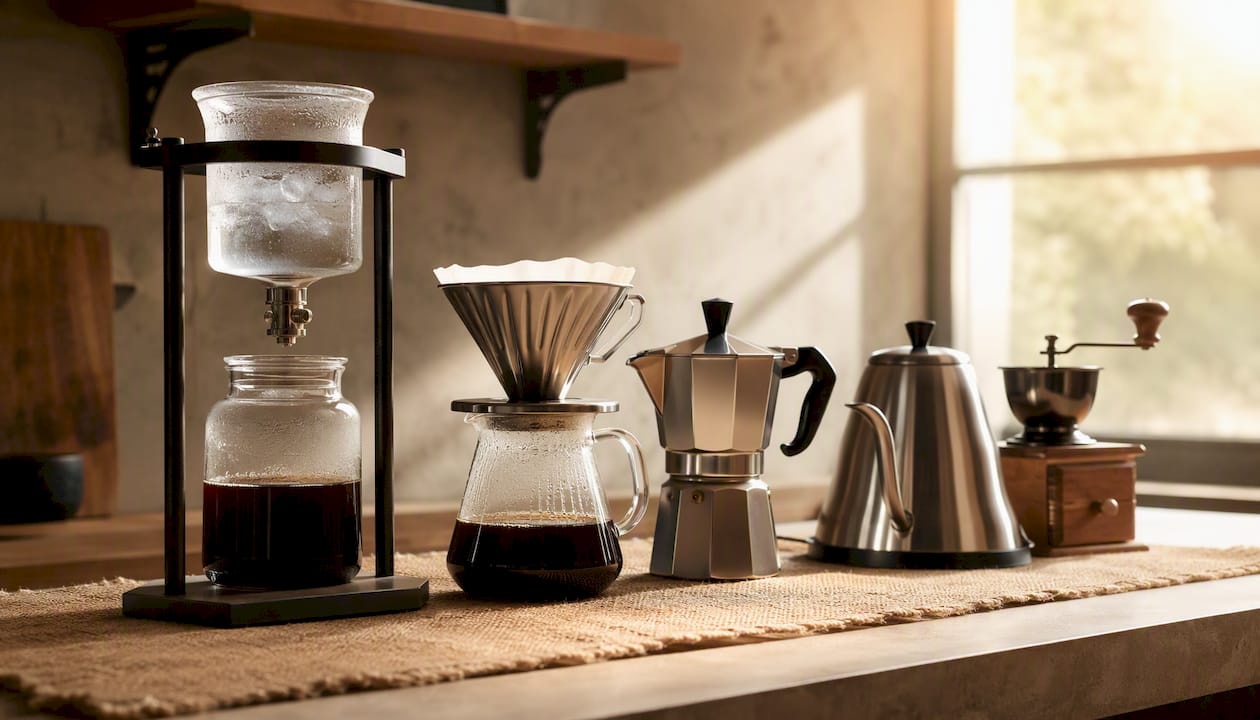
Single-serve and pod brewers (Keurig, Nespresso) are the lowest-friction option for small or mixed-preference teams. Every cup is fresh, there’s no shared carafe to go stale, and cleanup is nearly zero. The trade-off is cost per cup and plastic waste, though compostable pod options exist.
Automatic drip / batch brewers are the workhorse of office coffee. A quality machine like the Technivorm Moccamaster or OXO Brew brews at the right temperature and delivers consistent results batch after batch. Brew a full carafe, pour it into a thermal carafe, and it stays good for 30–45 minutes without a hot plate degrading the flavor.
Bean-to-cup superautomatics shine for teams that want espresso-based drinks (lattes, cappuccinos, Americanos) without a trained barista. The machine grinds, tamps, and extracts automatically. Jura and Breville make reliable office-grade models.
French press works beautifully for a solo user or a small group of enthusiasts willing to time a 4-minute steep. It produces a rich, full-bodied cup and requires no filters. The downside in a shared setting: someone always forgets to plunge it.
Aeropress and pour-over (Chemex, V60) are excellent for the dedicated coffee drinker at a personal station. They require attention and a bit of technique, which makes them less suited to a communal setup where anyone might be brewing.
Cold brew concentrate is a make-ahead method that works well for larger offices. Steep coarsely ground coffee in cold water for 12–18 hours, strain, and refrigerate. One batch serves a team for several days, and the concentrate dilutes to taste.
What gear and logistics keep a station running smoothly?
The machine gets the attention, but the supporting gear determines whether the station actually works day to day.
Burr grinders
A burr grinder produces a uniform particle size, which translates directly to even extraction and better flavor. Blade grinders chop unevenly and introduce bitterness. For a solo setup, a hand grinder like the Timemore C2 or 1Zpresso JX is quiet and precise. For a shared station, an electric burr grinder with a hopper large enough to hold 250–500g of beans reduces the frequency of refills. Look for a grinder with clearly marked settings so anyone can replicate the correct grind without guessing.
Kettles and hot water
An electric kettle with temperature control (the Fellow Stagg EKG is a popular choice) is the right tool for pour-over and French press setups. For a larger shared station, a plumbed hot-water dispenser eliminates the wait and the noise of a kettle cycling on and off every few minutes. Noise is a real consideration in open-plan offices: a superautomatic’s grinder runs for 10–15 seconds per drink, which can be disruptive in quiet environments.
Filters and storage
Paper filters produce a cleaner cup with less sediment; metal filters let more oils through for a richer body. Keep a stock of at least two boxes of filters at the station. For beans, an airtight canister with a one-way valve (Fellow Atmos, Airscape) preserves freshness significantly longer than the original bag left open on the counter. Buy in quantities you’ll use within two to three weeks of the roast date.
Pro Tip: Label the canister with the roast date and the bean origin. It takes ten seconds and tells everyone at a glance whether the beans are still at peak freshness, which is usually 7–21 days post-roast.
Space and layout
Affordable organizational upgrades like shelving, trays, and labeled containers improve usability and reduce maintenance friction without requiring a renovation. Place the station near a water source and an electrical outlet. A 24x18-inch footprint handles a basic shared setup; a mobile cart adds flexibility for offices that reconfigure frequently. Keep the cleaning supplies (brush, descaler, paper towels) in a drawer or basket directly below the machine so they’re always at hand.
How do you keep a shared coffee station clean and safe?
Shared equipment gets neglected. The fix isn’t a stricter policy; it’s a visible, simple routine that anyone can follow in under two minutes.
Daily tasks
- Empty the grounds bin or portafilter after the last brew of the day.
- Rinse the carafe and any removable drip trays with hot water.
- Wipe down the exterior surfaces and the drip tray with a damp cloth.
- Refill the water reservoir if it’s below half.
- Check that the bean hopper has enough coffee for the next morning.
Weekly tasks
- Run a cleaning tablet or backflush cycle through the machine (superautomatics and espresso machines).
- Wash carafes and lids with a carafe brush and dish soap.
- Wipe the grinder’s chute and hopper with a dry brush to remove stale grounds.
- Sanitize the steam wand (if present) by purging steam before and after every use, and wiping with a damp cloth.
- Inspect filters and replace if clogged or discolored.
Monthly tasks
- Descale the machine using a food-safe descaler appropriate for the machine type. Most manufacturers recommend descaling every 1–3 months depending on water hardness.
- Deep-clean the grinder burrs with a grinder cleaning tablet (Grindz is a common option) or by disassembling and brushing.
- Check and replace water filters if the machine uses an internal filter cartridge.
On allergens and hygiene: If the station includes a milk frother or steam wand, designate a separate labeled pitcher for dairy and one for plant-based alternatives. Purge the wand with steam between uses. For decaf, store beans in a clearly labeled, separate canister and use a dedicated grinder setting or a separate grinder entirely to prevent cross-contamination for caffeine-sensitive colleagues.
Keep a small cleaning kit at the station at all times: a group-head brush, a carafe brush, a bottle of descaler, and a pack of cleaning tablets. When the tools are visible and within reach, people actually use them.
How do you organize people, budgets, and policies for office coffee?
The best machine in the world goes stale and grimy without a simple governance structure. You don’t need a formal committee; you need three things decided in advance: who buys the coffee, who cleans the machine, and what the rules are.
The coffee steward role
Assign one person per month as the coffee steward. Their responsibilities take about 10 minutes per day:
- Brew the first batch of the morning.
- Check supplies and flag when beans or filters are running low.
- Run the weekly cleaning cycle.
- Refill the bean hopper and water reservoir as needed.
Rotating the role monthly keeps it from becoming a burden and distributes the knowledge of how the machine works.
Etiquette and labeling rules
- Label all canisters clearly: origin, roast date, and whether it’s caffeinated or decaf.
- Post the house recipe card at eye level.
- Set a “last cup” rule: whoever takes the last cup brews the next batch.
- Keep the grinder set to the default setting; post a note if it’s been adjusted.
- Allergen note: if any flavored syrups or alternative milks are stored at the station, label them clearly.
Budget and ordering cadence
A team of 10 drinking two cups per person per day consumes roughly 500g of coffee per week. At specialty-grade pricing, that’s approximately $25–$40 per week in beans alone. Order every two weeks to stay within the freshness window. For a team of 30, scale proportionally and consider a 1kg or 2kg wholesale format to reduce per-cup cost.
How do you make coffee for a meeting or a large group?
Serving coffee for a group of 20 or more requires a different mindset than running a daily station. The goal is timing, not perfection.
Batch sizing by group:
- 10 people: two full carafes (8–10 cups each), brewed 15 minutes before the meeting starts
- 25 people: four carafes or two commercial-brewer batches, staggered by 10 minutes
- 50+ people: twin commercial brewers running in parallel, with a dedicated person managing the rotation
Thermal carafe strategy: Brew directly into thermal carafes rather than glass carafes on a hot plate. Thermal carafes preserve flavor far better than a hot plate, which begins degrading coffee within 20–30 minutes. Label each carafe with the brew time using a piece of tape and a marker; discard anything older than 45 minutes.
Pre-brew checklist:
- Confirm the machine is clean and descaled before a large event.
- Pre-grind beans into a sealed container if you’re brewing multiple batches quickly.
- Set up the cup, lid, sugar, and cream station before guests arrive.
- Assign one person to manage the brew rotation and replenishment.
- Have a backup kettle and French press ready for overflow.
Cleanup plan: Place a small bin near the station for used cups and stirrers. Assign the cleanup to the coffee steward or a designated volunteer. Wipe down surfaces immediately after the event to prevent staining.
Does a good coffee setup actually improve the workplace?
The short answer is yes, and the reasoning is straightforward. A well-maintained office coffee station improves morale, reduces off-site coffee trips, and functions as a social gathering point that signals to employees that small daily comforts matter to the organization.
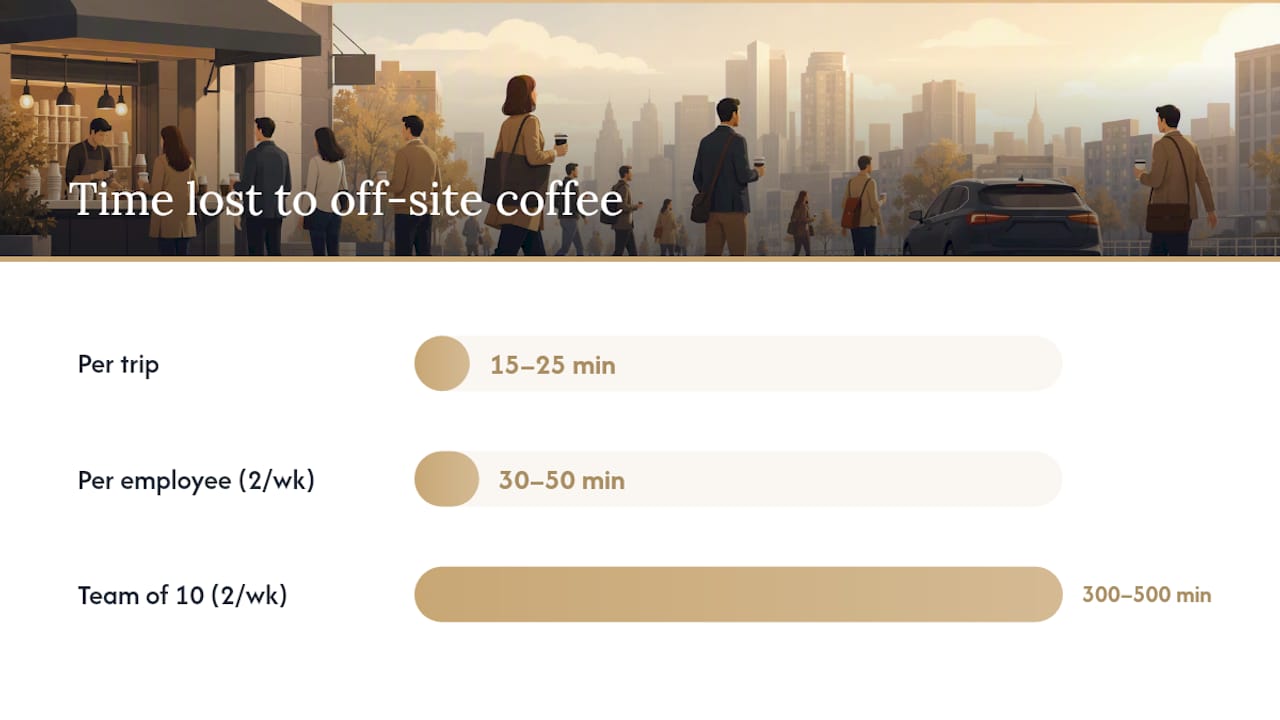
The indirect cost savings are real, even if they’re hard to quantify precisely. When employees leave the office for a $6 latte, they’re typically gone for 15–25 minutes. For a team of 10 making that trip twice a week, the time cost adds up quickly. A quality in-office station doesn’t eliminate every off-site trip, but it reduces the frequency for most people.
The morale argument is equally practical. Coffee is one of the few workplace perks that touches nearly everyone, every day. A station that’s reliable, clean, and stocked with coffee that actually tastes good functions as a small but consistent signal that the employer pays attention to the details that matter.
A thoughtfully curated coffee station isn’t a luxury — it’s one of the lowest-cost, highest-visibility investments a workplace can make in daily employee experience.
Measuring impact is simple:
- Track how often the station runs out of beans (a proxy for usage and satisfaction).
- Ask in a quarterly survey whether employees feel the coffee setup meets their needs.
- Note whether off-site coffee runs decrease after upgrading the station.
Shared office coffee problems are almost always operational, not equipment-related. Stale beans, dirty machines, and inconsistent batch sizes are the real culprits. Fix those first, and the station becomes something people genuinely look forward to.
Key Takeaways
A well-matched office coffee setup, maintained with a simple routine and stocked with fresh beans, is one of the most cost-effective workplace investments available.
| Point | Details |
|---|---|
| Match machine to team size | Solo setups need $80–$200 in gear; small teams need $300–$800; larger offices need $800–$3,000+. |
| Brew temperature matters | Water at 195–205°F is the standard for consistent extraction across drip, pour-over, and French press. |
| Routine beats equipment | Daily rinse, weekly cleaning cycle, and monthly descaling prevent the most common shared-station failures. |
| Governance keeps it running | Assign a rotating coffee steward and set a restocking cadence; without it, even great gear goes neglected. |
| Rowst for bean supply | Rowst’s wholesale and curated packs offer single-origin specialty beans with consistent roast dates, suited to offices wanting café-quality coffee on a reliable cadence. |
What I’ve learned from watching offices get coffee right (and wrong)
There’s a pattern I’ve noticed in offices that get coffee right: they treat it as a ritual worth designing, not a utility to be managed. The ones that get it wrong almost always make the same mistake — they buy a decent machine, stock it once, and assume it will take care of itself.
The truth is that the bean supply is where most office coffee programs quietly fall apart. A machine can be excellent and still produce a mediocre cup if the beans are three months past their roast date or ground on a blade grinder set to the wrong coarseness. At Rowst, we’ve worked with offices and wholesale partners long enough to see this pattern repeat itself. The teams that get the most out of their setup are the ones who treat bean sourcing with the same care they give the machine itself: ordering on a fixed cadence, choosing single-origin coffees with clear roast dates, and rotating origins occasionally to keep the experience interesting.
One small operational note that makes a real difference: order in quantities you’ll finish within two to three weeks of the roast date. Buying in bulk feels efficient, but stale coffee is the single most common complaint we hear from office teams. Freshness is the variable that’s easiest to control and most often ignored.
Rowst brings specialty coffee to your office without the logistics headache
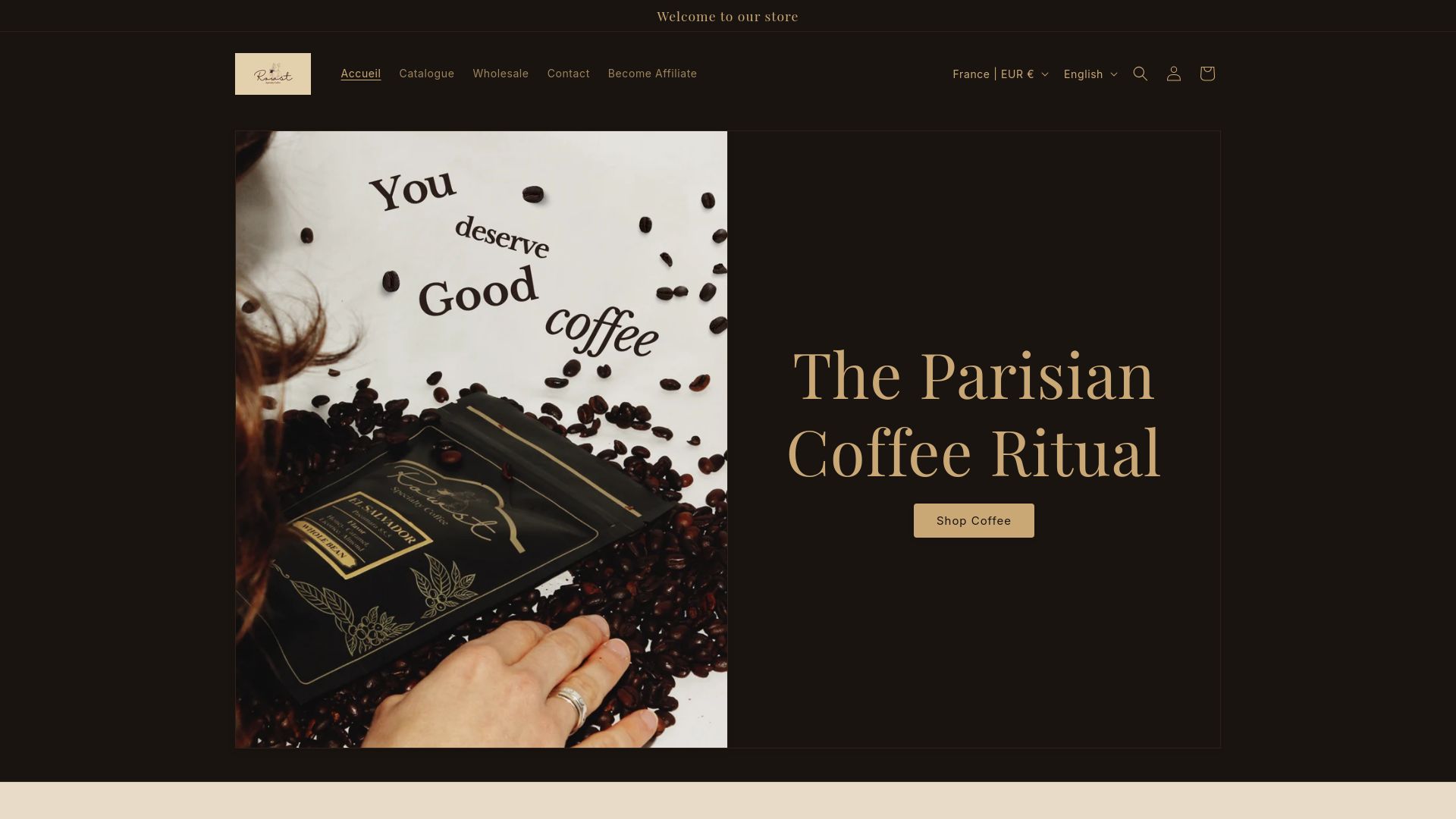
Sourcing quality beans for an office is where most setups stall. You want something exceptional, but you also need it to arrive consistently, in the right quantity, and without a procurement process that takes longer than the coffee itself. Rowst’s wholesale program is built for exactly this situation: direct-sourced, single-origin specialty coffees from small-scale producers in Uganda, El Salvador, and Mexico, supplied on a cadence that keeps your station stocked and your beans fresh.
For offices that want to sample before committing to a larger order, the Coffee Lover Pack and Discovery Pack offer a curated selection of origins in quantities suited to small teams. Each bag carries a clear roast date, so you always know exactly where you are in the freshness window.
Visit Rowst to browse the full range or reach out about a wholesale arrangement tailored to your team’s size and brewing setup.
Useful sources and further reading
- Small Office Coffee Station Ideas That Actually Improve Employee Retention
- How to Make Good Coffee at Work
- Office Coffee Setup: Better Shared Pots Without Drama | Coffee Guide | Fondsites
- The Best Coffee Machines for the Office That Your Employees Will Love
- Office Coffee Station Ideas: 7 Smart Small Space Designs
- Office Coffee Station Ideas for Modern Workplaces