

Geisha Coffee: 105 Aroma Compounds and Why Buyers Pay Hundreds
Geisha, sometimes spelled Gesha, is a Coffea arabica variety prized for cups that taste more like jasmine tea than coffee, layered with bergamot, peach, and honeyed sweetness. It commands some of the highest prices in specialty coffee because it yields little, demands meticulous harvesting, and has a competition and auction history that turned scarcity into obsession. Taste it slowly, black, in a pour-over, and you will understand the fuss within one sip.
TL;DR:
- Geisha plants produce low yields, require high-altitude growing environments, and demand meticulous hand-picking, driving up production costs and rarity.
- The variety’s distinct floral and fruity flavors are strongly linked to terpenoids like linalool, which are preserved best through light roasting and washed processing.
- Panama Geisha, especially from renowned farms, commands prices often reaching hundreds of dollars per pound, reflecting scarcity, provenance, and auction prestige.
- Buying genuine Geisha requires careful verification of farm specifics, lot details, and documented scores, as many non-Panama lots are priced lower but less authentic.
- Smaller-lot, direct-trade coffees from other origins, such as Uganda or El Salvador, can deliver comparable flavor complexity at a fraction of Geisha’s price point.
Table of Contents
- What Is Geisha Coffee, and Where Does the Name Come From?
- What Does Geisha Coffee Taste Like?
- Why Is Geisha Coffee So Expensive?
- How Terroir and Processing Change Geisha’s Flavor
- How Should You Taste and Brew Geisha Coffee?
- Where Can You Buy Authentic Geisha, and What Should You Expect to Pay?
- What Traceability Signals Actually Matter When Buying Rare Coffee?
- Is Geisha Worth the Splurge?
- Explore Rowst’s Single-Origin Coffee Collection
- Sources
What Is Geisha Coffee, and Where Does the Name Come From?
The story starts far from Panama, the country most people associate with this bean. Geisha traces back to the Gori Gesha forest in southwestern Ethiopia, where researchers collected seed stock in the 1930s. From there, the lineage traveled through Tanzania and a research station in Costa Rica called CATIE before landing in Panama’s highlands sometime in the mid-20th century, largely ignored for decades because it produced so little fruit per tree.
That changed in 2004, when Hacienda La Esmeralda entered a lot in the Best of Panama competition and shocked the judging panel, then the market, by fetching auction prices far above anything a washed Arabica had commanded before. The variety carried a specific genetic identity researchers now catalog as the T2722 accession, and World Coffee Research’s Geisha profile documents that lineage and its distinct fingerprint in detail.
A few naming notes matter here:
- “Gesha” reflects the Ethiopian place name more directly; “Geisha” is the transliteration that stuck in English-speaking markets.
- The word has zero connection to Japanese geisha entertainers. That resemblance is coincidental, per Wikipedia’s entry on the variety).
- Panama Geisha and Ethiopian Gesha are genetically related but not identical in expression, since decades of separate growing conditions shaped each differently.
What Does Geisha Coffee Taste Like?
Ask ten cuppers to describe Geisha and you’ll hear the same handful of words repeated: jasmine, bergamot, peach, tropical fruit, honey, and a tea-like body that feels lighter than typical coffee. It is less “big and bold” and more “delicate and aromatic,” which is exactly why it polarizes drinkers used to darker roasts.
A 2026 peer-reviewed analysis identified 105 volatile compounds in Geisha and found that terpenoids, including linalool and α-terpineol, correlate strongly with the floral, fruity, and sweet notes tasters rate highest in a study published on flavor chemistry in roasted Geisha beans. Linalool is the same aromatic compound found in high-quality jasmine tea and many flowers, which explains why “tea-like” keeps showing up in tasting notes rather than words like “nutty” or “chocolatey.”
Common tasting notes reported across specialty sources include:
- Jasmine and floral perfume on the aroma
- Bergamot or citrus-forward acidity
- Peach and stone fruit sweetness
- Tropical fruit undertones on natural-processed lots
- A light, tea-like body rather than heavy mouthfeel
Genotype sets the baseline for these compounds, but processing method and growing conditions determine how strongly they show up in the cup. High-scoring lots routinely clear 90-plus points on specialty scoring scales, according to coverage of Geisha’s tasting profile, which puts it in rarefied territory most Arabica never reaches.
Why Is Geisha Coffee So Expensive?
Three forces stack on top of each other: the plant itself is a poor producer, harvesting it is labor intensive, and the auction system has turned scarcity into spectacle.
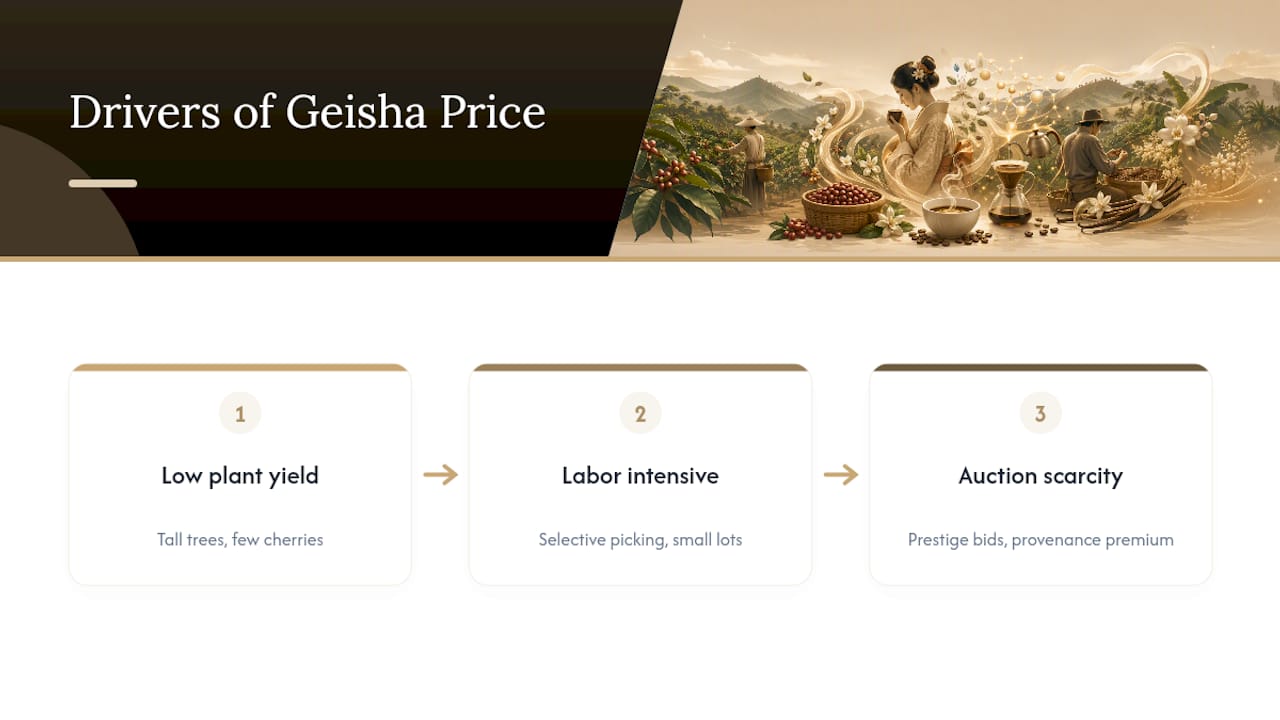
Geisha trees grow tall and lanky with brittle branches, and they simply do not produce much cherry per plant compared to Bourbon or Typica. Farmers also need a narrow altitude band, generally above 1,400 meters in regions like Panama’s Chiriquí province, where volcanic soil and cool temperatures let the plant’s delicate aromatics develop without the tree overproducing at the expense of flavor, a pattern detailed in Coffee Studies’ breakdown of Panama Geisha.
Then there’s labor. Selective picking means workers pass through the same trees multiple times to catch cherries at peak ripeness, and small lots get processed and sorted separately rather than mixed into bulk shipments. That kind of attention costs more per pound before a single bean touches an auction table.
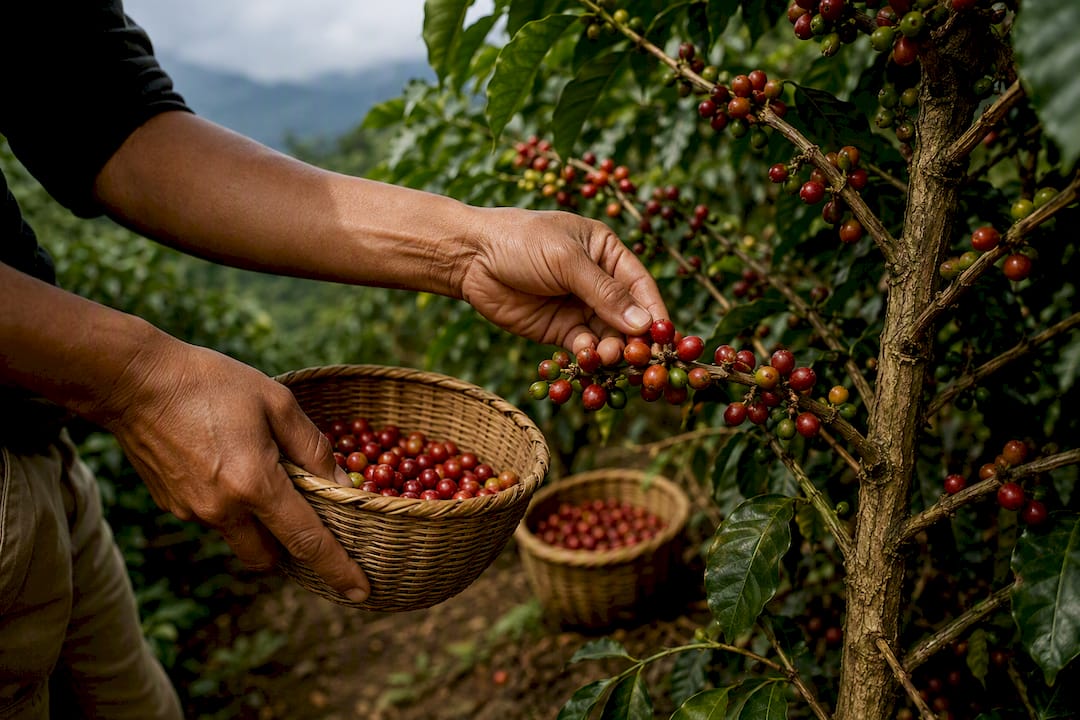
Speaking of auctions: early record Panama Geisha lots sold for a modest price per pound in 2004, a figure that looks almost modest next to what Best of Panama lots fetch now, with premium green lots reaching very high prices per pound according to Coffee Studies’ auction history. Collector demand and prestige bidding push prices well past what sensory quality alone would justify, and buyers at that level are often paying for provenance and bragging rights as much as flavor. If you want to understand how far small-lot economics can stretch, Rowst’s look at nanolot coffee covers the same dynamic playing out across other rare micro-lots.
Before paying a premium, check for lot transparency, a named farm, and a documented score. Vague labeling is the biggest red flag in this category.
How Terroir and Processing Change Geisha’s Flavor
Where a Geisha tree grows and how its cherries get processed after harvest changes the cup almost as much as the variety itself does.
- Origin sets the frame. Panama’s Boquete region, with its volcanic soil and high elevation, tends to produce the cleanest, most floral expression the variety is known for. Ethiopian Gesha, grown closer to its ancestral forest, often leans slightly more herbal and less polished, though still recognizably aromatic. Rowst’s guide to coffee terroir walks through why altitude and soil shift flavor this dramatically across origins generally.
- Washed processing sharpens clarity. Removing the fruit before drying tends to spotlight the jasmine and bergamot notes cleanly, with less interference from fermentation sugars.
- Natural and anaerobic processing amplify fruit. Letting the cherry ferment on the bean longer pushes tropical fruit and sweetness forward, sometimes at the cost of the tea-like clarity washed lots deliver, a trade-off outlined in Roastopedia’s Geisha processing notes.
- Roast level protects or destroys the aromatics. A lighter roast preserves the terpenoids responsible for the floral character; push past medium and you start baking off exactly what makes Geisha worth the price.
How Should You Taste and Brew Geisha Coffee?
Geisha rewards patience more than any other coffee you’ll brew at home. Rush the process and you’ll taste hot water with a hint of flowers instead of the layered cup the variety is capable of.
Run through a simple checklist when tasting: smell the dry grounds first, then the wet aroma after brewing, then pay attention to acidity (should feel bright, not sour), body (light and tea-like is normal, not a flaw), and how long the finish lingers.
For brewing, pour-over methods outperform anything with a metal filter or French press, since paper filters keep the cup clean enough for delicate aromatics to shine.
- V60 or Chemex: medium-fine grind, roughly 1:16 coffee-to-water ratio, water around 200°F.
- Kalita Wave: similar ratio, slightly coarser grind for a gentler extraction.
- Both benefit from a proper bloom phase, which Rowst’s explainer on coffee bloom covers in more depth if you want to dial in extraction further.
Pro Tip: Skip milk, cream, and sweeteners entirely. Geisha’s aromatics are too subtle to survive dairy, and a proper wash-processed lot needs nothing added to taste balanced. If you want to try it cold, Rowst’s iced pour-over guide explains how to chill it without flattening the florals.
Where Can You Buy Authentic Geisha, and What Should You Expect to Pay?
Price ranges vary enormously depending on whether you’re buying Panama-specific lots or Geisha grown elsewhere under looser labeling.
- Non-Panama Geisha from places like Colombia or Costa Rica often runs closer to standard specialty pricing, still a step above commodity coffee but far from auction territory.
- Panama Geisha, particularly anything tied to Best of Panama or Hacienda La Esmeralda, sits in a much higher bracket, with green pricing sometimes reaching hundreds of dollars per pound before roasting even happens.
- Verify authenticity by looking for a named farm, a lot number, a documented cup score, and, ideally, some auction or direct-trade provenance rather than a generic “Geisha blend” label, a caution echoed in World Coffee Research’s variety documentation.
Start small. A 100 to 250 gram bag or a single café pour lets you learn the profile before committing to a larger purchase.
What Traceability Signals Actually Matter When Buying Rare Coffee?
Rowst builds every offering around direct relationships with small-scale producers, skipping the layers of intermediaries that make traceability murky in the first place. That approach shapes how the discovery packs get curated across origins like Uganda, El Salvador, and Mexico.
When evaluating any seller claiming rare or single-origin coffee, look for:
- A named farm or cooperative, not just a country of origin
- Lot-specific detail: processing method, altitude, harvest year
- A documented cup score from a recognized scoring system
- Clear language about direct-trade or direct-sourcing relationships with growers
Is Geisha Worth the Splurge?
Geisha earns its reputation on flavor chemistry alone, but the auction price tag reflects prestige and scarcity as much as cup quality. It’s worth chasing if you want to taste terroir at its most expressive, or if you’re building sensory knowledge as a coffee enthusiast. If you just want floral, fruity notes without record pricing, plenty of smaller-lot single-origins deliver something close. Buy a small amount first. Attend a cupping if one’s near you. Or start with a discovery pack that lets you compare origins side by side before spending on a name.
— Diego
Explore Rowst’s Single-Origin Coffee Collection
You don’t need an auction paddle to taste something remarkable. The Rowst Coffee Collection features single-origin beans sourced directly from small-scale farmers across Uganda, El Salvador, and Mexico, each chosen for a distinct, nuanced flavor profile rather than a marketing story.
Discovery packs exist for exactly this kind of exploration: a way to taste multiple origins side by side and learn what you actually gravitate toward before committing to a full bag of anything rare. Every purchase goes back to the farmers who grew, harvested, and sorted the beans, with no markup-hungry middlemen sitting between your cup and their work. If jasmine and stone fruit notes caught your attention in this guide, the El Salvador Pacamara offers a comparable brightness at a fraction of Geisha’s price. Start with a small bag, brew it as a pour-over, and decide from there whether you want to go deeper into single-origin coffee or eventually chase a Panama lot of your own.
Sources
- The flavour of world Geisha coffee: Differences and relationships between quality, flavour attributes, and volatile compounds in roasted beans — DOI
- Geisha (Panama) — World Coffee Research varieties
- Panama Geisha Coffee: The Premium Bean Explained — Coffee Studies